
Biography of Abigail Hartman-Rice

General Background
Early Life
Maria Appolonia Hartman, known in adulthood as Abigail, was born on September 4, 1742, according to the Rice family Bible, to Johannes Hartman and Anna Margaretha (Margaret) Moses. Johannes and Anna Margaretha were German immigrants who settled in Pennsylvania as part of the mid-eighteenth-century German Lutheran migration. The Hartman family arrived in Pennsylvania in 1750 and relocated to Chester County by 1753, establishing a farm near Yellow Springs in the Pikeland region. Abigail was raised in a German-speaking Lutheran household within a close agricultural and religious community where families relied on one another for farming labor, worship, and survival.
The Hartman household was shaped by frontier conditions, including land clearing, church formation, and shared labor among neighboring families. Abigail formally entered adult church life on June 26, 1756, when church records list Maria Appolonia Hartman at the age of fifteen. Her father, Johannes Hartman, remained a respected figure in the local community into the Revolutionary period, with his farm located only miles from the Valley Forge encampment. Abigail’s brothers were active during the war, most notably Peter Hartman, who served as a militia officer and recruiter and was involved in transporting supplies and escorting sick soldiers from Valley Forge to Yellow Springs.
Marriage
In 1757, Abigail married Zachariah Rice, a German-born millwright living in Pikeland Township. Together they established a long-term household near Pickering Creek, close to Yellow Springs. Abigail bore approximately twenty-two children over the course of her marriage, seventeen of whom survived into adulthood. Her adult life was defined by sustained domestic labor, child-rearing, and community responsibility.
Contemporary descriptions portray her as physically strong, capable, and warm-hearted, traits necessary to manage such a large household.
Yellow Springs
Abigail’s life intersected closely with that of Christina Schneider Hench, born in 1720, the wife of Johannes Hench, who owned and managed a neighboring farm in the Yellow Springs area. During the American Revolutionary War, both women lived and worked within the same emergency landscape created by Yellow Springs Hospital and Washington Hall, major Continental Army medical facilities. Christina Hench’s son, Lieutenant John Hench, born in 1750, later married Margaret Rice, Abigail’s daughter born in 1762, binding the Rice and Hench families together through both wartime service and marriage.
Biographical Timeline
September 4, 1742
Birth and Family Context
- Maria Appolonia Hartman was born to Johannes Hartman and Anna Margaretha (Margaret) Moses, as recorded in the Rice family Bible. She was born into a German Lutheran immigrant family that would later settle in the Pikeland region of Chester County, Pennsylvania.
- According to online sources like Find-A-Grave, Abigail was born in Ilbesheim, Donnersbergkreis, Rheinland-Pfalz, Germany. Her father, Johannes Hartman, was born in Ilbesheim as well, and was born on October 23rd, 1716.
- Her mother, Anna Margaretha “Margaret” Moses Hartman (also spelled Annae Margarethae Hartman) was born on April 13th, 1716 in Munich, Stadtkreis München, Bavaria, Germany.
- Johannes Hartman’s Cultural background at Birth:
- In 1716, families in Ilbesheim lived in a small Lutheran farming village in the Electoral Palatinate of the Holy Roman Empire. Their lives centered on the household, the church, and the village. Most households included several generations and were led by a male head of family. He represented the family in the village court and took responsibility for taxes, required labor, and discipline at home. People saw marriage as both a religious commitment and an economic partnership. Lutheran teaching stressed order, obedience, and shared duties within the family. Pastors led church services, taught children, kept official records, and watched over the moral behavior of the community. Most people married someone from Ilbesheim or a nearby village in the Donnersberg region. Families often married into other Lutheran villages to strengthen family ties, but they rarely married outside their faith. The church calendar shaped daily life. Baptisms, confirmations, weddings, and funerals brought the community together. Feast days and harvest celebrations marked the seasons and guided work and rest. People spoke a local Palatine dialect and followed regional customs in dress, food, and farming. Neighbors often worked together during harvest. Many still remembered past wars and hardships, so they valued stability, strong faith, and land. Their world focused on the local community, but trade, marriage, and family ties connected them to nearby villages.
- Anna Margaretha Moses’s Cultural background at Birth:
- In 1716, most people in Munich lived in a strongly Catholic city ruled by the Elector of Bavaria within the Holy Roman Empire, and the city’s laws and public life favored Catholicism, shaping how minority Lutherans lived. Small Lutheran communities existed in and around Munich, but their worship and marriages were limited by law, and they often practiced privately or traveled to other areas for church services. Many worked as craftsmen, merchants, servants, or soldiers, and some came from regions where Lutheranism was stronger. Families organized life around the household, led by a male head responsible for civic duties, work, and discipline. Marriage was both religious and economic, and marrying into a Lutheran family usually meant being Lutheran oneself or agreeing to join the faith. The memory of the wars of religion, especially the Thirty Years’ War from 1618 to 1648, still shaped daily life: people remained cautious about mixing confessions, and Lutheran communities preserved strong kinship networks, trade ties, and church practices to maintain their identity in a Catholic city. Cultural life followed the church calendar, with feast days, markets, and seasonal labor guiding routines, and urban families lived close together while relying on trade more than farming.
- Intriguingly, Margaret’s original surname (before she married into the Hartman family) is recorded as “Moses.” This surname was uncommon in Lutheran communities in early 18th-century Germany and was most often associated with Jewish families, though some especially biblically-minded Protestant families also adopted biblical names over generations. In a strongly Catholic city like Munich, a surname like “Moses” might have marked her as unusual or signaled a family origin outside the local Lutheran networks. If her family had Jewish roots, complete conversion to Lutheranism would have been necessary for her to fully participate in community life and to marry within the Lutheran faith. Even if her family was already Protestant, the name would still have stood out, highlighting the ways that religion, culture, and identity intersected in personal and social life. Either way, Margaret’s original surname suggests a background that required careful navigation of religious and social boundaries, especially in a period still shaped by the memory of the Thirty Years’ War and the enforcement of confessional divisions in the Holy Roman Empire.
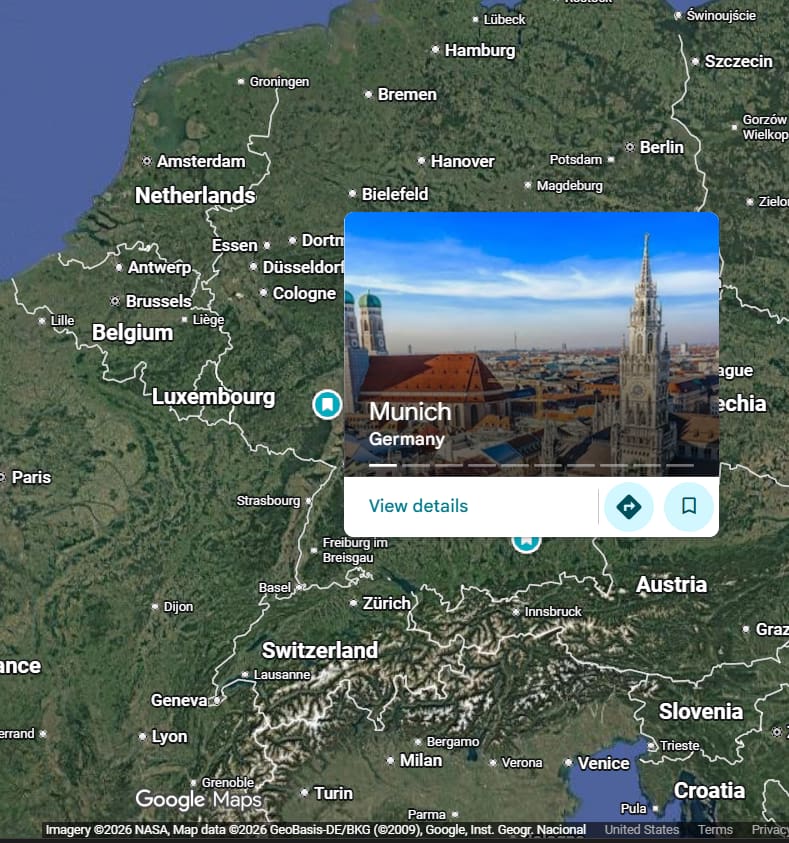
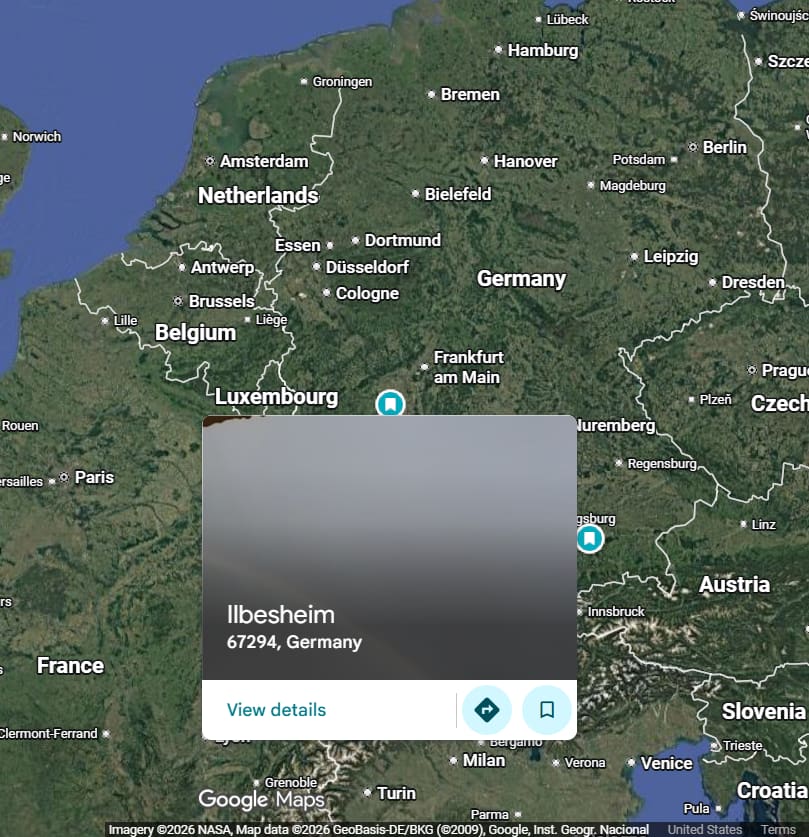
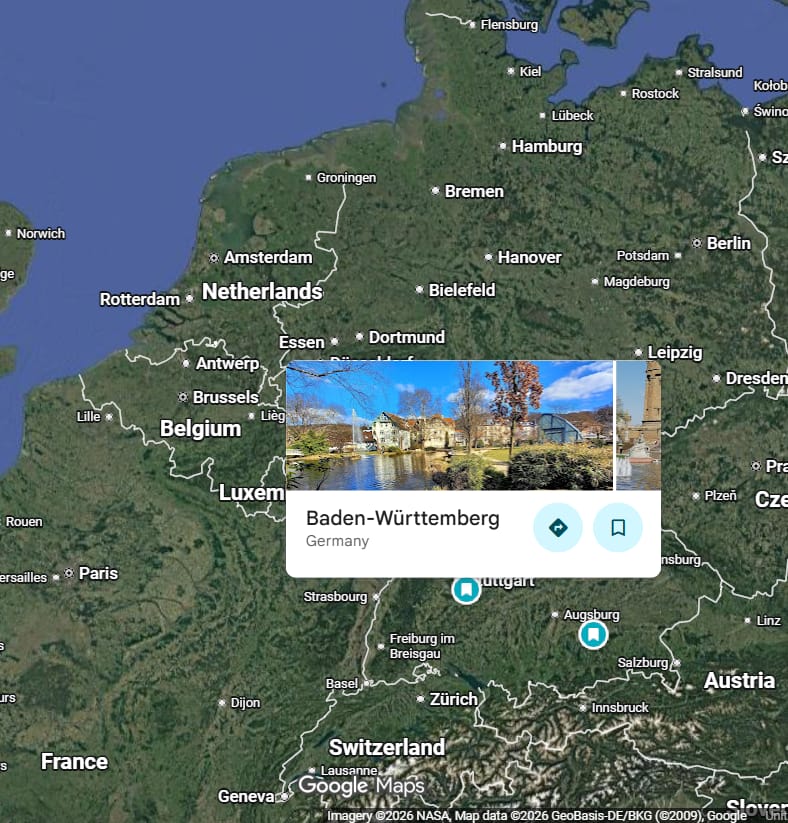
- At her birth, Abigail had one older brother- Johann Peter Hartman- born on April 2nd, 1740. Her older brother, later known as Major Peter Hartman, is recorded as being born in the Baden-Württemberg state of Germany, though the city or town is not listed as per his account on Find-A-Grave. The placement of this state is about equidistant between Munich and Ilbesheim, where Abigail was born.
- Margaret, having been from Munich in Bavaria, would have entered into the Hench family of Ilbesheim in 1739 (at the latest- their date of marriage is still unconfirmed) as someone very different from the typical Palatine Lutheran villager. Munich was a large city under strong Catholic rule, and Protestants there lived with limited public worship and few formal Lutheran institutions, while Ilbesheim was a small rural village where Lutheran faith and local customs structured every aspect of life, from weekly worship and parish discipline to communal work and seasonal festivals.
- Movement of people between the German states did happen in the 18th century, but traveling more than 150–200 kilometers to settle in another region was unusual; except for economic necessity or religious reasons, especially where people wanted to live where their confession was accepted.
- Due to the long legacy of cuius regio, eius religio that kept confessions tied to territory after the Peace of Westphalia, in Germany, especially within devout Lutheran communities, inter-parish marriages like those of Abigail’s parents (especially at this scale of distance) would have been uncommon. The place of the birth of Abigail’s older brother, about half-way between Munich and Ilbesheim, suggests that the journey that took Margaret and Johannes back to Ilbesheim was a long one. Their firstborn child may have even been born during their journey home.
- By Abigail’s birth, however, the Hartmans seemed to have settled into life in the village of Ilbesheim.
1748
Birth of younger brother, Jacob Hartman
- Johann Jacob Hartman, Abigail’s younger brother, was born on October 3rd, 1748 in Ilbesheim, Donnersbergkreis, Rheinland-Pfalz, Germany. At this point, Abigail was around 6 years old.
- A six‑year‑old girl in a Lutheran farming family in Ilbesheim helped with simple chores like fetching water, gathering kindling, and caring for younger siblings. She would have potentially attended a small village school (if she received an education at all) and when possible would learned Bible stories, hymns, and reading tied to the church calendar through that education. She played with siblings and other village children during breaks in work.
1750
Immigration to the American Colonies
- Johannes Hartman and his wife and children arrived in Philadelphia on August 15th, 1750 on board the ship Royal Union from Rotterdam, in the Netherlands, and Portsmouth, located on England’s south coast. (Information from the Pennsylvania Archives, Second Series, Vol XVII, pg 312.)
- The Hartman family arrived in Pennsylvania as part of the broader German immigration to the colony, seeking land and stability within established German-speaking communities.
1753
Move to Chester County
- By this year, the Hartman family had relocated to Chester County and established a farm near Yellow Springs, where Abigail’s childhood unfolded amid agricultural labor, church life, and frontier settlement.
June 26, 1756
- Church records confirm Maria Appolonia Hartman, then fifteen years old, marking her formal entry into adult church life within the local Lutheran congregation.
1757
- Abigail married Zachariah Rice, a German-born millwright living in nearby Pikeland Township. Based on her recorded birthdate, she was approximately fourteen or fifteen years old at the time of her marriage.
- The couple established their household near Pickering Creek, close to Yellow Springs, where they would reside for decades and raise a large family.
1762
- Abigail gave birth to her daughter Margaret Rice, who would later marry Lieutenant John Hench, the son of Christina Schneider Hench and Johannes Hench.
1777
- When the American Revolutionary War reached Chester County, Abigail’s home lay in immediate proximity to Yellow Springs Hospital and Washington Hall, major Continental Army medical facilities during the Brandywine campaign.
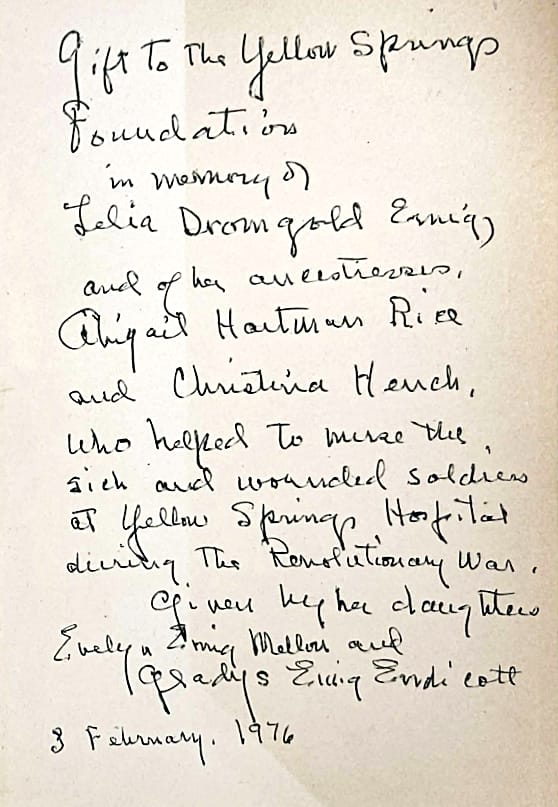
- Abigail served as a civilian nurse and provider, helping tend wounded soldiers and assisting in the gathering and transport of food, medicines, and supplies from surrounding farms.
- Christina Schneider Hench, a neighboring farm owner, also opened her household to wounded soldiers, and she and Abigail worked within the same informal civilian medical network supporting the Continental Army.
- Zachariah Rice used his skills as a millwright and carpenter to assist with the construction and maintenance of Yellow Springs Hospital and other wartime government projects, bringing military activity directly to the Rice household.
- Abigail’s brother, Peter Hartman, served as a militia officer and recruiter, transporting supplies and escorting sick soldiers from Valley Forge to Yellow Springs by wagon, increasing the movement of wounded men through Hartman and Rice properties.
1777–1778
- During the Valley Forge winter, Abigail’s nursing work intensified as troop movements, military construction, and the presence of sick and dying soldiers became a constant feature of daily life.
- While making repeated visits to Yellow Springs Hospital, Abigail contracted typhus fever, a disease common in overcrowded military medical facilities.
- Although she survived the initial illness, her health never fully recovered, leaving her physically weakened for the remainder of her life.
After 1778
- Despite her fragile health, Abigail continued to manage her household and raise her children, maintaining domestic stability in the years following the war.
1789
- The Rice family faced severe financial hardship when the long-standing English mortgage on their farm was foreclosed, resulting in the loss of land they had worked for decades.
November 6, 1789
- Abigail died at the age of forty-seven, her health having failed after years of illness and cumulative hardship.
- She was buried at St. Peter’s Church in the Pikeland area of Chester County, Pennsylvania.
- Seventeen of her children walked in procession to her grave, a sight remembered as extraordinary even at the time.
- Her original grave marker was later destroyed or lost, though her burial place is commemorated nearby.
Posts Featuring Abigail
Further research ongoing!
See our family tree for Abigail and her relations on Ancestry.com here!
See Abigail Hartman-Rice depicted by Hannah Schmidt, an actress from the SALT theater, as she appeared in WHYY’s feature on Washington Hall!