
Biography of Dr. John B. Cutting
- Early Life and Revolutionary War Service (Before 1776)
- Apothecary General of the Continental Army Hospital Department (1777â1778)
- Yellow Springs and the April 1778 Letter to Dr. Jonathan Potts
- Continued Supply Problems and the Hospital Department Crisis (1778)
- The Hospital Department Controversy and Cuttingâs Relationship with Dr. William Shippen Jr. (1777â1780)
- Post-War Diplomacy and International Career (After 1783)
- Negotiations with Luxembourg and the South Carolina Debt (1780s)
- Advocating for Impressed American Sailors and Later Legal Career
- Posts Featuring Dr. Cutting
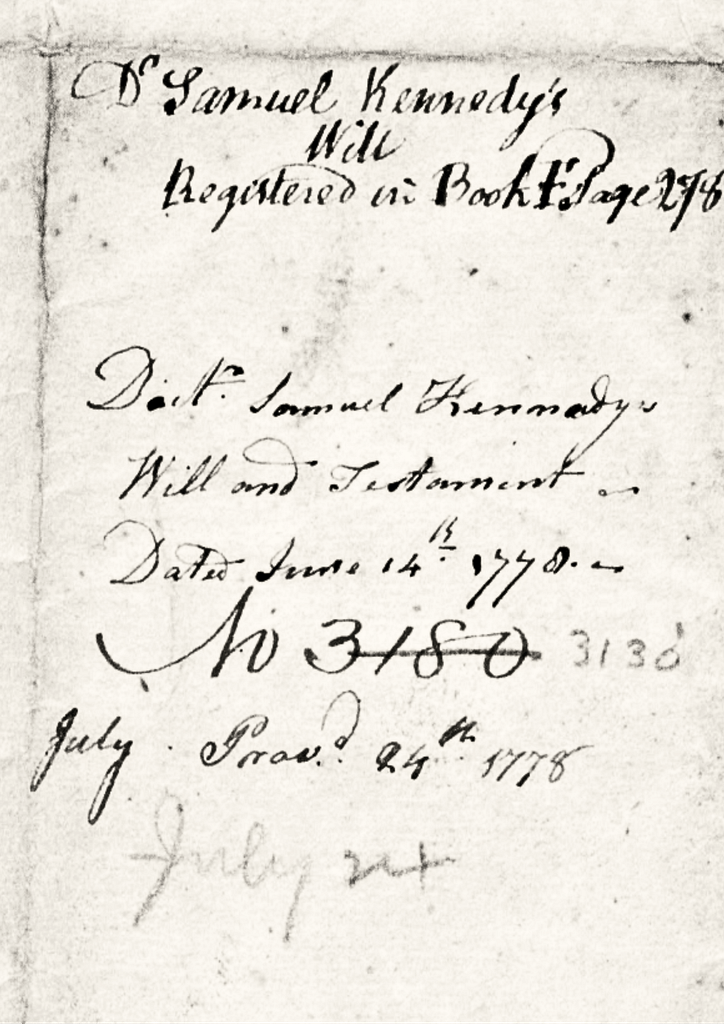
- The Will and Estate of Dr. Samuel Kennedy
- A Study of Medical Services
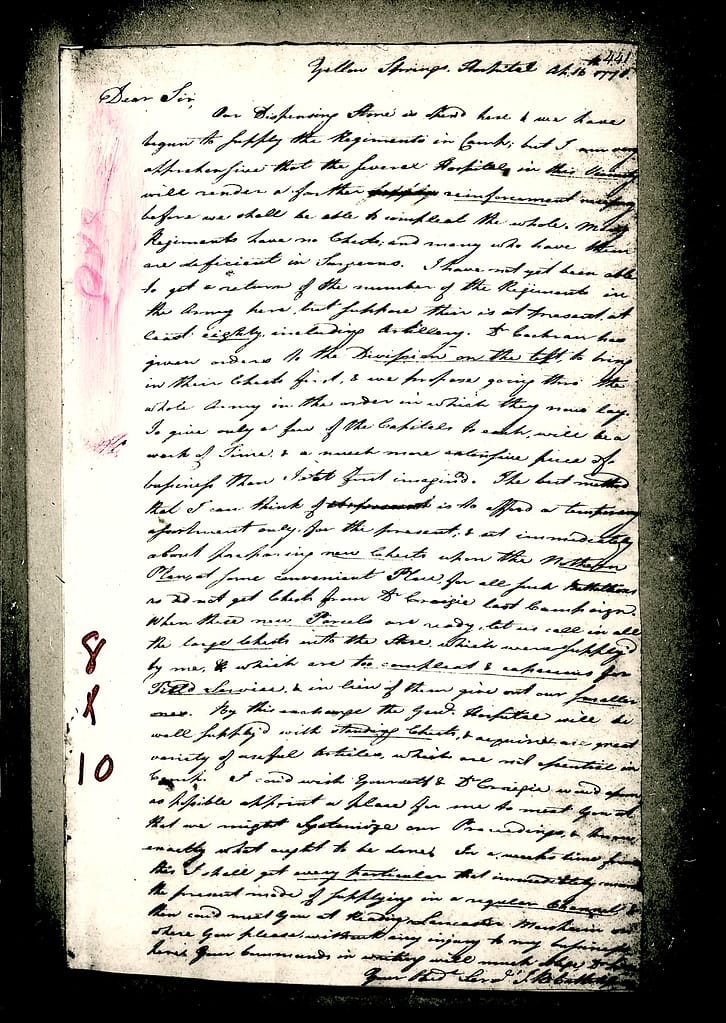
- Letter to Johnathan Potts from John B. Cutting
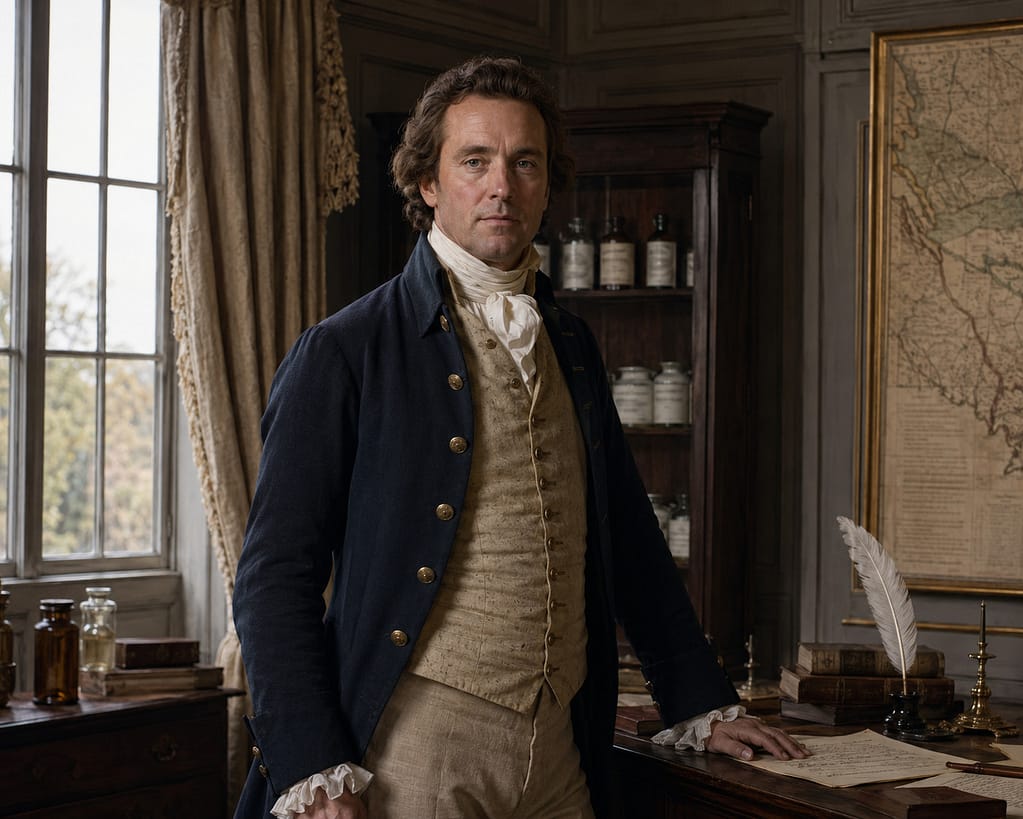
John Brown Cutting remains a somewhat elusive figure despite occupying a significant position within early American military and diplomatic circles. Although records regarding his early life are limited, the surviving evidence reveals a man who moved between medicine, military administration, international diplomacy, and law during the formative years of the United States.
Early Life and Revolutionary War Service (Before 1776)
Little is currently known about Cutting’s childhood or early education. He was a resident of South Carolina and appears to have entered public service during the American Revolutionary War while still in his early twenties.
Despite later using the title “Doctor,” there is no clear evidence that Cutting received formal medical training before the war. Instead, his medical reputation appears to have developed through his service within the Continental Army’s Hospital Department.
During the early years of the Revolution, Cutting became involved in military medical logistics and pharmaceutical management. By 1776, after British forces attacked Long Island, General George Washington ordered military supplies located in the area to be transferred to Newark, New Jersey, under Cutting’s supervision. This assignment suggests that he had already gained the trust of military leadership in managing essential medical resources. He was said, by one source, to be in his twenties during the Revolutionary War, but this is tentative at the moment.
Apothecary General of the Continental Army Hospital Department (1777–1778)
By the winter of 1777–1778, Cutting had risen to the position of Apothecary General for the Hospital Department of the Continental Army. In this role, he was responsible for overseeing the preparation, storage, and distribution of medicines and medical supplies throughout the Middle Department.
His duties included managing inventories, coordinating with the Purveyor General, maintaining records, supervising assistants, and ensuring that surgeons and regimental hospitals received necessary medical supplies. During one of the most difficult periods of the Revolutionary War, his position placed him at the center of the army’s ongoing struggle with shortages, transportation problems, and administrative failures.
This responsibility brought Cutting to Yellow Springs, Pennsylvania, during the winter encampment at Valley Forge. Following reforms initiated after General Washington’s December 1777 appeals to Congress regarding the army’s suffering, Yellow Springs became the primary headquarters and supply depot for the Middle Department’s Hospital Department.
The decision to establish the medical headquarters at Yellow Springs was influenced heavily by Dr. Jonathan Potts, the Purveyor General, who believed the location allowed for improved oversight of procurement and distribution. Although Dr. James Craik, Physician General of the Middle Department, initially preferred Carlisle because of its western supply connections, Yellow Springs ultimately became the center of military medical operations.
Yellow Springs and the April 1778 Letter to Dr. Jonathan Potts
On April 16, 1778, while stationed at Yellow Springs, Cutting wrote to Dr. Jonathan Potts regarding the continuing difficulties faced by the Hospital Department.
In the letter, Cutting reported that the hospital’s dispensing store had opened and that supplies were beginning to reach regiments in camp. However, he warned that the department faced significant challenges. Many regiments lacked medical chests, while others did not have enough surgeons to properly serve their troops.
Cutting proposed reorganizing the distribution system by creating new, smaller medical chests designed specifically for field use. He explained that existing hospital chests were too large and impractical for active service and argued that exchanging them for smaller supplies would allow the General Hospital to maintain better reserves.
The letter provides important evidence that, even after Yellow Springs became the central supply depot for the Hospital Department, shortages continued to affect military medical operations. If Yellow Springs struggled to obtain adequate supplies, then the smaller “flying hospitals” near Valley Forge and other military locations faced even greater difficulties.
Continued Supply Problems and the Hospital Department Crisis (1778)
Cutting’s concerns were echoed shortly afterward by Dr. James Craik, who wrote to Potts on May 15, 1778. Craik reported that additional hospitals had been established around Yellow Springs and that urgent supplies were needed, including medicines, food items, bedding, and equipment.
Craik also requested additional wagons, personnel, commissaries, and reliable record keepers to manage the growing medical complex. He specifically mentioned the need for someone trustworthy to oversee the stores at Yellow Springs, demonstrating the administrative difficulties facing the Hospital Department.
Although Craik praised the cleanliness and organization of the Yellow Springs hospitals, noting that General Washington himself had been pleased with their condition during his visit, he warned that supply delays continued to threaten operations. Soldiers were becoming increasingly ill, transportation remained unreliable, and medical resources were still insufficient.
These letters demonstrate that Cutting and other medical officials were actively attempting to address supply problems, but they were working within a system affected by broader administrative conflicts, inadequate resources, and logistical failures.
The Hospital Department Controversy and Cutting’s Relationship with Dr. William Shippen Jr. (1777–1780)
During this same period, the Continental Army’s medical leadership became increasingly divided.
The Hospital Department had already experienced instability following the replacement of Dr. John Morgan by Dr. William Shippen Jr. as Director General of Hospitals in 1777. Morgan, who had helped establish early military medical organization, later accused Shippen of mismanagement and poor oversight. Dr. Benjamin Rush joined Morgan in criticizing Shippen’s administration and calling for reform.
Cutting became connected to this controversy through a series of public disputes between medical officers. According to James E. Gibson’s Dr. Bodo Otto and The Medical Background of the American Revolution, Cutting participated in published exchanges with Morgan that included personal criticisms.
Gibson also records that Cutting accused Morgan of previously intending to leave the country for the West Indies before changing his plans after receiving support from Rush for efforts against Shippen. These exchanges reveal the intense personal and professional divisions within the Continental Army’s medical leadership.
Interestingly, despite witnessing the supply shortages affecting Yellow Springs firsthand, Cutting appears to have supported Shippen during these disputes.
During Shippen’s later court-martial proceedings, Shippen referenced Cutting’s testimony regarding financial transactions involving medical supplies. Cutting confirmed that Shippen had provided personal funds to purchase necessary materials for the hospital system, including medicines that could not otherwise be obtained without immediate payment.
This testimony complicated later accusations against Shippen by suggesting that some questionable financial practices may have occurred alongside legitimate attempts to obtain desperately needed supplies.
Post-War Diplomacy and International Career (After 1783)
Following the conclusion of the Revolutionary War, Cutting traveled to London, where he studied law and became connected with influential American diplomats abroad.
During this period, he developed close relationships with figures including John Adams, Thomas Jefferson, and William Short. His correspondence with these prominent Americans demonstrates his continued involvement in political and diplomatic circles.
Cutting later traveled with John Adams to the Netherlands, where he temporarily served as Adams’ secretary during diplomatic negotiations. Although he developed a reputation among some contemporaries for sharing political information too freely, his relationships placed him among important American representatives during the early years of international diplomacy.
Negotiations with Luxembourg and the South Carolina Debt (1780s)
After returning briefly to the United States, Cutting became involved in negotiations between South Carolina and the Prince of Luxembourg.
During the Revolutionary War, South Carolina had leased a ship from the prince. The vessel, named the South Carolina, became one of the most successful Patriot naval ships of the war. However, the state was unable to fully repay the financial obligations associated with the agreement.
Cutting attempted to mediate the dispute between South Carolina and Luxembourg, but the issue remained unresolved and continued to affect the state’s finances for decades.
Advocating for Impressed American Sailors and Later Legal Career
Cutting returned to Europe the following year and became involved in efforts to assist American sailors who had been forced into service in the British Navy.
Using his own finances, he helped secure the release of nearly 1,000 American prisoners. After returning to the United States, he practiced law and sought reimbursement from the federal government for the money he had spent.
Although Congress eventually awarded him $2,000, Cutting spent years attempting to recover the remaining funds.
Research is Ongoing!
Posts Featuring Dr. Cutting

Bibliography
Gibson, James E. Dr. Bodo Otto and the Medical Background of the American Revolution. Springfield, IL: Charles C. Thomas, 1937.
“John Brown Cutting.” Founder of the Day. Accessed July 21, 2026. https://www.founderoftheday.com/founder-of-the-day/johnbrowncuttin
Copyright Disclaimer: Under Section 107 of the Copyright Act 1976, allowance is made for ‘fair use’ for purposes such as criticism, comment, news reporting, teaching, scholarship, and research. All materials sourced from sources indicated throughout this post are referenced for the purposes of education for reference purposes.