
Biography of John Rose
Family Background
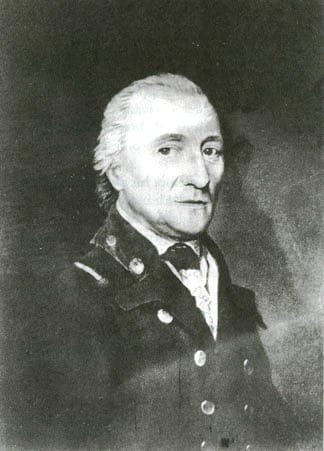
John Rose was born Gustav Heinrich de Rosenthal in 1754 into a long-established Baltic aristocratic family rooted in Estonia and Livonia. His father was Johann Adolf de Rosenthal, a Baltic baron whose family belonged to a small ruling class that had governed land and estates in the region for centuries. His mother was Ulrike von Funcken, who was Swedish, and through her maternal line the Rosenthal family held a Swedish title of nobility granted more than one hundred years earlier by Queen Christina of Sweden. This Swedish title was considered older and more prestigious than Russian noble titles, which at the time could be purchased rather than inherited.
The Rosenthal family’s social position was shaped by the unique status of the Baltic Barons within the Russian Empire. Estonia and Livonia had traded with cities of the Hanseatic League for over three hundred years by the time of Gustav’s birth, and the region had been ruled by a small group of barons for roughly five hundred years. This long exposure to European trade and Scandinavian influence made the Baltic aristocracy more outward-facing than much of the Russian Empire. Despite owning landed estates worked by serfs, Baltic nobles were viewed as more traditional, provincial, and less opulent than Russian nobility. By 1774, Czarina Catherine II, known as Catherine the Great, was said to favor the Baltic aristocracy over the Russian aristocracy, considering them socially superior.
Gustav Heinrich de Rosenthal was born on the family estate at Vaimõisa and spent his early life moving between the manor houses and estates at Vaimõisa and Rosenthal. He was the eldest child of Johann Adolf de Rosenthal and Ulrike von Funcken. He had two sisters and one younger brother named Karl. In his journal, Gustav appears to have been closest to Karl among his siblings. His upbringing emphasized aristocratic honor, family prestige, and noble obligation, values that strongly influenced his later decisions.
Biographical Timeline
1754
- Gustav Heinrich de Rosenthal was born on his family’s estate at Vaimõisa into a Baltic aristocratic household with deep roots in Estonia and Livonia, a region long shaped by European trade and noble rule.
1760s
- He spent his childhood moving between the manor houses and estates at Vaimõisa and Rosenthal, growing up as the eldest child alongside his two sisters and his younger brother Karl, with whom he later recorded the closest relationship.
early 1770s
- Rosenthal was educated at the Knight’s Academy in Tallinn, an institution closely associated with the regional nobility and the traditions of the Teutonic Order, which likely shaped both his education and his sense of noble duty.
by 1774
- By this time, the Baltic aristocracy, including the Rosenthal family, was reportedly favored by Czarina Catherine II, who viewed Baltic nobles as superior to their Russian counterparts, reinforcing Gustav’s confidence in his inherited status.
circa 1774
- By the age of twenty, Rosenthal had arrived in St. Petersburg to become a member of the czarina’s court, placing him within the elite but highly regulated environment of imperial society.
mid-1770s
- While at court, Rosenthal became involved in a duel with an unknown man who had insulted the honor of an elderly uncle. Although the uncle’s identity is unclear, Rosenthal’s journal shows that his aristocratic upbringing compelled him to defend family honor.
mid-1770s
- Dueling at the czarina’s court was illegal and often punishable by death. After killing his opponent, Rosenthal fled Russia to save his life, escaping aboard a ship bound for the Americas, though the name of the vessel is unknown.
spring 1776
- Rosenthal arrived in Baltimore during the American Revolution and adopted the name John Rose, marking a deliberate break from his European identity and past.
spring 1776
- Shortly after arriving, Rose began studying surgery under Dr. C. F. Wiesenthal, a German physician who operated a surgical school in Baltimore and is mistakenly referred to as “Dr. Wisendorf” in Rose’s journal.
spring–summer 1776
- Wiesenthal, an early advocate for smallpox inoculation and deeply concerned with camp diseases such as typhus and diphtheria, trained Rose in treating illnesses that plagued the Continental Army.
June 1776
- Rose was present during the American invasion of Quebec and took part in the Battle of Trois-Rivières on June 8, 1776, likely serving in the role of a surgeon’s mate amid a severe smallpox outbreak.
late spring–December 1776
- While stationed at Fort Ticonderoga, Rose befriended William Irvine, an officer in the Continental Army, and continued gaining experience treating smallpox and other camp diseases while still a student of Wiesenthal.
January of 1777
- Dr. Wiesenthal was appointed Surgeon Major of the First Maryland Battalion while Rose remained under his instruction, strengthening Rose’s ties to the Continental medical service.
Late Summer or Early Autumn of 1777
- Wiesenthal sent Rose to the hospital complex at Yellow Springs to assist Dr. Samuel Kennedy in maintaining the facility.
~November and December of 1777
- The General Hospital at Yellow Springs, known as Washington Hall, had been personally commissioned by George Washington and served as the first purpose-built hospital authorized by Congress as well as the headquarters of the Hospital Department of the Revolutionary War.
- Upon arrival, Rose found the hospital only half-built but developed a strong regard for Dr. Kennedy. He served as a surgeon’s mate and was noted for his enthusiasm for the patriotic cause and his compassionate care of soldiers wounded in battle or suffering from illnesses related to Valley Forge.
winter 1777–1778
- Rose worked closely with Dr. Samuel Kennedy, Dr. Bodo Otto, and numerous surgeons, nurses, and country doctors throughout the winter, treating soldiers afflicted by disease and injury at Yellow Springs.
spring 1778
- Dr. Samuel Kennedy fell ill with typhoid fever and diagnosed himself. Although Dr. Bodo Otto wished to treat him with bloodletting and other harsh methods, Kennedy was already frail and died later that spring.
late 1770s
- The hospital at Yellow Springs continued operating for approximately ten more years after Kennedy’s death, until Congress ceased its funding.
late 1770s
- Following Kennedy’s death, Rose struggled with his duties as a surgeon’s mate. He was court-martialed, though the specific charges are not detailed in the notes.
late 1770s
- After his court-martial, Rose became a privateer and served aboard a ship named Revenge.
1782
- When William Irvine was transferred to the Western Department, Rose accompanied him and was assigned to the Crawford expedition under Colonel William Crawford, with orders to keep a detailed written account of the campaign.
1782
- During the election of officers for the expedition, Rose was elected adjutant with the rank of Major.
June 1782
- As the expedition advanced toward Upper Sandusky, Rose was selected to lead an advance scouting party and identified a grove of trees, later called “Battle Island,” as a strong defensive position.
June 4–5, 1782
- Rose’s advance detachment was ambushed by Native American forces led by the Wyandot chief Half King, Delaware chiefs Captain Pipe and Wingenund, and British agent Simon Girty, prompting Rose to conduct a fighting retreat and alert the main army.
June 5, 1782
- As additional British and Native forces arrived, including Butler’s Rangers and Shawnee warriors under Chief Black Snake, the battle turned against the Americans, leading Colonel William Crawford and Colonel David Williamson to attempt a nighttime retreat.
June 6, 1782
- Rose again led an advance company during the retreat. Near the Olentangy River, British and Native forces attacked, beginning the Battle of the Olentangy, where American troops eventually forced their attackers back.
June 13, 1782
- Rose commanded the rear guard, holding off enemy forces long enough for the remaining American troops to cross the Ohio River into American territory, after which he delivered his report to General Irvine.
after 1783
- Following the end of the American Revolution, John Rose returned to Estonia, where he married and raised a family.
1829
- John Rose, born Gustav Heinrich de Rosenthal, died in 1829. His journal from the Crawford expedition remained part of his estate, and a family member later sent a copy to the Pennsylvania Historical Society, preserving his firsthand account of the campaign.
Further research ongoing!