
Throwback Thursday: Revolutionary Food
Our Research Using a Book From the Moore Archives Library to Imagine What History Here Would’ve Tasted Like
Setting the Scene (or Table)
At Yellow Springs, the Moore Archives is in a major digitization process. This project lets us organize and discover parts of the archives that were overlooked. The Moore Archives Library is a key part of that project. While we were going through the shelves this week, one book caught our eye.
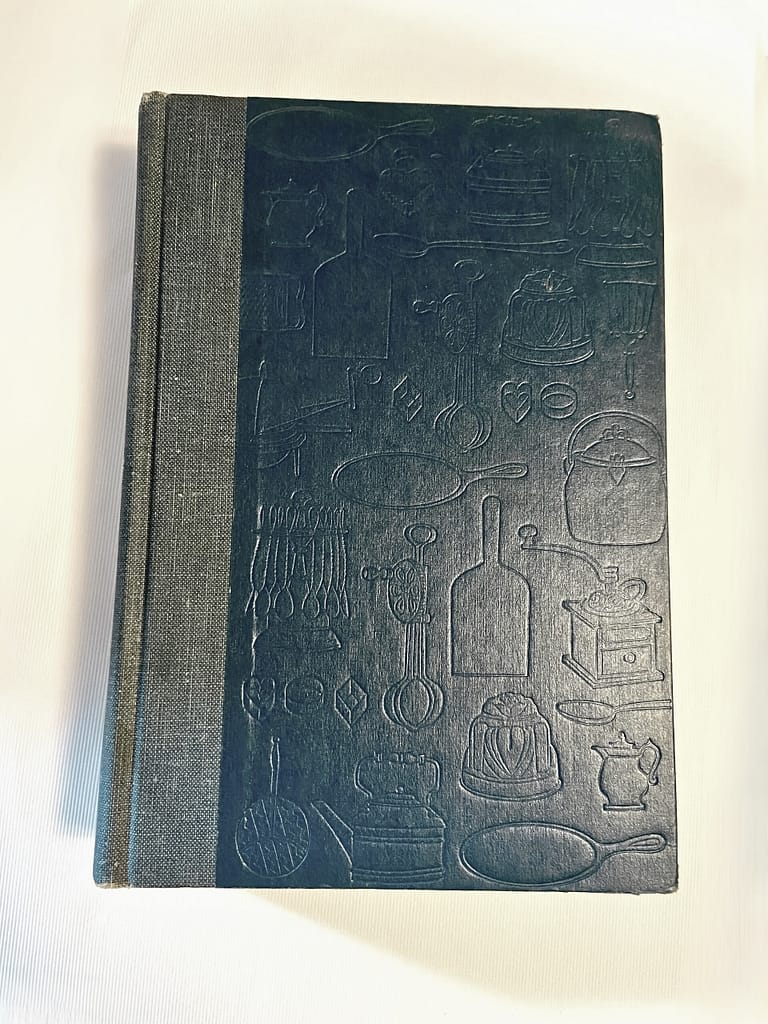
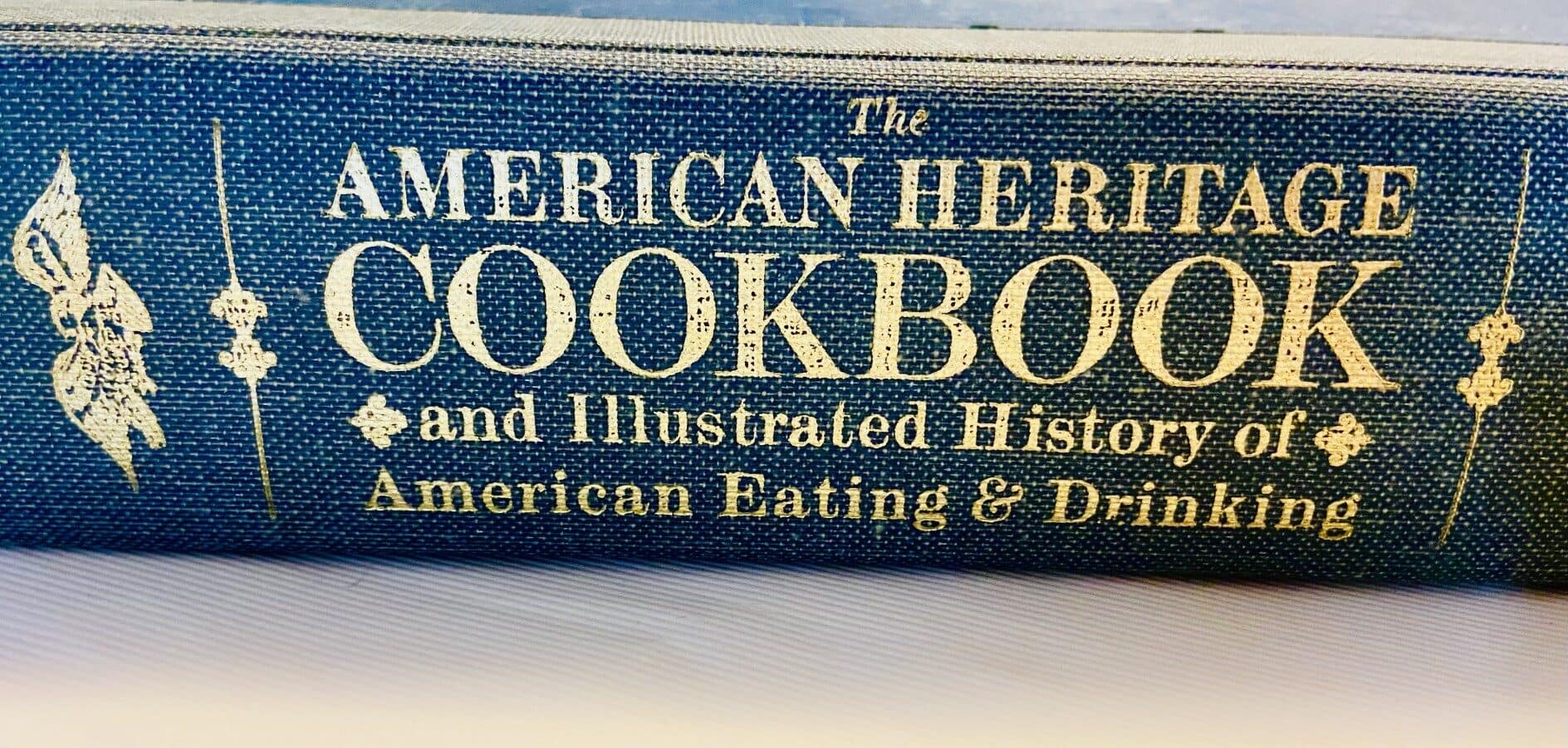
The book is The American Heritage Cookbook and Illustrated History of American Eating & Drinking by Helen McCully and other contributors, first published in 1964 by American Heritage Press in New York.
In this post we will use images from the book as selections. These images are used under fair use for educational purposes. We will not show every image or explore every topic in the book that touches on the Revolutionary era. We recommend this book for people interested in this era of history, as it is a well‑researched and valuable reference work, and is available for purchase online.
If readers want to read the book in full, it is available in two forms on ThriftBooks (links here and here) and also available on Amazon.com here.
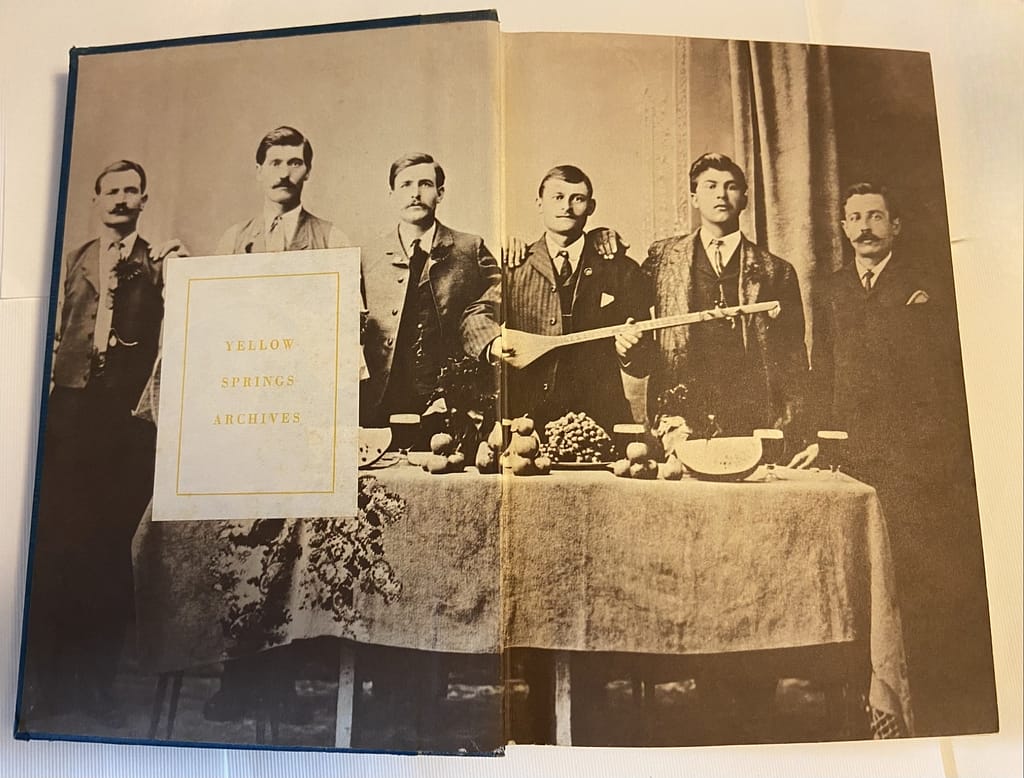
This book offers a wide view of food and culture across early America. It gives us context for how people ate, what foods they valued, and how food shaped social life.
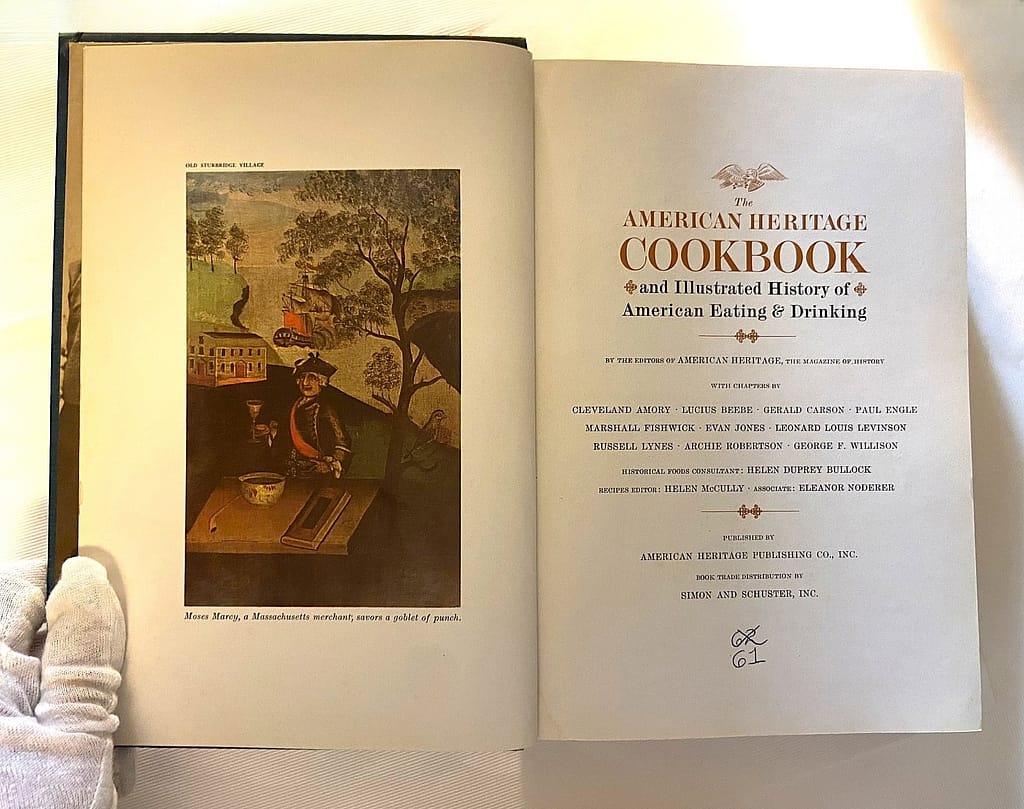
Even though it covers the whole nation and many time periods, the sections that touch on the colonial era help us imagine the world of the people connected to Yellow Springs during the Revolution.
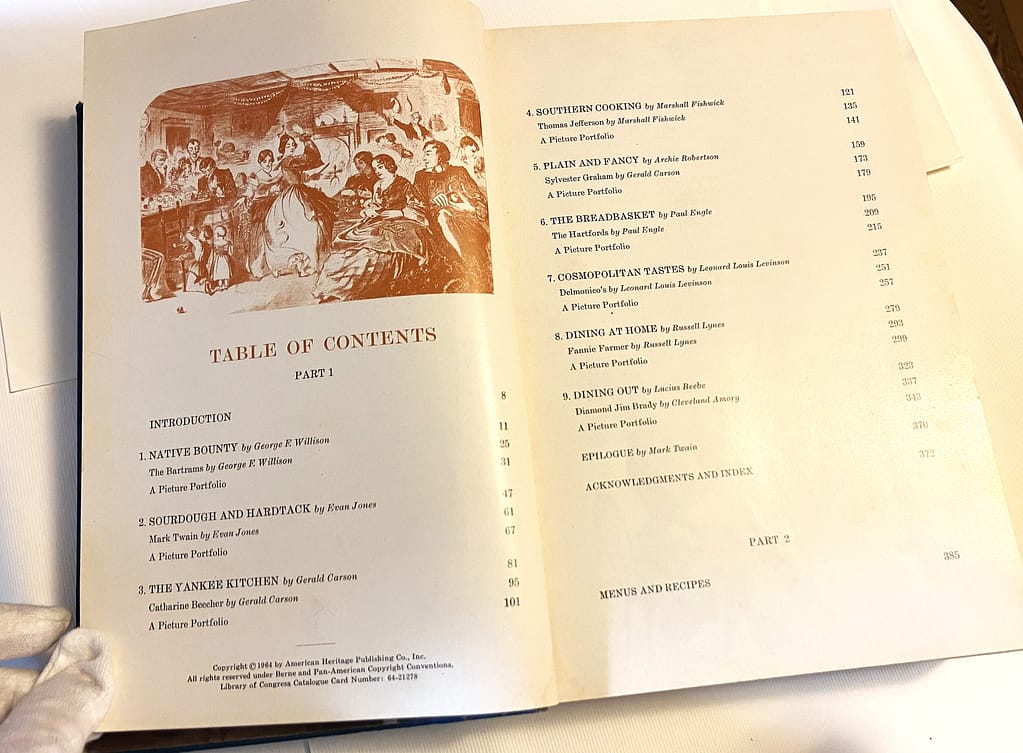
Hosting At Washington Hall
During the colonial era, Pennsylvania was the Keystone State in more than name. Philadelphia was socially, politically, and culturally important. Congress first convened in that city during the Revolution. However, in The American Heritage Cookbook and Illustrated History of American Eating & Drinking the Middle States do not get a segment of their own. The book’s sections show that cuisine in colonial Pennsylvania depended heavily on social class and location.
For the Kennedy family, who owned the Yellow Springs Plantation, this mattered a great deal. They were considered planter elites. Their food, their dining, and their hosting reflected elite planter culture common from Virginia to New Jersey. When we imagine life for Mrs. Sarah Kennedy as she welcomed delegates and military leaders at Washington Hall, we can turn to parts of the book written by Marshall Fishwick.
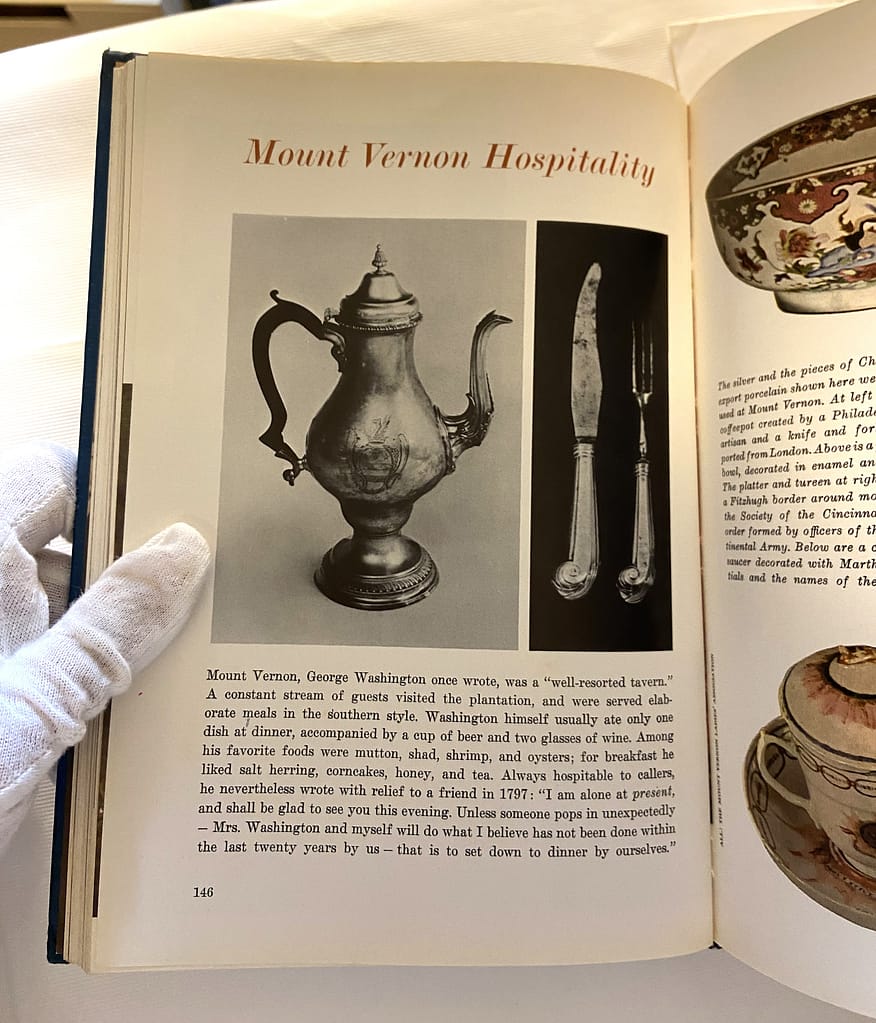
Fishwick’s section on hosting at Mount Vernon gives clues.
The book amusingly notes that Mount Vernon, George Washington’s plantation and primary residence, was originally a tavern. Yellow Springs boasted much of the same at that time. A tavern on the property, run for the Kennedy family by Samuel Culbertson, served neighbors and travelers alike.
During the Battle of the Clouds on September 16, 1777, the Yellow Springs tavern became General George Washington’s headquarters while his men camped in nearby fields. Perhaps he would have even felt a little bit reminded of home during his short stay here.
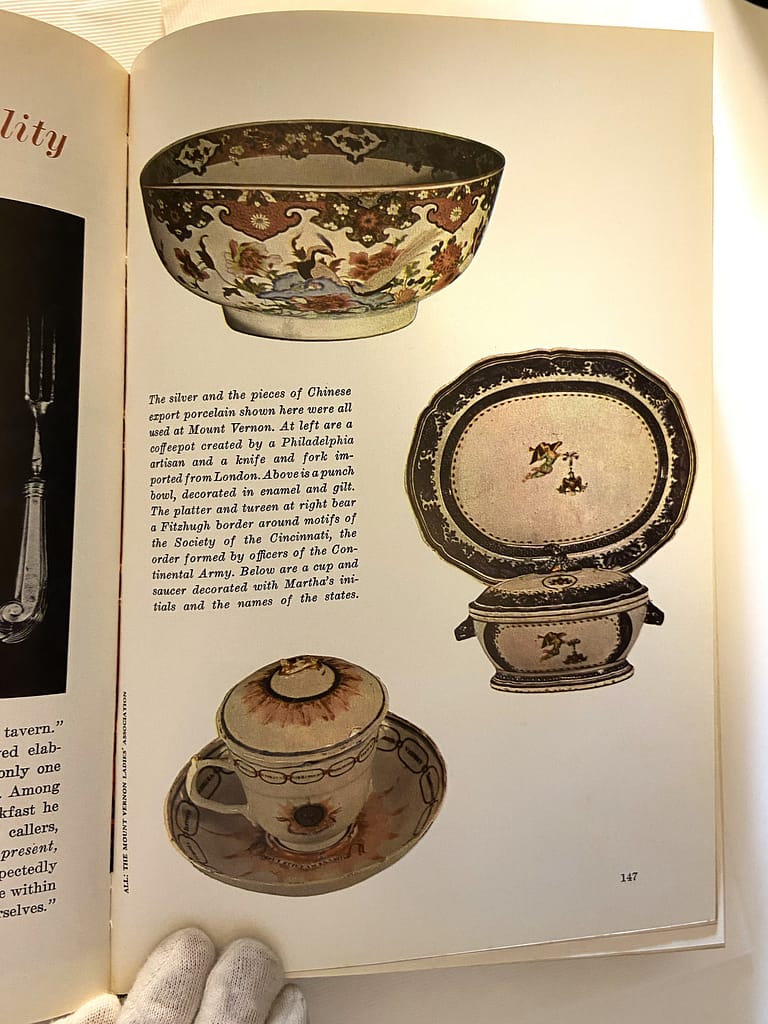
Wait- Does that Teacup Handle Look Familiar?
Great eye! The teacup shown in this image from the book belonged to Martha Washington. It would have been decorated with her initials and the names of the former colonies, which are now states.
The American Heritage Cookbook does not say the teacup is made of tin-glazed earthenware, but we can make an educated guess about what it probably was.
While exploring the rediscovered springs on the hill above where the tavern and Washington Hall stood during the Revolutionary Era, we found pieces of pottery that could be reconstructed into a teacup from the same time period.
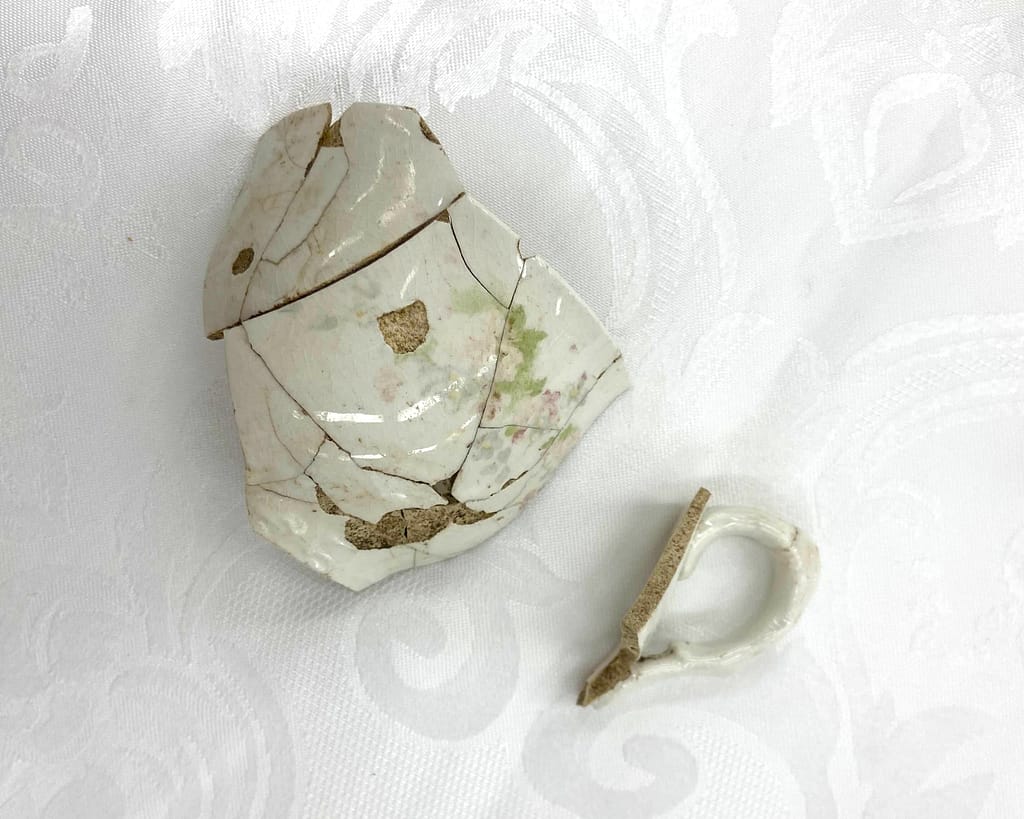
While teacups like these would have been hand-crafted and hand-painted, giving them a range of consistency with the intricacies of their structure, the style of the handle in particular is extremely similar.
Even more interestingly, the site where these fragments were discovered, the limewater springs, appears in earlier records (including a PAFA-period report) as being connected to the “Old Building.” Based on our research, several now-lost structures once stood up on the hill behind the modern village of Yellow Springs. One of these, most likely the “Old Building” mentioned in the report, was probably the Main House or Manor House on the property.
In other words, while George Washington stayed at the Yellow Springs Tavern during the Battle of the Clouds, the Kennedy family estate was likely just up the hill from him.
We can never be entirely certain that this teacup belonged to Sarah Kennedy personally. Still, the stylistic dating of the pottery fragments and Martha Washington’s contemporary example- from around 1790 at the latest– show that teacups like these were very popular among planter-class married women in the American colonies and the early United States. After George Washington became the first president, Martha Washington became a cultural icon. But even before that, she was one of the wealthiest women in the colonies, and her material tastes would have been impeccable.
Although our teacup is in pieces and probably would not have been as fine or richly detailed as the one shown in the American Heritage Cookbook, the fact that people living at Yellow Springs during the Revolutionary Era could afford such a teacup shows their considerable status. This evidence supports historic records identifying the Kennedy family as part of Chester County’s small planter-class elite.
You can read more about our fragmented teacup here, and more about the lime springs rediscovery here!
The Menu
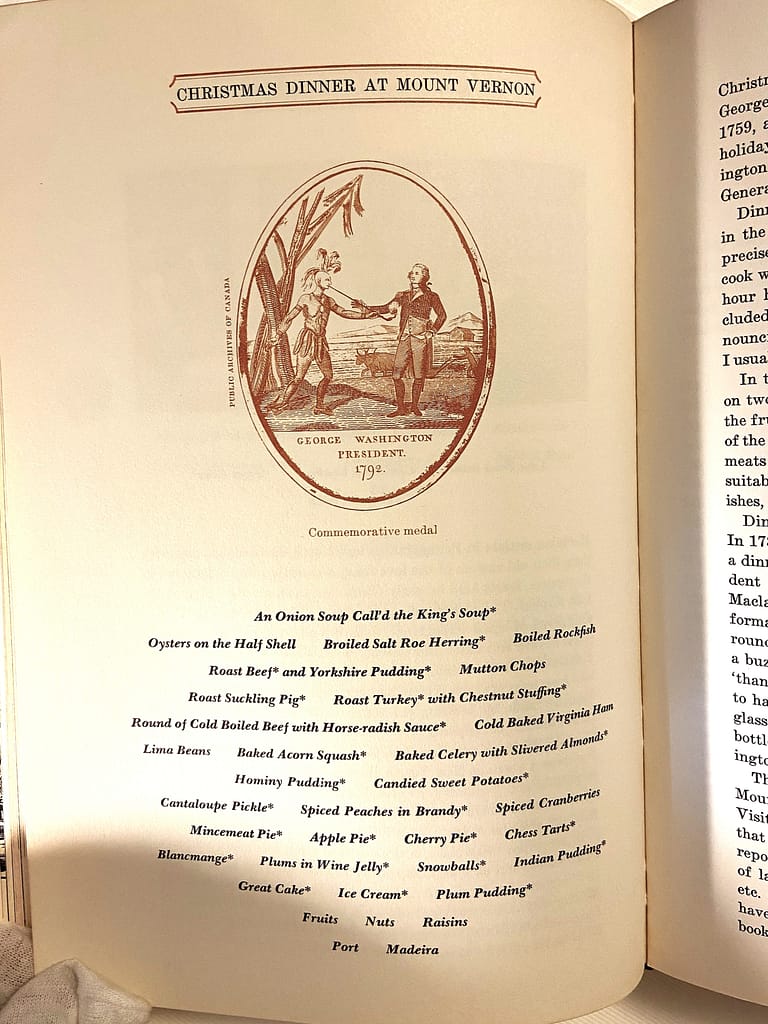
This instance of high society hosting comes from later in the 18th century than the first year of Washington Hall, yet many social expectations stayed the same. Pictured above, the extensive menu for the Washington family’s Christmas feast in 1792 reflects the kind of elaborate dining elite families aspired to reach.
The Washingtons, of course, were significantly wealthier and had a lot more resources than the Kennedys (especially by the 1790s), yet the kind of feast described above set the standard for elite planter hospitality.
For readers interested in learning more about Dr. Samuel Kennedy and Sarah Kennedy, you can read more here!
Supper in the Countryside
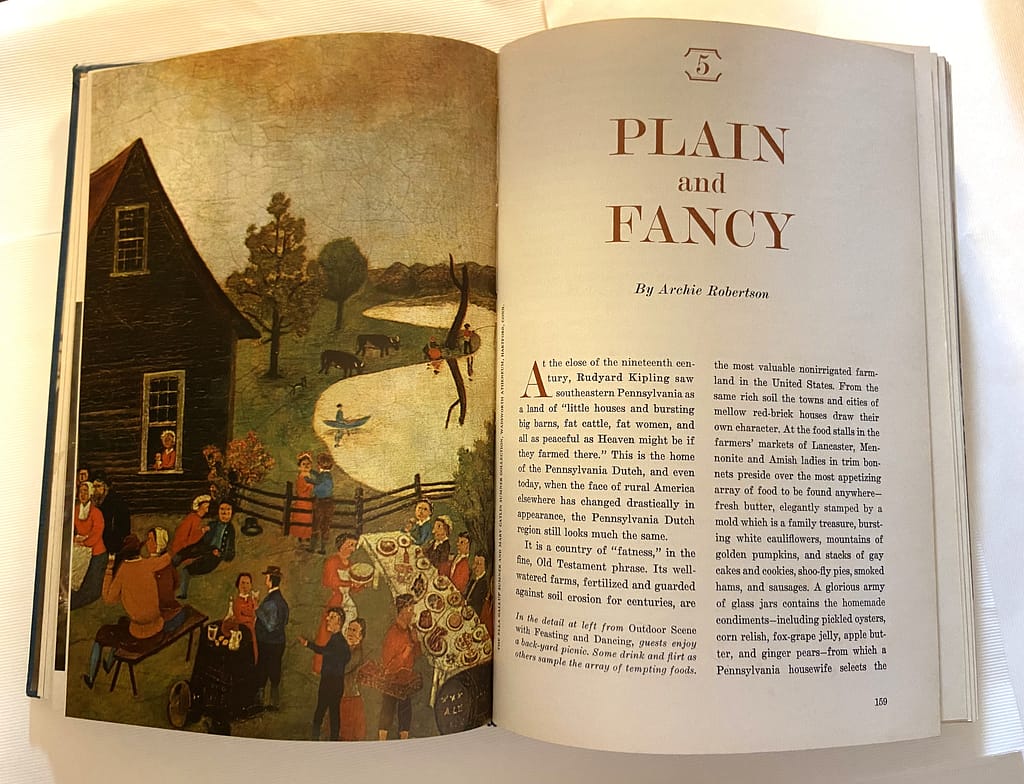
Much of the information in this section comes from Archie Robertson’s piece in The American Heritage Cookbook and Illustrated History of American Eating & Drinking. His focus is on the food traditions of the “Plain People,” especially the Pennsylvania Dutch.
At the time, these groups included Moravians who came mainly from regions of what are now southern Germany, such as Saxony and Moravia. They settled into rural farming communities and developed distinct food ways tied to agriculture.

Many readers familiar with Yellow Springs, Washington Hall, or local Revolutionary heroine Abigail Hartman‑Rice might expect that Moravians and the German‑speaking farmers nearby shared much in common.
However, there is an important distinction here- Abigail Hartman‑Rice’s family was Lutheran. Her mother came from the Bavaria region and her father from Rheinland‑Pfalz, where Abigail herself was born. Lutherans from Rheinland‑Pfalz were culturally distinct from the Moravians in religious practice, but both groups shared many similarities in daily life, especially farming and food.
However, because both these subsets of German‑immigrant culture farmed for a living, their food culture, foodways, and food production techniques overlapped.
They raised crops, preserved meats, and baked breads that reflected old‑world traditions adapted to American ingredients. Their cooking favored hearty, simple, and filling fare suited to long workdays.
Interestingly, the Plain People have connections to both Dr. Bodo Otto Sr. and Dr. Samuel Kennedy, who led Washington Hall during its operation. After Dr. Bodo Otto arrived in the colonies and following a smallpox outbreak in Philadelphia, he and his family moved to Germantown in 1756. In Germantown, Otto worked with Dr. Christopher Witt, a Pietist physician influenced by the religious community of Johannes Kelpius’ (who lived in a cave) followers near Philadelphia. Pietism shaped both the Plain People and some Lutheran communities through its emphasis on simple living, work, and shared meals.
Though Otto was not a Plain person himself- though his father did have ancestry in the Saxon region of Germany as well- living in Germantown would have made for a notable amount of cultural diffusion with them- likely including with regards to food.
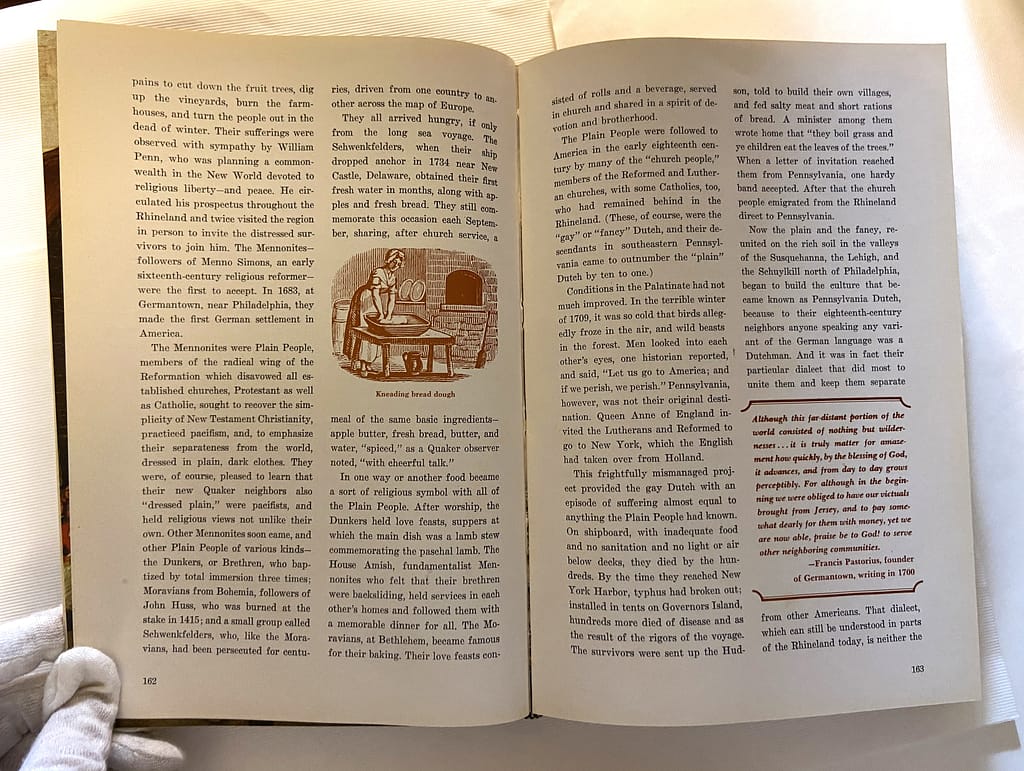
Before overseeing Washington Hall as it was built on his property, Dr. Samuel Kennedy worked in the flying hospitals at Lititz, Pennsylvania.
Lititz was a major Moravian settlement around 1777, known for its communal agriculture, craft workshops, and shared kitchens.
While the German‑speaking farming community near Yellow Springs remained mainly Lutheran, their donation of food, supplies, and care helped keep Washington Hall operating, just as much as the surgeons and physicians did.
Judging by the descriptions in The American Heritage Cookbook and Illustrated History of American Eating & Drinking, some of the food that was brought to Washington Hall would have rather tasty, especially early on in 1777-1778. By 1780, however, the sick at Washington Hall would have been grateful for nearly any food.
Interested in the story of the first winter at Washington Hall? Check out our Living History Exhibition: Revolutionary Medicine to learn more! Details can be found here.
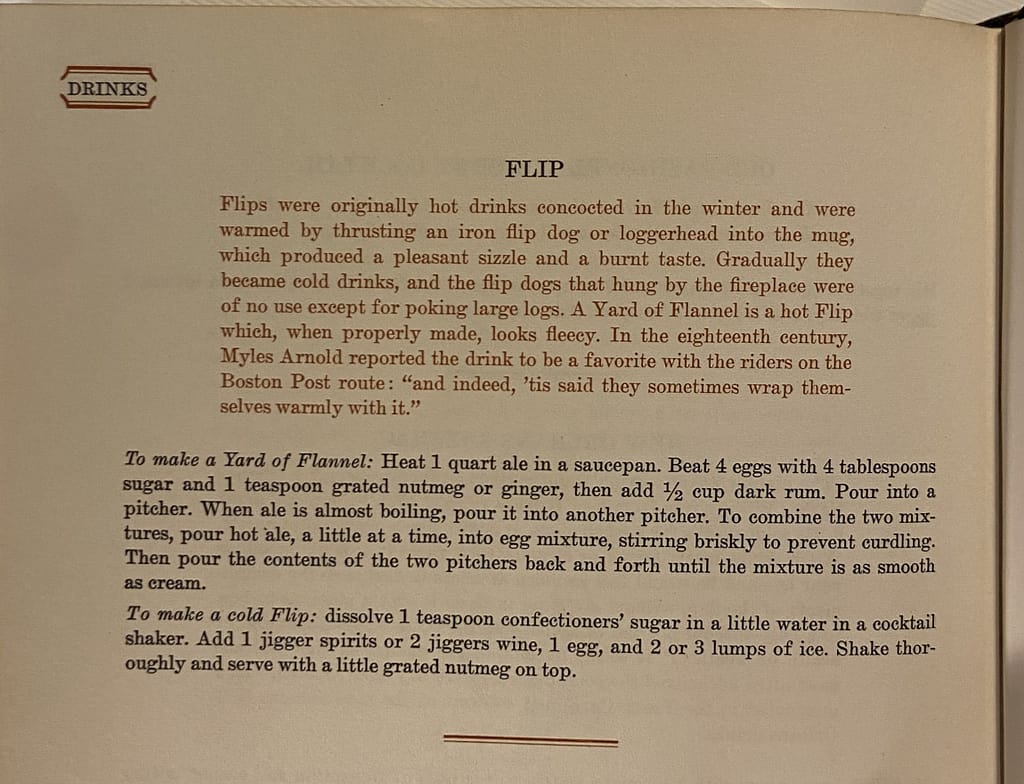
Long-standing local oral history tells us a short story about Abigail Hartman‑Rice from this era too. When General Washington passed through her farm on his way to Yellow Springs, she offered him a drink called flip. A recipe for that beverage appears below.
Interested in learning more about the biographies of Abigail Hartman-Rice, Dr. Bodo Otto, Bodo Otto Jr. and many other key figures from our past? Check out or biographies hub, which is updating continuously!
Pennsylvania Taverns and Mush
This section again draws heavily from Pennsylvania Dutch traditions as found in The American Heritage Cookbook and Illustrated History of American Eating & Drinking.
However, more applicably to us at Yellow Springs, this section of Archie Robertson’s piece discusses tavern life and the kind of food taverns offered patrons in the late 18th century. It also paints us a picture of people of a more middling class than the Kennedys, but that were not farmers tied to the land like the Hench, Rice, or Hallman families that neighbored Yellow Springs.
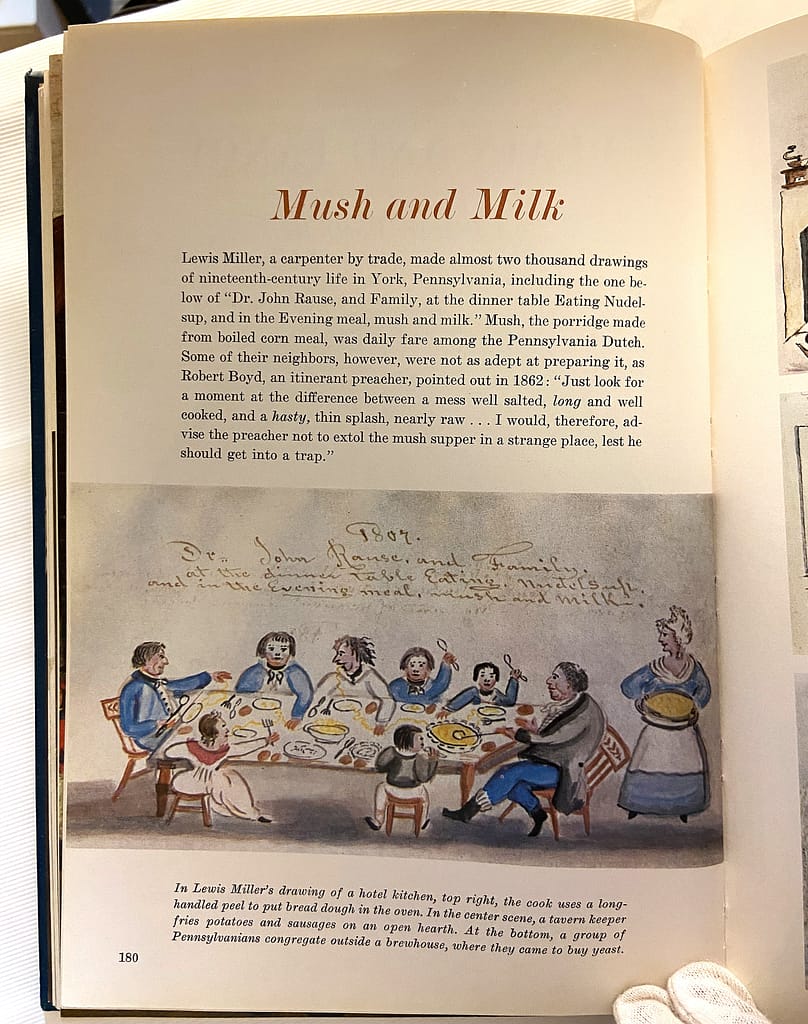
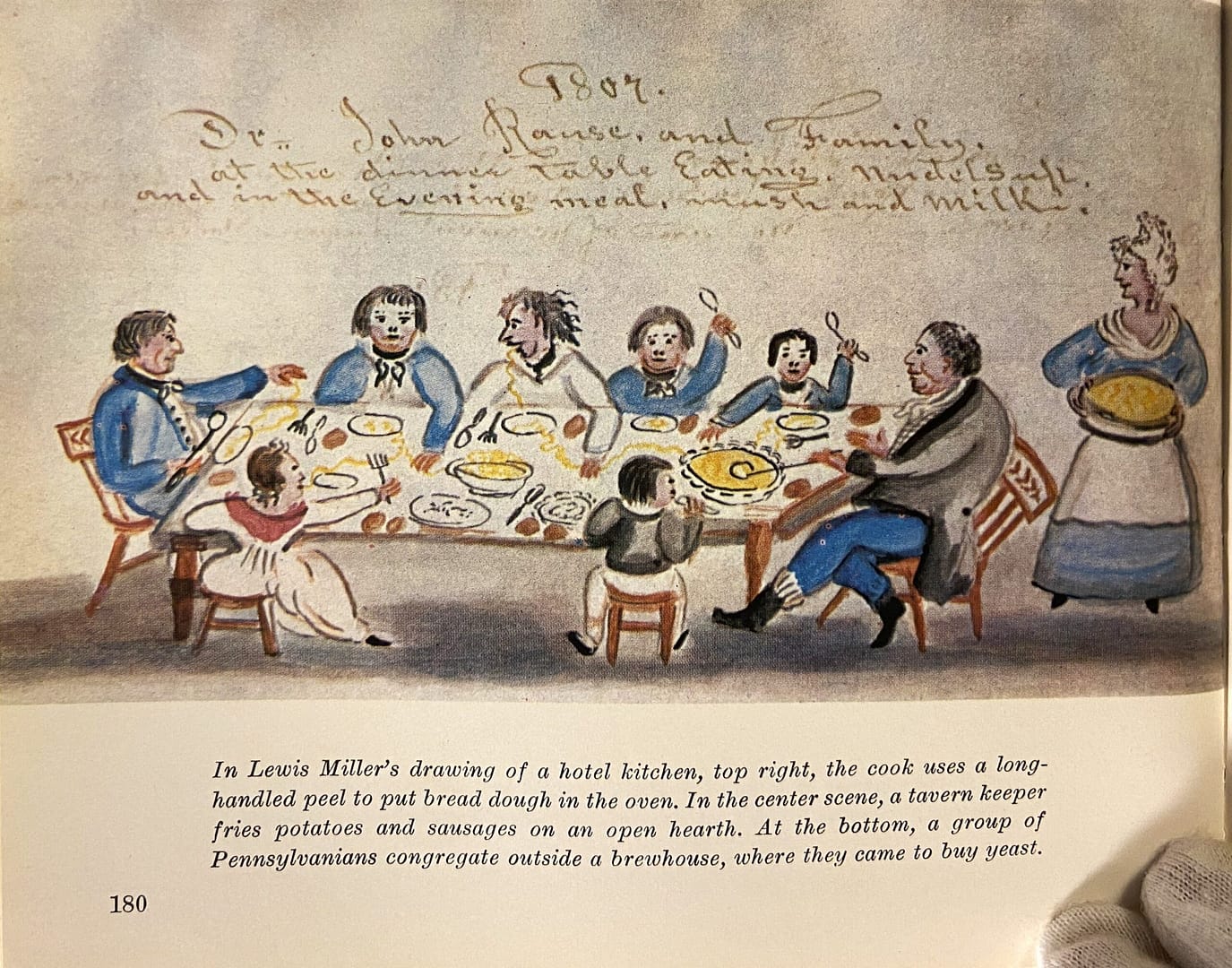
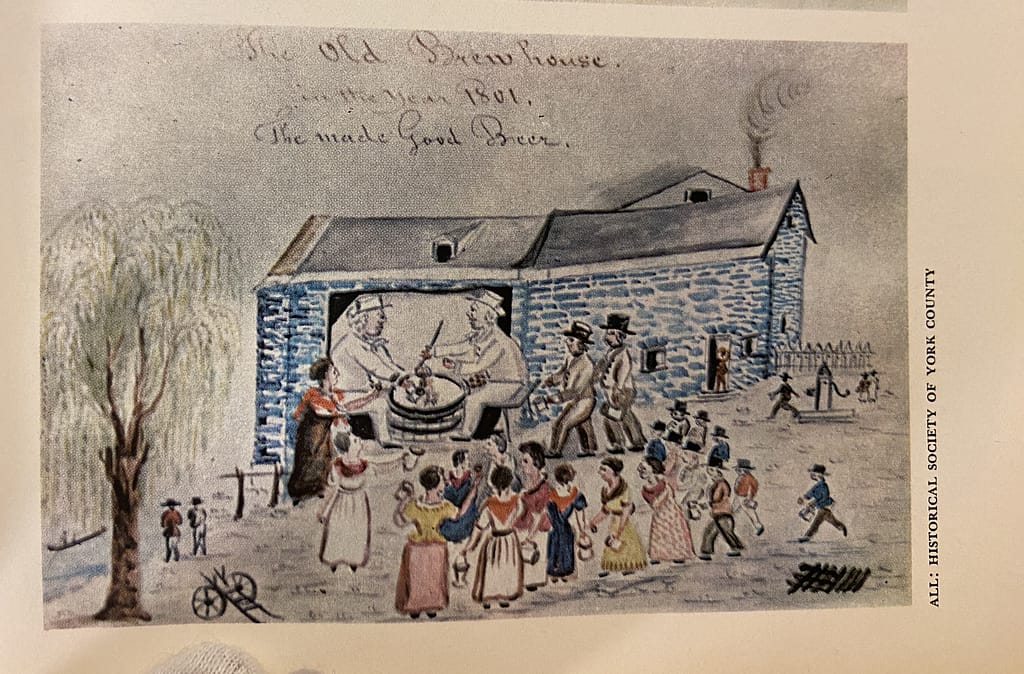
The images we include from the end of the 1790s and early 1800s show tavern life in places like York, Pennsylvania. Though this area lies outside Chester County, these scenes help us imagine what tavern food might have looked like for travelers passing through southeastern Pennsylvania.
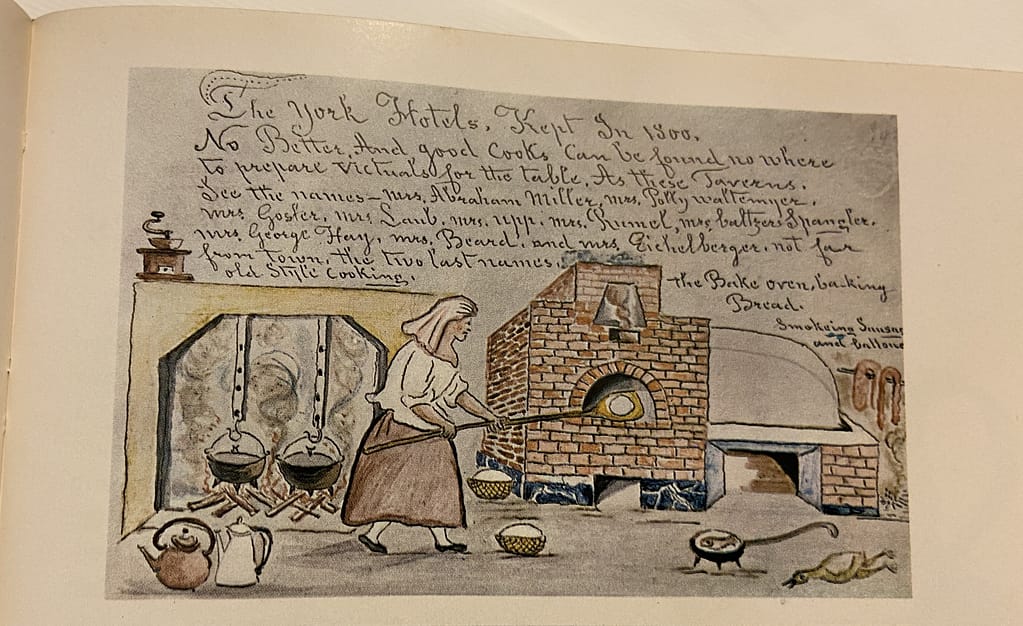
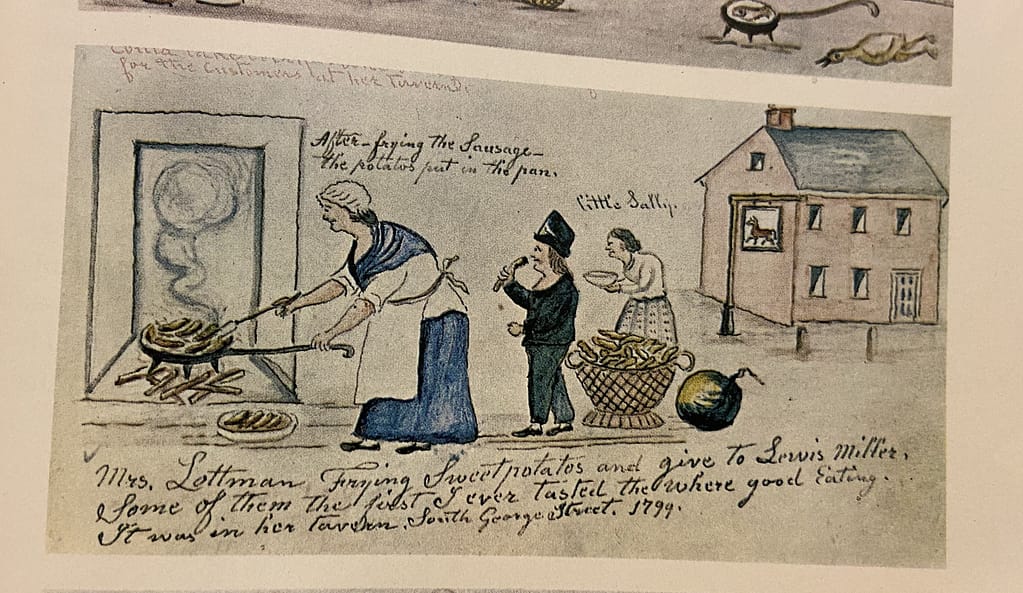
In these images, the nature of tavern and hotel-keeping, especially in regards to food in these communities, comes to life for us. Sausages and breads seem particularly popular.
One image shows a long line of people coming from all over Pennsylvania to get good Pennsylvania‑Dutch beer.
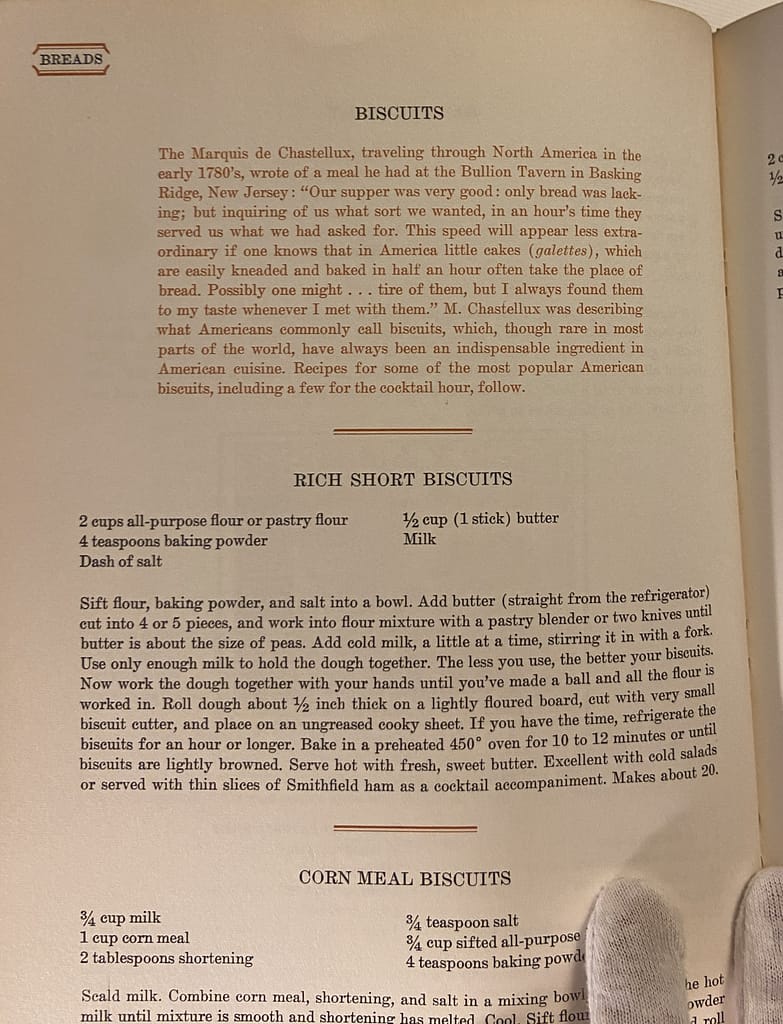
The book also includes a recipe for biscuits. Biscuits were a novel and distinctly “American” item in taverns by the latter half of the 18th century. The text specifically references New Jersey, which shared cultural and culinary ties with Pennsylvania. Further than that, Dr. Otto and his sons spent time in New Jersey, and it was where Dr. Bodo Otto Jr. established his household just before the outbreak of the Revolutionary War.
The recipe below has them referred to as “little cakes” by the Marquis de Chastellux as he traveled through North America.
At Valley Forge
Food scarcity at Valley Forge was severe. In a letter from one of Dr. Bodo Otto’s sons, most likely Bodo Otto Jr., he described how there was nothing to eat but bacon and smoke. He lamented how much he missed his wife and her cooking.
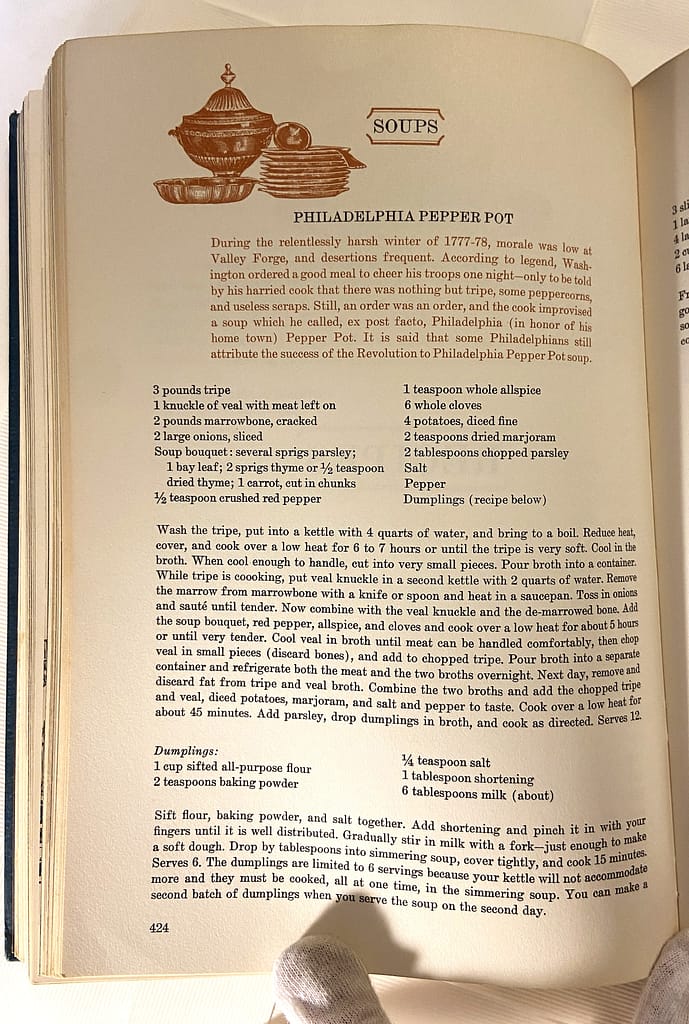
One dish recorded in oral history as a rare warm meal for soldiers at Valley Forge is Philadelphia Pepper Pot.
This hearty stew appears in The American Heritage Cookbook and Illustrated History of American Eating & Drinking and likely offered some comfort to men weakened by hunger and cold. Many of the sick and injured soldiers from Valley Forge would soon be taken to Washington Hall, where care and food became even more critical.
Stories like these help us understand the human side of war. Food was not just nourishment. It mattered for morale, health, and hope in the darkest moments of the struggle.
To Us, Today
When we reconstruct and remember the past, we often forget that people then were real, living humans who experienced life much as we do. They felt hunger, hope, pride, and comfort.
Food, for all of human history, has been more than just a source of nourishment. Throughout the centuries, it has shaped memories, celebrations, sorrows, and routines.
Imagining what food was eaten at Washington Hall during its first year reminds us of the people behind the history. What filled pots and plates tells us about work, family, class, and culture.
Thinking about meals helps us see the Doctors Otto, the Kennedys, the soldiers, neighbors, nurses, apothecaries, Abigail Hartman‑Rice, and countless unnamed people who would have eaten food similar to what is described in this book as individuals with everyday lives.
Food connects us across centuries. When we imagine the smells, tastes, and scenes of a colonial kitchen, we make history come alive. In this way, the past becomes just a little more real to us.
🍳🍽️🍲
Learn more about the history of Yellow Springs
You can read the more in-depth version of this post here
Follow us on Substack, Instagram, and Facebook
🍳🍽️🍲
Copyright Disclaimer: Under Section 107 of the Copyright Act 1976, allowance is made for ‘fair use’ for purposes such as criticism, comment, news reporting, teaching, scholarship, and research. All materials sourced from The American Heritage Cookbook (1964) are referenced for the purposes of education for reference purposes.