
Throwback Thursday: Tavern Troubles (Part VI)
- Setting the Scene: Searching for Yellow Springs' First Tavern Keeper
- Early Taverns in Chester County: What the Records Reveal
- A Few More Wills: Connecting the Early Families
- The Changing Tavern Landscape at Yellow Springs
- The Missing Records: What Happened After 1728?
- Indigenous Settlement and the Colonial History of Yellow Springs
- The Pritchard Family and the Search for the First Tavern Keeper
- What We Know So Far
- Featured History Event at Historic Yellow Springs
Who Was the First Tavern Keeper at Yellow Springs? New Discoveries in Chester County Records

Setting the Scene: Searching for Yellow Springs’ First Tavern Keeper
In our last installment, we took a brief break from the historical records for Halloween. We examined a cassette recording of Muriel Ulmer, who claimed to communicate with spirits at Yellow Springs. During her investigation, Ulmer described a young servant who spoke about working in the tavern under a cruel keeper.
We cannot identify this woman or confirm that she ever lived at Yellow Springs. However, her account raised an interesting question. Who were the people responsible for running the original tavern, and who worked inside it?
This week, we return to the historical record. Our search has led us through hundreds of pages of Chester County tavern petitions. We have also examined wills, newspaper advertisements, road records, tax accounts, and Quaker meeting records.
These documents help us place early tavern applicants within their communities. Sometimes, they also reveal that a promising candidate was operating somewhere else entirely.
In this installment, we investigate four names from the early 1720s: Richard Woodworth, Abel Pearson, John Rice, and Robert Wilkins. Each led us to unexpected discoveries about the development of early colonial Chester County.
Richard Woodworth: Finding a Tavern Along Concord Road
Our first candidate, Richard Woodworth, appears in the Chester County tavern petition index under the year 1721. His application was approved, but the record does not identify his township or the name of his tavern.

The original application provides a few additional clues. Richard Marsden, whose surname may also be written as Meersden, appears to have been involved in the proposed business. However, Woodworth is listed first, suggesting that he was considered the primary tavern keeper.
Two other men, Robert Boarson or Bearson and Edward Healy, signed in support. Although we could not identify Healy, we found a possible connection between Boarson and a man named Robert Benson.
Benson owned land in what is now Uwchlan Township. Tax records place him there from 1718 onward, and he remained until selling his property in 1742. This initially suggested a possible connection to the area around Yellow Springs.
However, another historical record provided a much stronger lead.
A road petition from 1718 describes a route beginning at Thomas Moore’s Mill. It connected with an existing road that ran from Richard Woodward’s tavern toward Concord.
Thomas Moore’s mill was built in 1716 along the east branch of the Brandywine Creek. It became an early settlement center for what would eventually become Downingtown. The road connected Moore’s mill with Nicholas Pyle’s mill in Concord Township.
Following this route led us to a historic building known as The Beehive.

The Library of Congress identifies this building as the Richard Woodward House. Its construction dates to sometime between 1690 and 1700. The location and historical road descriptions match the tavern mentioned in the 1718 record.
We can therefore identify Woodward’s tavern as a building along Concord Road in present-day Thornbury Township, Delaware County.
This discovery allows us to remove Richard Woodworth from our list. Although the connection between Robert Boarson and Robert Benson remains uncertain, the tavern itself was not at Yellow Springs.
Abel Pearson: An Unexpected Name in the Records
Our next candidate appeared in the tavern petition index as Pearson Abele. When we located the original application, however, we discovered something unexpected.
There was no Pearson Abele. The applicant was actually named Abel Pearson.
The unusual name and difficult handwriting likely caused the original index to reverse his first and last names. This explains why our earlier searches had produced so few useful results.

Although we identified the correct name, we still needed to determine where Pearson lived. His family’s records offered our first substantial clues.
A will belonging to his father, Thomas Pearson, identifies him as a resident of Marple Township. Thomas left only five shillings to each of his four sons. He gave much more of his estate to his friends Samuel Levis and Bartholomew Coppock.
All three men appear in Chester County Quaker meeting records. These same records document Abel Pearson’s birth in 1695.
The Pearson family therefore appears to have belonged to the local Quaker community. Samuel Levis was also an influential early Quaker farmer. His house, built around 1696, still stands in present-day Delaware County as the Levis House.


We also found that Abel married a woman named Mary in 1718. She died in Bucks County in 1755. Later tax records place Abel in Philadelphia’s Mulberry Ward in 1769.
However, the most useful discovery came from a newspaper advertisement.
On March 23, 1721, the American Weekly Mercury published an advertisement from Abel Pearson. He reported that his servant, John Renolds, had run away from his property in Derby, Chester County.

Derby is the historical name associated with present-day Darby Township in Delaware County. This places Pearson outside the Yellow Springs area just one year before his tavern application.
Unless he relocated between March 1721 and August 1722, Pearson was unlikely to have been operating a tavern here. We can therefore remove him from our list of candidates.
John Rice: Five Petitions, Two Generations, and a Missing Connection
John Rice presented a more complicated problem. We found five tavern petition entries under his name between 1724 and 1725.
At first, it was unclear whether these records referred to one man or two different men. Examining the handwriting, signatures, and supporting witnesses helped us begin to untangle the story.
The first application, dated November 1724, contains an unusual explanation. Rice tells the court that he and his wife are both “ancient” and can no longer support themselves through physical labor.
They had already been receiving travelers at their property. However, without a tavern license, they could not legally provide the services those travelers needed. A license would allow them to continue this work and earn a living.
The application does not appear to have been signed by Rice himself. Instead, the clerk seems to have written his name on his behalf.
Several men supported the application, including Joseph Richards, Thomas Giffing, Joseph Powell, John Powell, Richard Marsden, Joseph Bond, and John Wade.

A second application from November 1724 reveals more about the arrangement. This time, John Wade appears alongside Rice as a co-petitioner.

Rice also appears to sign his own name. His handwriting differs from the clerk’s writing in the first application, and the same signature appears in later records.
Wade’s signature is especially interesting. He appears to have written the letter W and added a distinctive identifying mark. Someone else then completed the surrounding letters of his name.
This was a common practice among people who could not write their full names. Instead, they used personal marks, symbols, or initials to identify themselves.
The mark is not an attempt to write another letter. It appears to be Wade’s own identifying symbol. A 2016 resource from the Northumberland Archives provides useful examples of this practice.

The remaining applications from 1725 help confirm that these records concern the same tavern. Rice’s handwriting appears consistently in the later petitions, as does Wade’s identifying mark.

The fifth application provides particularly strong evidence. Rice’s signature matches his earlier handwriting, while Wade’s mark appears again.
Together, these documents establish that all five applications refer to the same tavern operation.
However, another name connects this story to our earlier research.
Richard Marsden, who supported Rice’s application in 1724, had also appeared on Richard Woodworth’s tavern petition in 1721. In both cases, he seems to have played a role similar to a modern business partner or co-operator.
Marsden may have been a personal friend of Rice’s. Alternatively, his experience operating a tavern with Woodworth may have made him an important person to have supporting a new application.

The next major discovery came from a will recorded in Chester County between 1726 and 1727.
The Rice Family: A Father and Son in the Tavern Business
John Rice’s will provides information that the tavern petitions alone could not. He names his wife as Catherine Rice and identifies two brothers, Edward and Henry, who were living in Ireland.
He does not mention any surviving children. Instead, he names two friends, Alexander Hunter and William Weldon, as witnesses to his final wishes.
The will identifies Rice as a yeoman rather than a tavern keeper. It also describes him as a resident of Chester.
The document was dated February 9, 1726, and approved on March 28, 1727. This timing corresponds with a burial record for a John Rice at Old St. Paul’s and Swedish Burial Ground in Chester.
However, the online burial record gives his birth year as 1693. That would make him only in his thirties when he died. This does not fit the description of an elderly man and his wife in the 1724 petition.
The grave marker is now badly weathered. Even an edited photograph provides little help in confirming the inscription.


We therefore turned to Quaker meeting records to investigate the possibility of two men named John Rice.
Those records connect a John Rice to the Richland Quaker Meeting House, now located in Quakertown, Bucks County. Further genealogical research suggests that this man was the son of another John Rice.

The older John Rice was married to Mary. The younger John Rice was married to Catherine. This distinction helps explain the different signatures and the apparent age discrepancy.
Our current interpretation is that the older Rice submitted the original 1724 petition with John Wade. He likely died shortly afterward. His son then continued operating the tavern with Wade.
The younger Rice appears to have died in 1726, leaving no known descendants. His brothers remained in Ireland.
The family may have belonged to a Welsh-English Quaker community that migrated into Ireland during the 1650s and 1660s. They appear to have maintained connections with influential Quaker families in colonial Chester County.
We also considered a possible connection to Abigail Hartman-Rice and her husband Zachariah, who lived around Yellow Springs during the Revolutionary War. However, their German heritage and Lutheran faith rule out the proposed family connection.
The evidence also places the Rice tavern somewhere in present-day Delaware County. Richard Marsden’s earlier association with Woodworth and the younger Rice’s identification as a Chester resident both support this conclusion.
John Rice can therefore be removed from our list of potential Yellow Springs tavern keepers.
Robert Wilkins: Following the Trail to Lancaster County

Our fourth candidate, Robert Wilkins, appears in the Chester County tavern petitions in 1725. Unfortunately, his application provides very little information.
There is no tavern name or useful witness information to help identify his location. We therefore turned to an older history of Chester County, published by John Smith Futhey and Gilbert Cope in 1881.
Their History of Chester County, Pennsylvania identifies a Robert Wilkins as an English inhabitant of Conestoga Township in 1718.
Today, Conestoga is part of Lancaster County. However, it remained within Chester County until Lancaster County was established in 1729. This explains why Wilkins’s application appeared in the Chester County records.

Further research led us to a 2024 study by William Robert Sipe for Elizabethtown College. The report examines early colonial residences and the development of the Marietta area.
According to Sipe, Robert Wilkins was a Welsh fur trader born around 1672 in Brecon, Wales. He settled near the Conestoga Creek before marrying Elizabeth Ross in 1702.
By 1718, Wilkins had claimed a 200-acre property along the Susquehanna River. He eventually sold this land in 1727 to Reverend James Anderson, an important figure in the founding of Marietta.
This discovery led to another interesting piece of regional history.
The Galbraith Ordinary: An Early Tavern Near Marietta
Research into Wilkins’s property also brought us to the Galbraith Ordinary. This may have been the oldest known tavern-type establishment in the Marietta area.
The building is believed to have been constructed between 1718 and 1725. In 2026, Dr. Tim Trussell and archaeology students from Millersville University uncovered its foundation during an archaeological excavation.
The site had previously been thought to be an ordinary pasture. Instead, the excavation revealed an early structure and numerous archaeological artifacts.
Dr. Trussell identified the building as the Galbraith Ordinary, established by John Galbraith, a settler from Northern Ireland. Historical records show that Galbraith had petitioned the Chester County Court for an ordinary license as early as 1720.
This means his tavern may have been operating before Wilkins applied for his own license. That possibility depends on whether the two men operated separate establishments.

One detail caught our attention. John Galbraith does not appear in Futhey and Cope’s 1881 list of English inhabitants in the region.
Dr. Trussell identified Galbraith as a Northern Irish settler. He likely belonged to the Ulster-Scots community or another group of Anglo-Welsh Protestants associated with settlement in Ireland.
His absence from the 1881 list may reflect incomplete historical information. It could also be an oversight by the original authors.
Regardless, Wilkins’s documented presence in the Marietta area places him too far from Yellow Springs to be our missing tavern keeper. We can now remove him from the list as well.
Early Taverns in Chester County: What the Records Reveal
Although none of these four men appears to have operated the Yellow Springs Tavern, their stories reveal an interesting pattern.
The earliest recorded taverns in colonial Chester County were concentrated in what is now Delaware County. Ruth Hoskins established her tavern in 1718, followed by Richard Woodworth and Jonathan Ogden in 1721.
Hoskins’s tavern was located in Chester, near the place where William Penn first arrived in his new colony. Woodworth’s establishment stood along Concord Road in Thornbury. Ogden operated the Boar’s Head Inn, also in Chester.
These early tavern keepers were connected to established families and communities. Their local relationships likely helped them secure approval from the colonial government.
A second group appears to have emerged during the following years. This included John Rice, his father, and Abel Pearson.
Their connections to Quaker families are especially notable. Quaker communities played an important role in the early settlement and development of colonial Pennsylvania.
The distinction between these groups helps us understand how taverns developed across the county. It also gives us a better picture of the communities that may have influenced the earliest history of Yellow Springs.
However, the wills of several local residents reveal that these connections were more complicated than they first appeared.
A Few More Wills: Connecting the Early Families
While examining Chester County’s digitized will books from 1714 to 1736, we found several additional references to people already associated with our research.
One will belongs to George James, who identifies Richard Woodsworth as his brother-in-law. James describes Woodsworth as living in Bradford and names him as an executor.
Bradford was a developing agricultural community made up largely of English Quaker families. This provides another possible connection between Woodsworth and the wider Quaker network.

Another will, belonging to Richard Arnold, identifies his daughter Elizabeth as the wife of Richard Pritchard. This is particularly interesting because the Pritchard family appears repeatedly in our research into Yellow Springs.

We also found Samuel Lewis mentioned in the will of David Morris of Marple. The document identifies Lewis as a brother of the deceased, although it is unclear whether this means a biological brother or a religious or social relationship.

We cannot yet confirm whether this is the same Samuel Lewis who became a tavern keeper at Yellow Springs by 1751.
David Morris’s will also mentions a friend named John Rees of Newcastle. Rees is a common regional spelling of Rice, and the name was often recorded in different ways.
Newcastle was an important port of entry for Ulster-Scots and Protestant Anglo-Welsh settlers. It is possible that Morris knew both Samuel Lewis and the older John Rice through their shared community connections.
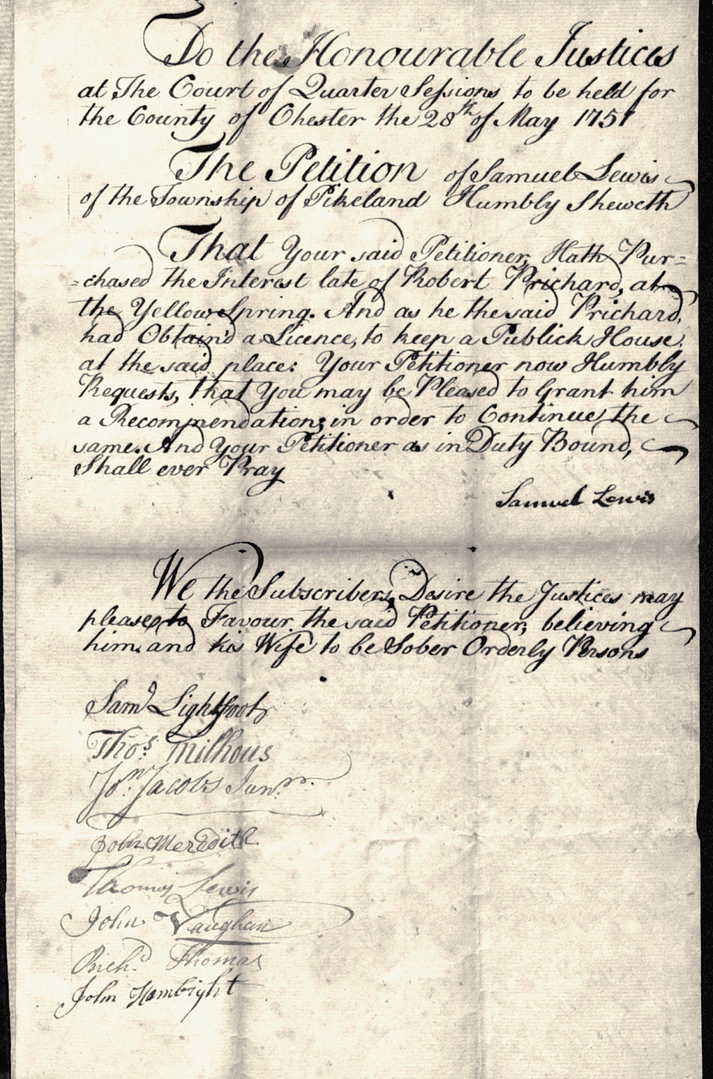
However, we cannot yet establish that these names refer to the same individuals found in the tavern petitions.
Finally, we examined the will of Jonathan Ogden, who operated the Boar’s Head Inn. His will does not mention Samuel Ogden among its heirs.

This raises questions about whether Samuel was his son, another relative, or an unrelated man with the same surname. It is also possible that the two men were estranged.
These records do not solve every mystery. However, they give us more family connections to investigate as we continue tracing the earliest tavern keepers.
The Changing Tavern Landscape at Yellow Springs
The growing list of tavern applicants also helps us reconstruct the history of the Yellow Springs property itself.
By 1750, Robert Pritchard is identified as a tavern keeper at Yellow Springs. His application describes the springs as a destination for people seeking better health. It also mentions travelers using a nearby public road.
Samuel Lewis appears as a confirmed tavern keeper in 1751. Daniel Pritchard follows in 1752 and 1753.
The records then identify Adam Ramsower, also recorded as Ramsour or Rumsour, as a tavern applicant in Pikeland from 1754 through the early 1760s. George David also appears in Vincent Township during this period.
By 1762, James Martin was operating the Yellow Springs Tavern. His application specifically names the establishment.
An advertisement from Martin and Caleb Harry that same year sought to lease the remaining portion of the Yellow Springs Plantation. This suggests that the original tavern was included in the property they retained.

Jonathan Durell appears as the next confirmed tavern keeper in 1763. His newspaper advertisement from November of that year promoted good entertainment at Yellow Springs and noted that the mineral water was in good order.
In 1764, Philadelphia silversmith John Bayly acquired the plantation. He advertised the property for lease and sought a new tavern keeper.
The advertisement describes the buildings in detail. It mentions the original tavern and a nearby log structure. This second building may represent an early version of the structure that eventually became part of today’s Washington Building.
The advertisement also identifies George Maxton as the tenant tavern keeper.

George Maxton continued to appear in the tavern petitions through 1771. His applications repeatedly identify Yellow Springs as his establishment.
In 1772, John Bayly appears again in the records. Around this time, Dr. Samuel Kennedy and Bayly advertised for a tenant at what is believed to have been the Main House.
This suggests that Kennedy may have acquired the entire plantation. Maxton does not appear to have continued as the tavern keeper under the new ownership.
After Kennedy’s death in 1778, his executors advertised the property for new tenants. Samuel Culbertson appears in the tavern records during the 1770s, alongside Zachariah Rice in 1778.
The tavern’s ownership and management continued to change throughout the following decades. Robert Patton appears in the 1790s, followed by members of the Holman family. Margaret Holman appears repeatedly in the early nineteenth-century records.
By the 1840s, Dr. George Lingen was operating the Yellow Springs Hotel. His 1846 advertisement includes an illustration that provides an important visual record of the village.
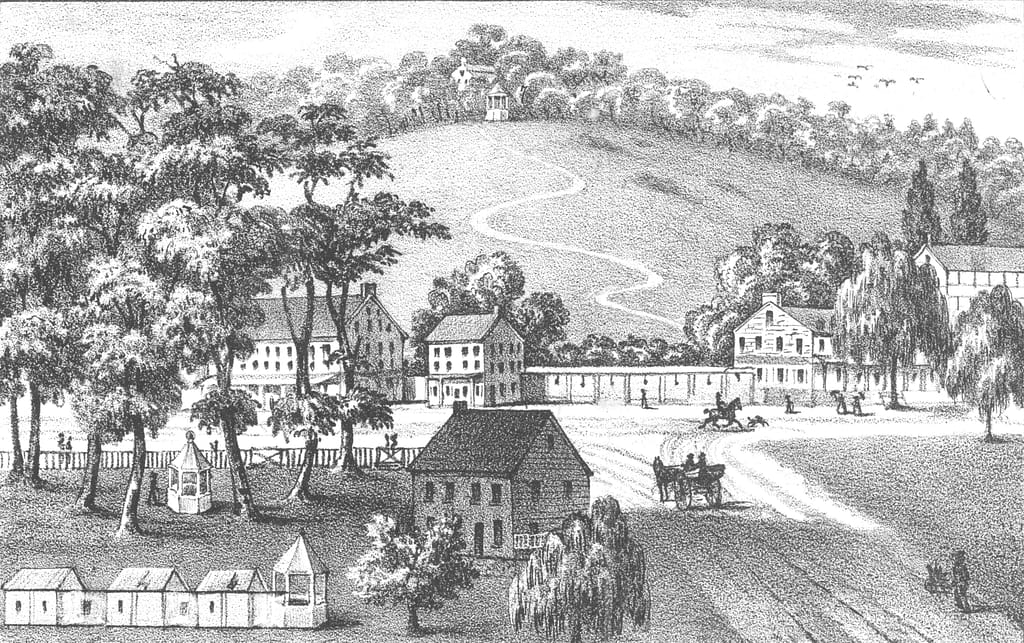
The records continue into the nineteenth century, naming the Neef family, Augustus Snyder, and other operators. By the 1860s, the Yellow Springs Hotel was still appearing in the tavern licensing records.
This long timeline gives us a much clearer picture of the property’s changing management. It also helps us compare the names in the tavern petitions with the buildings and property owners identified in other historical sources.
The Missing Records: What Happened After 1728?
Despite these discoveries, one problem remains. We have been unable to identify a likely tavern keeper at Yellow Springs before 1727.
The springs themselves appeared in newspaper references as early as 1722. Yet the tavern petitions and other surviving records have not given us a confirmed keeper from that period.
There also appears to be a gap in the surviving documentation after April 1728. Interestingly, this corresponds with a period of growing tension between European settlers and Indigenous communities in the region.
An 1872 account by Samuel Whitaker Pennypacker, Annals of Phoenixville and Its Vicinity, describes complaints from influential men in a place called Benbrenor’s Township.
These men reported increasing hostility with their Indigenous neighbors. Among those named was Anthony Halmon, likely a member of the Holman family, which later became deeply connected to the history of Yellow Springs.

The provincial governor, Patrick Gordon, investigated the situation. His account describes meeting with the concerned council near a place called Mahanatawny.


The council had become increasingly worried after hearing about a skirmish between Indigenous people and colonists at Colebrookdale in neighboring New Hanover Township.
We have not yet identified the later name or precise location of Benbrenor’s Township. Gordon’s reference to Mahanatawny also presents a challenge.
European settlers recorded several variations of the Lenape word manataunk. The term referred to a place associated with drinking water or a watering-hole settlement.
Over time, settlers treated these variations as the names of separate Indigenous settlements. Records include spellings such as Manatauna, Manatawny, Mahanatawny, and Manayunk.
This created confusion about which communities historical writers were actually describing.
The Yellow Springs property had been inhabited by the Lenape and their ancestors for at least 3,000 years. It is possible that the settlement surrounding the springs was itself associated with this type of place.
Indigenous Settlement and the Colonial History of Yellow Springs
These discoveries bring us back to an important part of the history of Yellow Springs. European settlement did not begin on an empty landscape.
Indigenous communities had lived throughout this region for thousands of years. The springs, waterways, and surrounding land were already part of an established landscape long before colonial settlers arrived.
As discussed in earlier installments, European settlers often established homesteads near existing Lenape settlements. One example comes from the story of James Anderson and his wife, Elizabeth Jerman Anderson.
According to local historical accounts recorded by Franklin L. Burns, the couple established a settlement near an Indigenous community along Pickering Creek, close to present-day Phoenixville.
Burns also identifies the Andersons as ancestors of several notable Chester County residents. These included Samuel Whitaker Pennypacker, the author of the 1872 history we have been consulting.
This connection is particularly interesting because Pennypacker’s family also appears in Estelle Cremers’s 30,000 Acres. Cremers identifies Harmon, John, and Benjamin Pannebecker as settlers near Pickering Creek during the 1790s.
They were descendants of Hendrick Pannebecker, who had arrived in Pennsylvania by 1699 at the latest.

Cross-referencing these records reveals another possible connection. Pennypacker’s list of concerned residents from 1728 includes a man named Henry Pannebecker.
We cannot yet establish whether this is the same family member or how his presence relates to the early history of Yellow Springs. However, the overlap gives us another promising direction for future research.
The Pritchard Family and the Search for the First Tavern Keeper
Although we have eliminated four more candidates, the Pritchard family continues to stand out.
Robert Pritchard is the earliest confirmed tavern keeper at Yellow Springs that we have identified so far. His connection to the property is documented by 1750.
However, other members of the family may have been connected to the area much earlier.
In 1737, a man named Reese Pritchard attempted to sell property in the Great Valley. A Richard Pritchard also appears in local records from the following decades.
In 1724, Richard Pritchard was identified as a landowner near a proposed road. His property was again used as a landmark in 1730, when an extension of the Conestoga Road was being planned.
In 1736, Rees Pritchard’s land was used as a landmark for another road connecting the Conestoga Road to George Ashbridge’s mill in present-day East Goshen Township.
By 1738, Richard Pritchard appears in Edgemont Township tax records alongside Samuel Lewis. This is particularly interesting because both names later appear in our research into Yellow Springs.
We still do not know why Richard Pritchard appears near the land of Joseph Pike in 1724 but is recorded in Edgemont by 1738.

Another possible connection appears much earlier. Pennypacker mentions a man recorded as Phillip Richards, who inherited land following the disappearance of Charles Pickering around 1690.
We cannot confirm that Phillip Richards was related to the Pritchards. However, the location of his inherited property near the Pickering Tract is worth keeping in mind.
The name Richards also appears in the 1724 Rice tavern petition. If these families were connected, their relationships could help explain the network of people involved in the earliest taverns throughout the region.
The Pritchard family therefore remains one of our most important research leads.
What We Know So Far
The search for Yellow Springs’ first tavern keeper has not yet produced a definitive name. However, each installment brings us closer to understanding how the village developed.
We know that buildings such as the Brick Room, along with evidence of early settlement associated with the Hench family just outside the village, date to approximately 1715–1720.
We also know that the springs were referenced in newspapers by 1722. Yet the identity of the person operating a tavern here during those earliest years remains unknown.
The gap in the surviving records is especially troubling when considered alongside the history of colonial expansion and conflict in the region.
Following the 1737 Walking Purchase, tensions between European settlers and Indigenous communities increased. These conflicts continued to escalate before the outbreak of the French and Indian War in 1754.
We cannot yet say whether these events explain the missing tavern records. However, the timing raises questions that deserve further investigation.
For now, Robert Pritchard remains our earliest confirmed Yellow Springs tavern keeper. We still have several names to investigate between the late 1720s and 1750.
In our next installment, we will return to the genealogical records. We will examine the connections surrounding Samuel Ogden, Captain Adam Holman, Richard Pritchard, and Hendrick Pannebecker.
These families may hold the answers to some of the oldest mysteries surrounding the Yellow Springs Tavern.
🔍📜📖
Complete “Tavern Troubles” Series
 Click image to read!
Part II
 Click image to read!
Part III
 Click image to read!
Part IV
 Click image to read!
Part V
 Click image to read!
Part VI
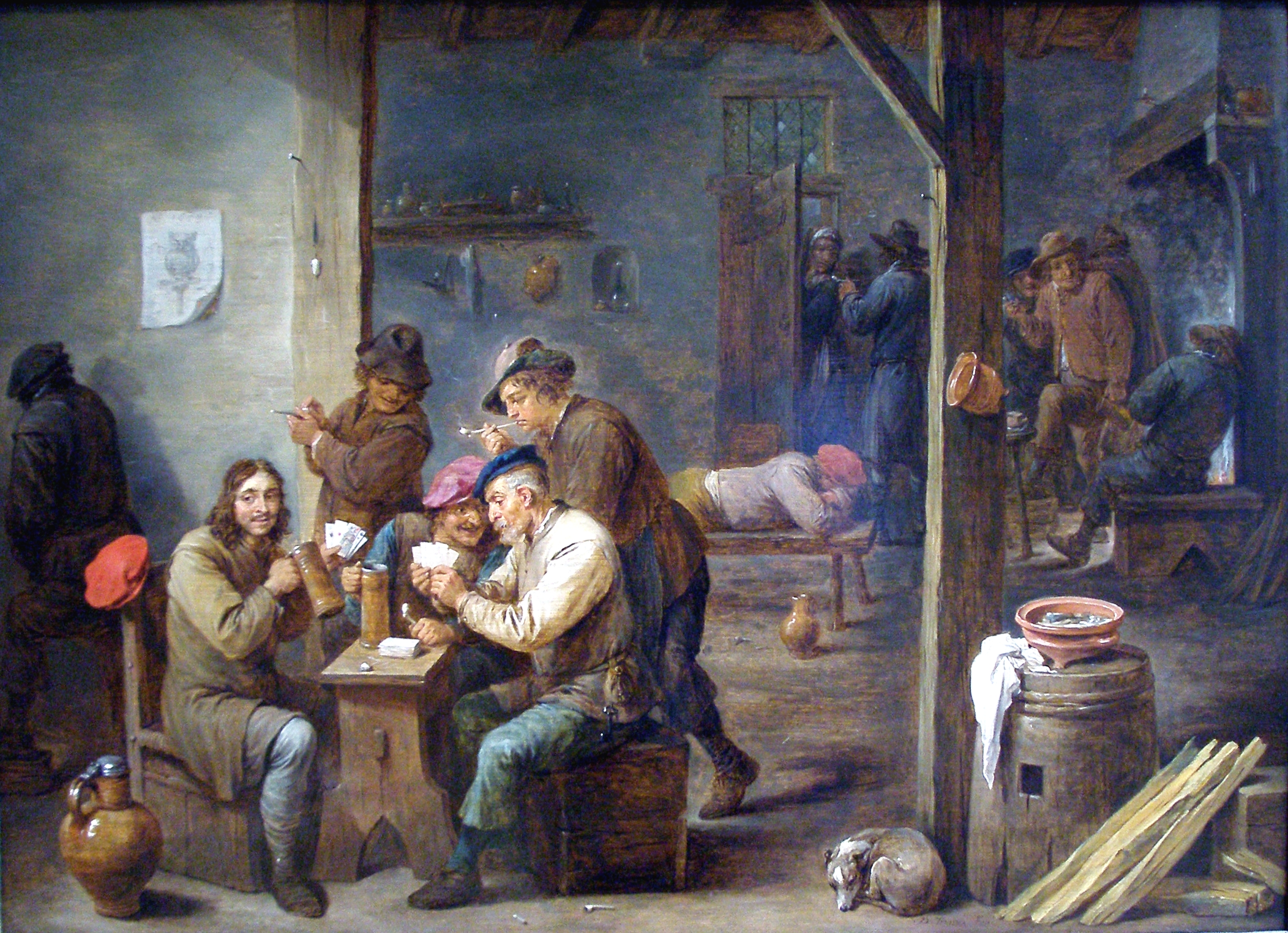 Click image to read!
Part VII
 Part Seven coming soon!
Part VIII
 Part Eight coming soon!
🔍📜📖
Featured History Event at Historic Yellow Springs
