
Throwback Thursday: Making History- Faces from The Revolution in Chester County
We Continue to Use Historical Research to Return Imagery to Lost Revolutionary Figures
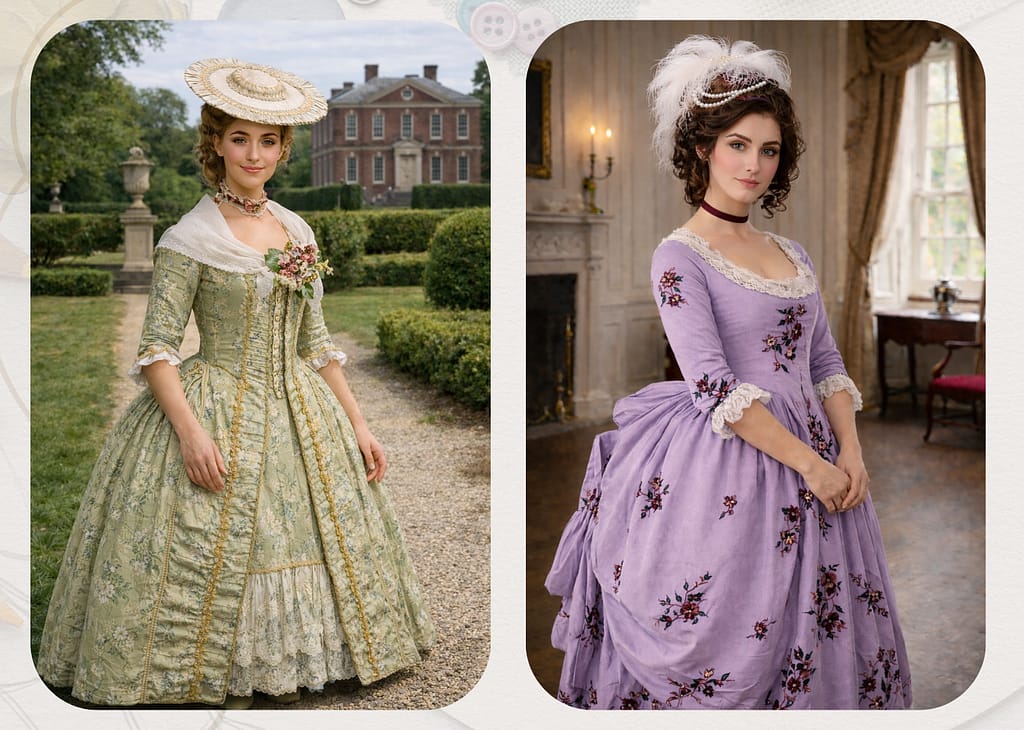
Setting the Scene
Last week, our Throwback Thursday post used new technology to return faces to Dr. Samuel Kennedy and Persifor Frazer, blending vintage reference materials (such as a book from the 1970s), of-the-era records from the time of the American Revolution, and modern techniques to breathe life back into people who feature in our stories of the past.
This week, we will continue to use the same technique, expanding it to create more photo-realistic representations of their respective wives, Sarah Ruston Kennedy and “Polly” Mary Worrall Taylor Frazer.
Next week, we will be doing the same process with the doctors Otto, Rina, and many other faces from the story of Washington Hall.
Tools of the Trade
To differentiate these representations from our stylized portraits that we did earlier, we will be doing digital photomanipulation to create cohesive images of the people we are representing.
This will be done using the Procreate digital art program, stock photos from websites, such as Pexels, and public domain images for reference. Photomanipulations will then be run through a filter on Picsart to give them a cohesive appearance.
We will also be using reference materials from the Moore Archives to provide additional context for our representations.
Polly Frazer
History remembers Mary “Polly” Taylor Frazer as the wife of Persifor Frazer, if it remembers her at all. In local history, she is a bit better remembered. The story of Polly sneaking information to Persifor has earned her the status of “rending material aid” and has gained her a listing on the Daughters of the American Revolution roster. Her number, according to their website, is #A042017.
However, as with anyone in history, it is important to remember that Polly Frazer was a real person, who lived a real life, and existed in multitudes beyond the vignette that renders her a patriot.
Who was Polly?
Today, researchers mostly trace Polly Frazer through WikiTree and similar genealogy websites. Although these sites often lack rigor, researchers can still compare their records carefully.
However, matching records from Ancestry.com and Find a Grave support Polly’s story.
According to WikiTree, Polly Worrall was born on April 8, 1745. She was born in Chester, Pennsylvania, before marrying on October 2, 1766. After marrying Persifor, she became Polly Frazer at age twenty-one, in an unknown location. Furthermore, her father, John Taylor III, came from Chadds Ford. In contrast, her mother, Sarah Worrall Pierce, came from Edgmont Township. Therefore, Polly’s family mostly descended from long-established Pennsylvania colonists and English settlers. Overall, Polly had mostly English ancestry, with some Welsh roots from Cardiganshire.
Why Do We Care About Polly’s Ancestry?
We study Polly Frazer’s heritage because no portrait of her survives. Instead, we must use her ancestry to estimate her appearance. Today, after the age of Exploration, Colonization, and Globalization, people groups move widely and mix more often. However, in the deep past, people usually stayed close to their original homelands and developed distinctive features. Therefore, Polly likely kept features from her English and Welsh ancestors, which we can use to imagine what she most likely would have looked like.
Both of her parents were born in Pennsylvania. Still, her father’s family came from England’s West Midlands. Meanwhile, her mother’s family came from southwest England and west Wales.
These regions sit fairly close together geographically. Historically, West Midlands families often had pale skin and light-colored eyes. They also often had brown, blonde, or red hair. In contrast, west Wales often produced darker hair and bright, light eyes. Likewise, southwest England often produced darker hair and darker eyes.
Because Polly mostly descended from English ancestors, we favored those features. As a result, we gave Polly rosy skin, medium-brown hair, and light brown eyes.
Polly’s Attire
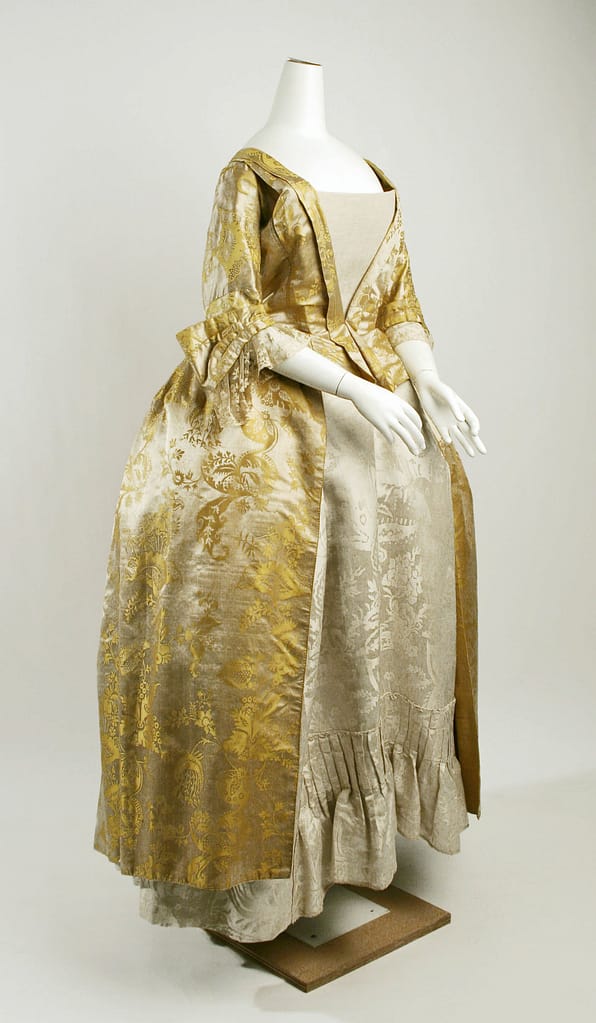
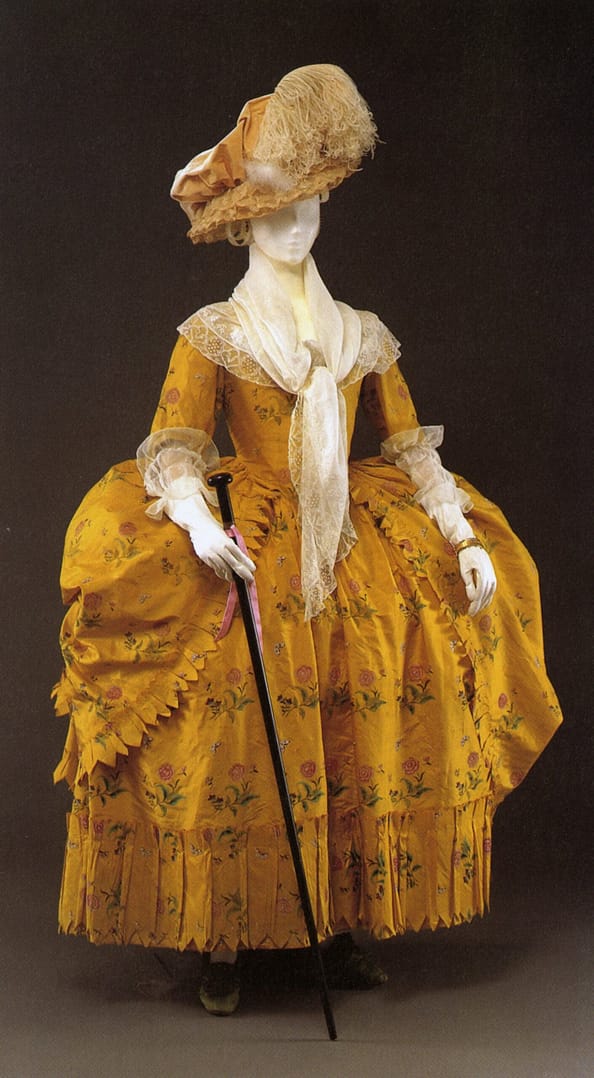
Like the Kennedy family, we know that the Frazer family was considered a member of the planter class in colonial Pennsylvania. As such, she would have worn some pretty high-end fashion, and would have needed to look her best in order to maintain a respectable level of social clout.
Below, we have several examples of what kind of attire a woman of the planter class in the 1770s would have worn, courtesy of the Metropolitan Museum of Art.
Polly, Reimagined
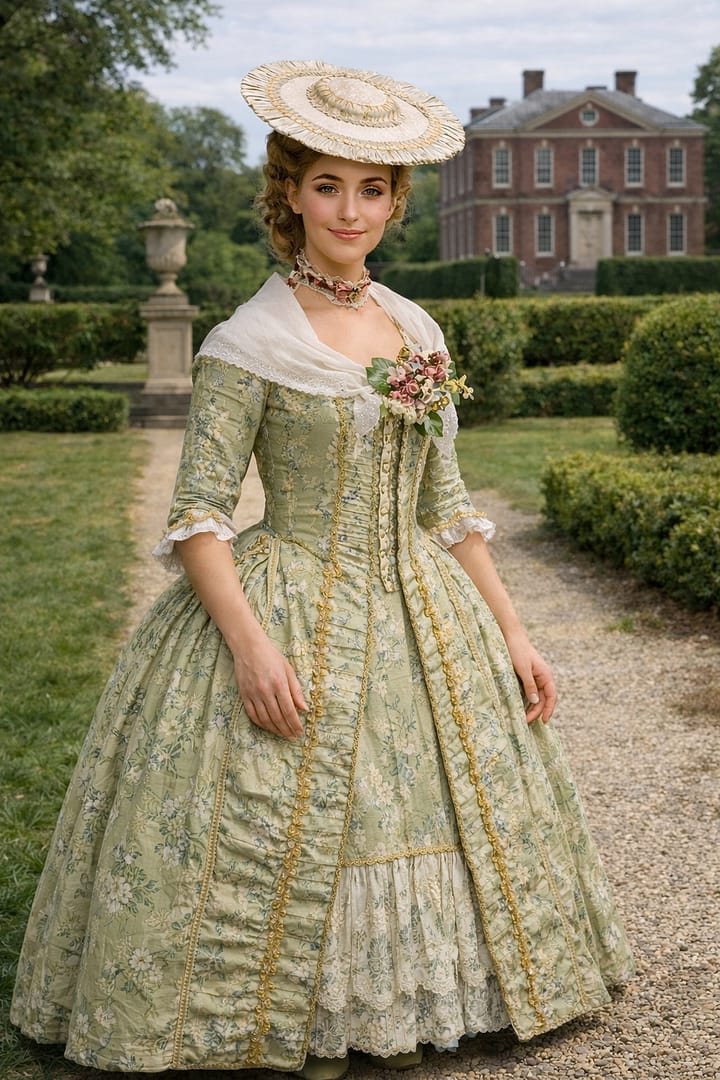
We have chosen to put Polly outside in a garden, and have given her a hat to go with her ensemble. Unfortunately, due to the polishing process on Picsart, the modern makeup artifact has been included, and thus we should note that such makeup would not have been worn during Polly’s era.
Sarah Kennedy
We have discussed who Sarah Kennedy is at length in previous blog posts, especially when we were drawing her for our exhibition on Washington Hall. You can read more about that here, if you are interested in why we chose the coloration we chose for her.
Sarah, Reimagined
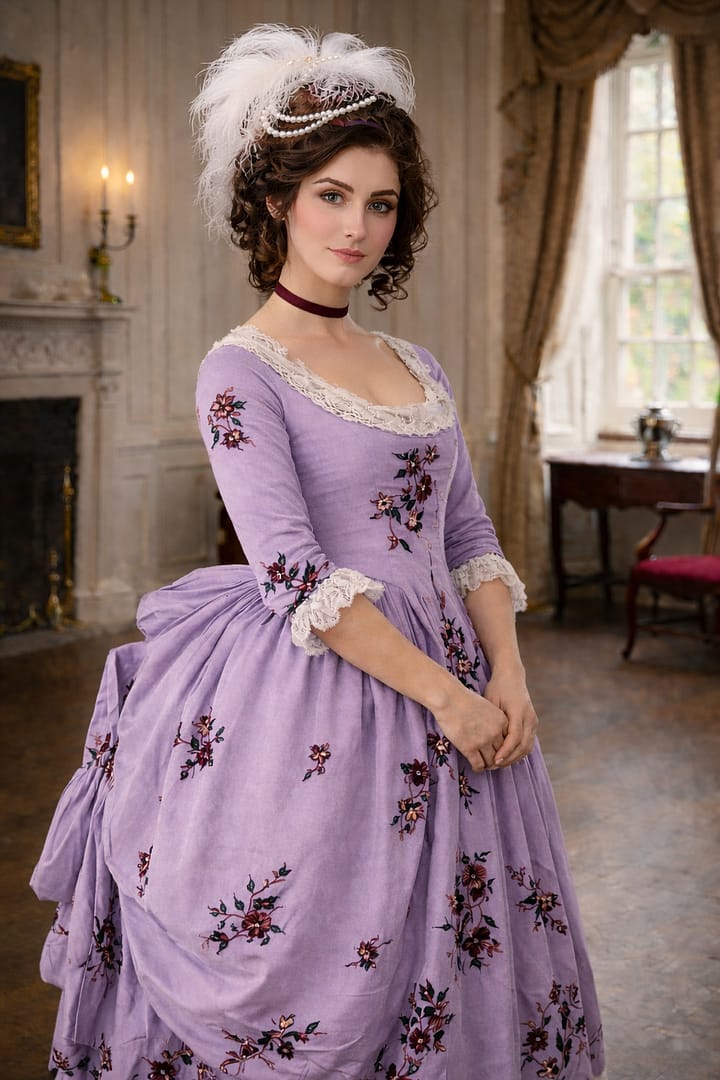
Unfortunately, we were not able to remove all the modern makeup that our filter applied to this representation of Sarah either. We have given her attire that would have been of the planter class as well, as well as a hair-peace that Sarah, belonging to a very wealthy family, would have worn at high-class social gatherings.
To Us, Today
Recreating images of Revolutionary-era figures who lack surviving portraits, such as Sarah and Polly, matters because it helps restore the human dimension of local history that is often left incomplete.
Their stories, like those of many women of their time, are rarely preserved in visual or written form with the same care given to men, even though their presence shaped families, households, and communities in essential but often unrecorded ways.
Even though these women would have been members of the planter class and would have been very wealthy in their day, no visuals exist of them from their era.
Without images or detailed accounts, women like them risk becoming even more invisible than their previously-faceless husbands in the historical record, remembered indirectly rather than understood as individuals with their own perspectives, labor, and influence.
When we look back at the Revolutionary era, including families like the Kennedys and the Frazers and places like Washington Hall, we are not only examining public events but also trying to understand the private lives that sustained them. Women like Sarah and Polly were part of that foundation, even when history does not clearly show their faces.
In this way, attempting to reconstruct their likenesses does more than fill a visual gap. It helps bring forward the often invisible presence of women in Revolutionary-era life and deepens our understanding of the world they helped hold together.
👗👢🖼️
Learn more about the history of Yellow Springs
You can read the more in-depth version of this post here
Follow us on Substack, Instagram, and Facebook
👗👢🖼️