
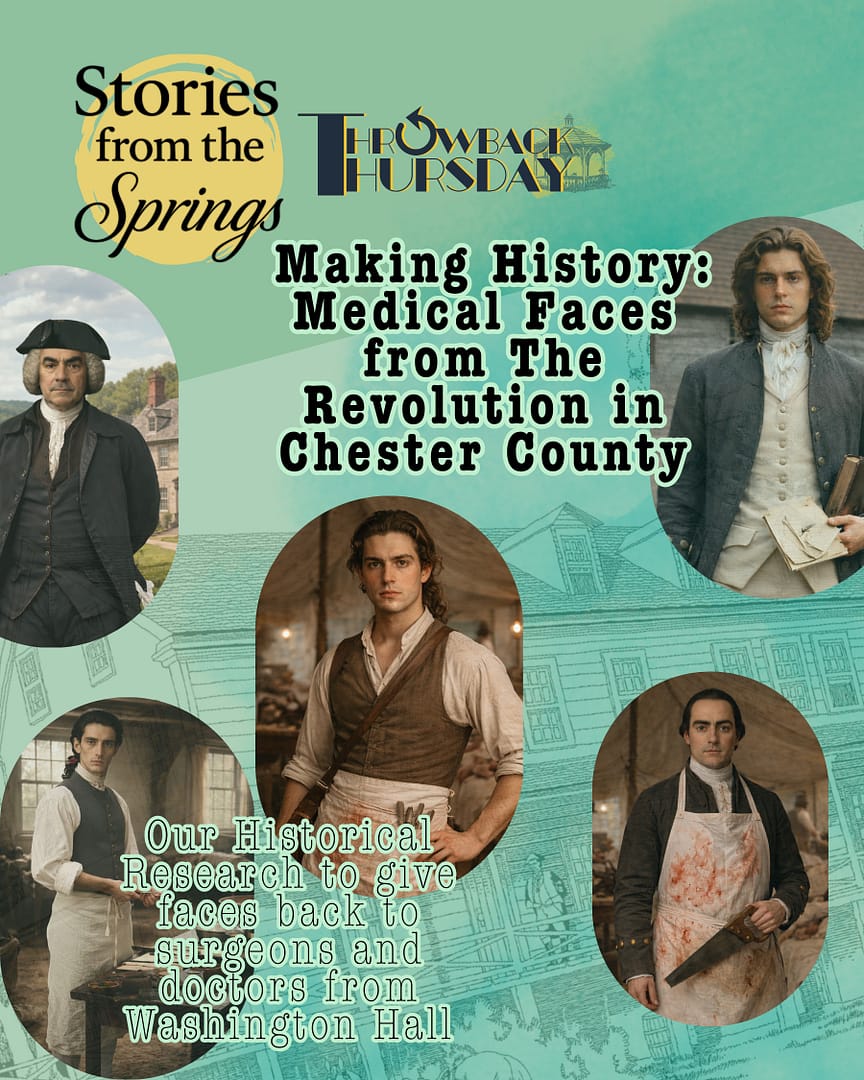
Throwback Thursday: Making History- Medical Faces from The Revolution in Chester County
We Continue to Use Historical Research to Return Imagery to Lost Revolutionary Figures
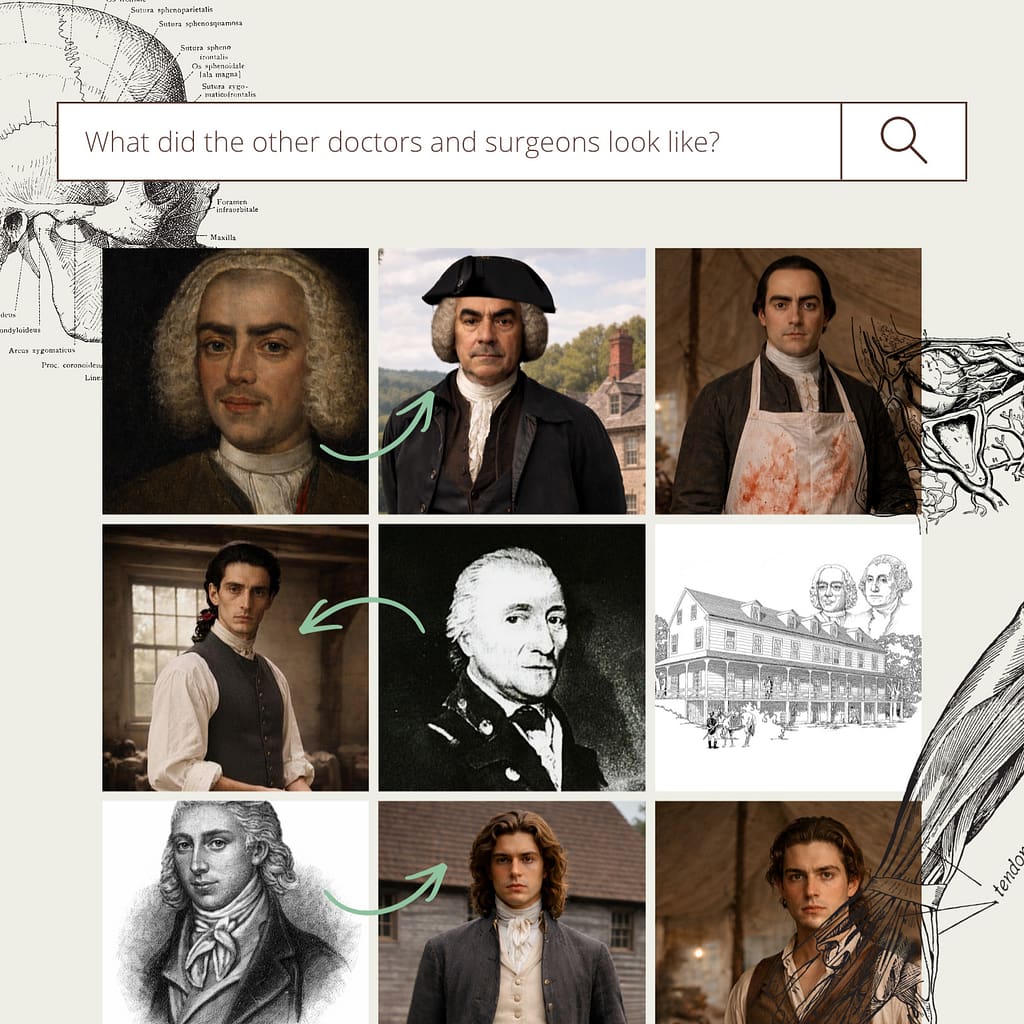
Setting the Scene
Last week, our Throwback Thursday post used new technology to restore the faces of “Polly” Mary Worrall-Taylor Frazer and Sarah Ruston Kennedy. Previously, we used the same techniques to restore the faces of their husbands, Persifor Frazer and Dr. Samuel Kennedy.
So far, we have reconstructed the faces of people from the wealthy and influential planter class. During the Revolutionary Era in Pennsylvania, these individuals stood at the top of the social ladder.
The Kennedys and the Frazers associated with figures such as George and Martha Washington.
Even so, no portraits from their lifetimes have survived. Now, we are expanding our scope to a wider berth of people from Washington Hall. These individuals would have represented a broader section of Pennsylvanian society.
Dr. Bodo Otto and his sons held strong influence in Philadelphia. At that time, people sometimes called Philadelphia the city of doctors. However, Dr. Bodo Otto Sr. built a dynasty focused more on the medical field. While Dr. Kennedy lived as a country gentleman and doctor, records present Dr. Otto Sr. as a medical man to his core. They held wealth and respect, but Dr. Otto first served poor patients in Philadelphia.
Intriguingly, we do have surviving portraits from the time of Dr. Bodo Otto Sr. and Dr. Bodo Otto Jr.
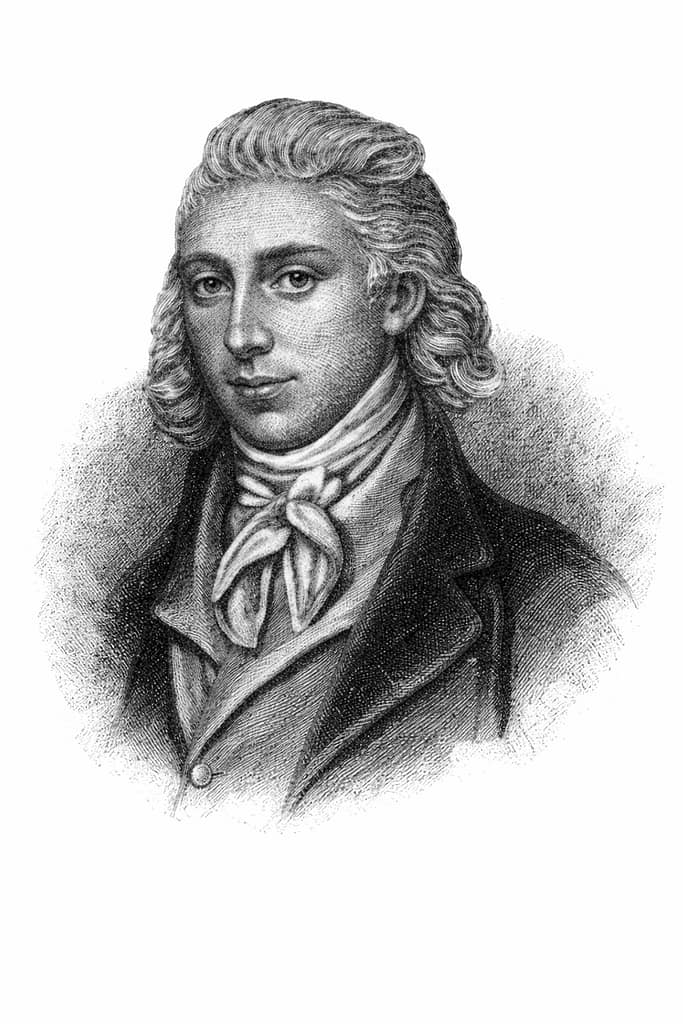
Similarly, we are also featuring the fugitive Baltic nobleman turned incognito Surgeon’s Mate, John Rose. While it’s rumored that Dr. Otto’s second wife, Catharina Dorothea Dahncken, had noble birth, we know John Rose held Baltic baron status for sure. He grew up and moved within noble society. We also have a surviving portrait of John Rose from later in his life. At that time, he had returned to his title as Baron Gustav Heinrich de Rosenthal.
Next week continues this series with reconstructions of Rina, Lucia, and Kitte. These women were the individuals worked as enslaved people in the Kennedy household.
Tools of the Trade
To differentiate these representations from our stylized portraits that we did earlier, we will be doing digital photomanipulation to create cohesive images of the people we are representing.
This will be done using the Procreate digital art program, stock photos from websites, such as Pexels, and public domain images for reference. Photomanipulations will then be run through a filter on Picsart to give them a cohesive appearance.
We will also be using reference materials from the Moore Archives to provide additional context for our representations.
Dr. Bodo Otto Sr.
Dr. Bodo Otto was born in 1711 in Hanover, Germany. Germany shaped his early training through pest house work treating infectious disease. His stationing in Lüneburg and later the Hartz mountains confirmed his medical education through formal examinations and a stint as the Chief Surgeon for the District of Scharzfels. Otto married three times, and had six children overall. Five of his children lived to adulthood. His three sons, Frederick, Bodo Jr., and John, all trained under their father. They became doctors as well, and benefited from their father’s German training as well as the new American school of medicine.
The Revolutionary War service defined Otto’s later career. He stood with George Washington during the Delaware River crossing. At Yellow Springs, he was in charge of smallpox inoculation efforts. Washington Hall passed under his leadership after Dr. Samuel Kennedy died.
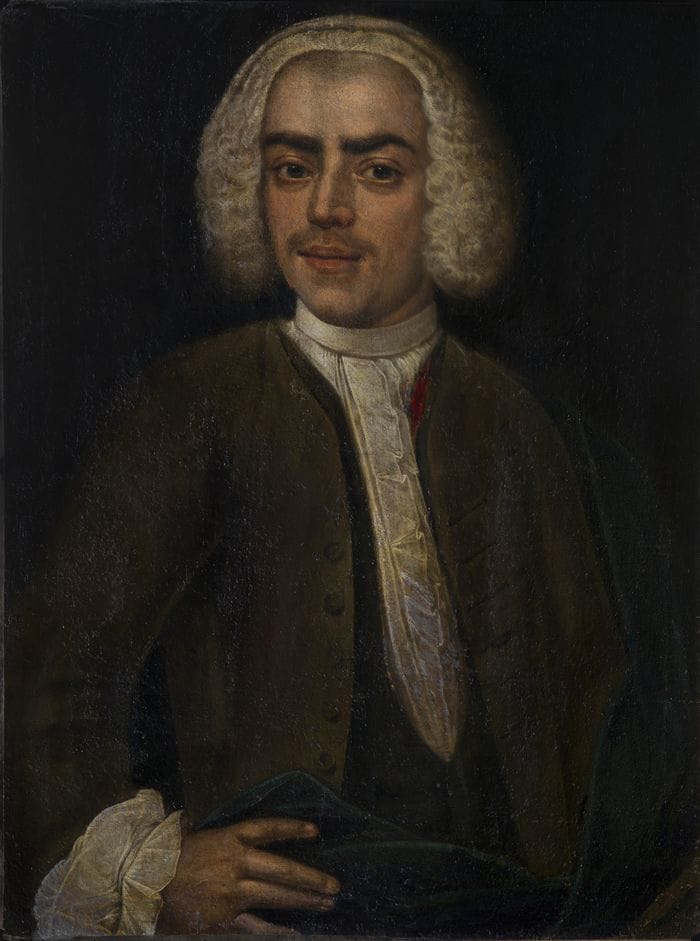
This portrait that shows Dr. Otto was painted alongside a portrait of his second wife, Catharina Dorothea Dahncken.
Our Records confirm the Otto family arrived in America in 1755, and Catharina died on August 11, 1765, which helps date the image. He is far younger here than he would have been while at Washington hall. We can age him up to 1777 and use what we know about him to imagine what he looked like at that time.
Research tells us that Otto consistently presented himself as distinctly German in appearance and identity, even while in America. We will German physician clothing styles from the 1750s for accuracy, and combine them with Philadelphian physicians from the 1770s.
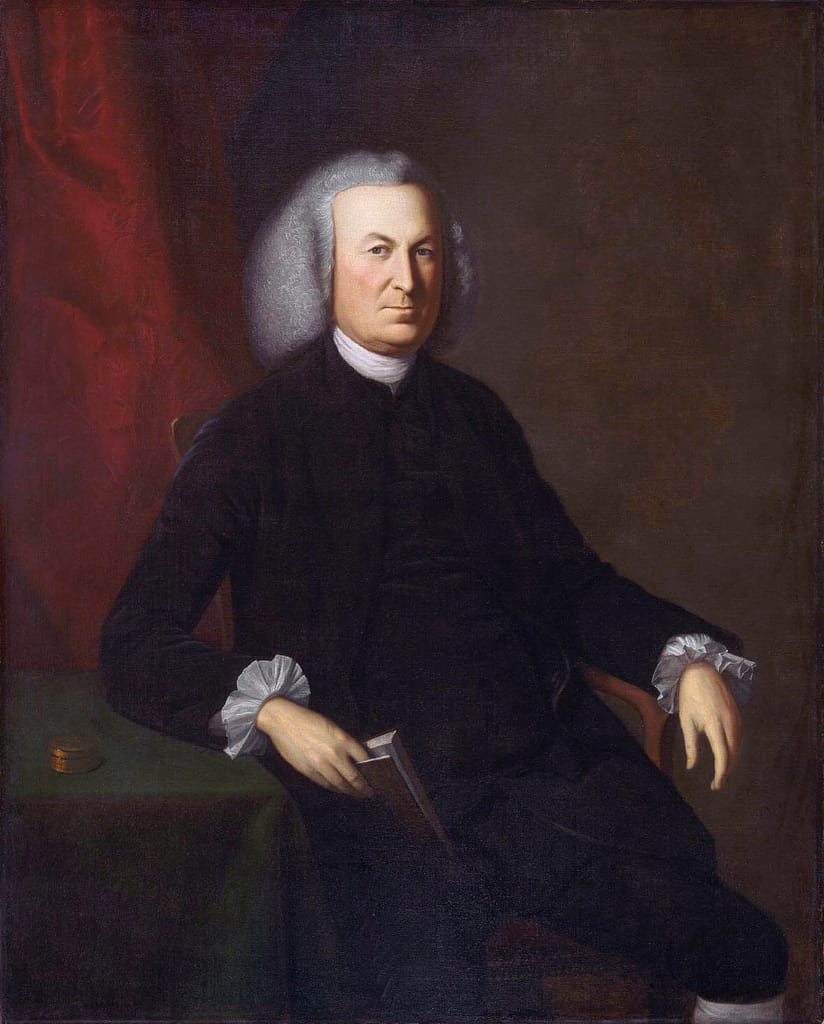
Dr. Bodo Otto Sr., Reimagined
Dr. Frederick Otto
Frederick was born on August 22, 1743, in Lüneburg, Germany. He was the eldest son of Dr. Otto Sr. and Catharina Dorothea Dahncken. Maria Elizabeth Otto and Anna Marie Otto were his elder half-sisters from his father’s earlier marriage. Bodo Otto Jr. arrived as his younger brother in 1748, followed by John Augustus Otto as the youngest.
Philadelphia and Germantown later shaped Frederick’s youth after the family relocation to the colonies. There, his father treated patients and trained his sons in medicine.
Frederick learned medicine directly through study and practice with his father and brothers. By the early 1760s, he entered formal medical training under Dr. Otto Sr. He gained hospital and clinic experience through Philadelphia medical institutions and early Pennsylvania Hospital. Medical education followed the same rigorous path as his brother’s training. All three brothers advanced together into professional medical practice.
New Jersey later became Frederick’s base, where the Otto family held property and ties. He joined a wider network of colonial physicians shaped by his father’s influence. Military service connected him to Revolutionary War hospitals across Pennsylvania and New Jersey.

Research on Washington Hall shows Frederick Otto signed an oath of allegiance at Yellow Springs. He signed that oath on May 25, 1778 during General Greene’s collection of oaths. Documents list him as a Junior Surgeon, though some handwriting remains unclear.
Reverend Sproat’s diary entries also mention the multiple “Doctors Otto” at Yellow Springs. This pledge allows us to more confidently conclude that Frederick and John A. Otto were likely here alongside Bodo Otto Jr.
Family records place Frederick’s birth on August 22, 1743. That date places him in his mid-thirties during his Washington Hall service. He was 34 years old when he swore his oath before General Greene here at Yellow Springs.
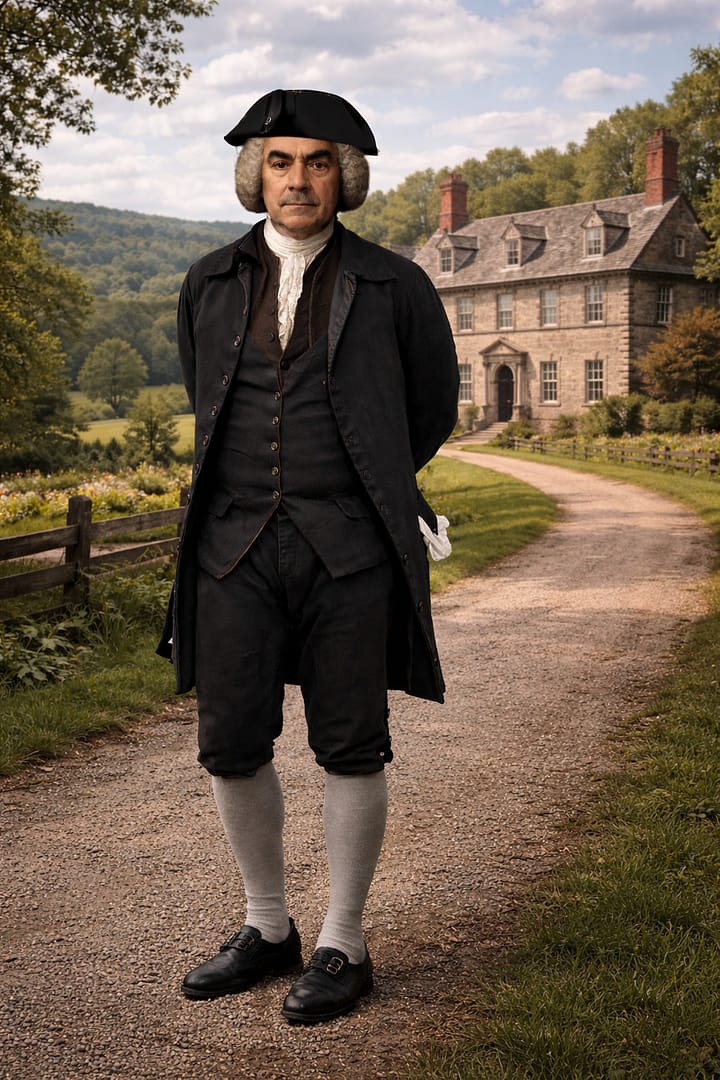
Dr. Frederick Otto, Reimagined
Because no images exist of Frederick Otto, to depict him, we effectively de-aged his father and combined that facial structure with some slight influences from the surviving portrait that we have access to- though that unfortunately has not been digitized- of his mother, Catharina Dorothea Dahncken.
Dr. Bodo Otto Jr.
As we have mentioned, we have access to surviving depictions of Dr. Bodo Otto Jr., one of which has been included above. We also completed extensive work to reconstruct him as a playable character in our Winter of Washington Hall exhibition.
We translated that artistic reconstruction into a more photorealistic image. We balanced it with depictions of Dr. Bodo Otto Jr. drawn from life.
You can read more about how we determined his likely appearance in life here, and you also read more about his experiences during the winter at Washington Hall here.
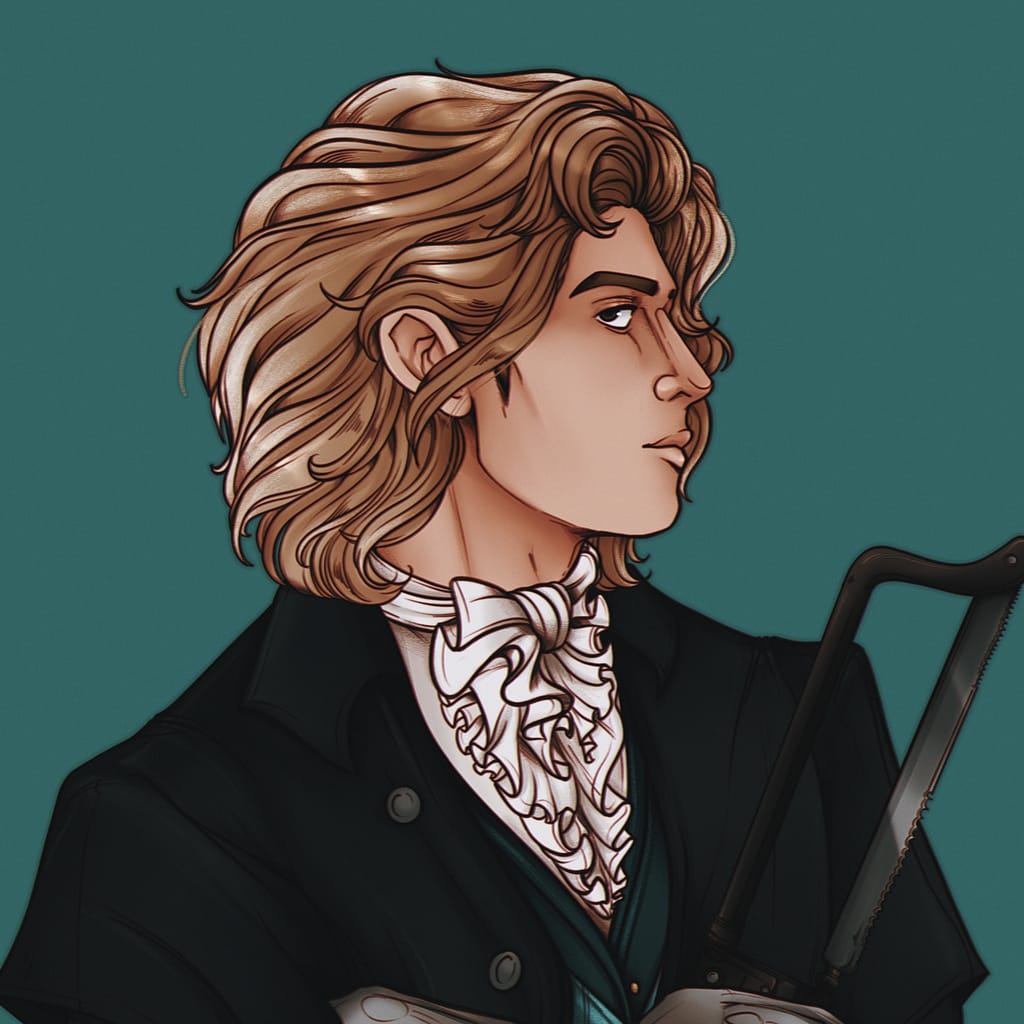
Dr. Bodo Otto Jr., Reimagined
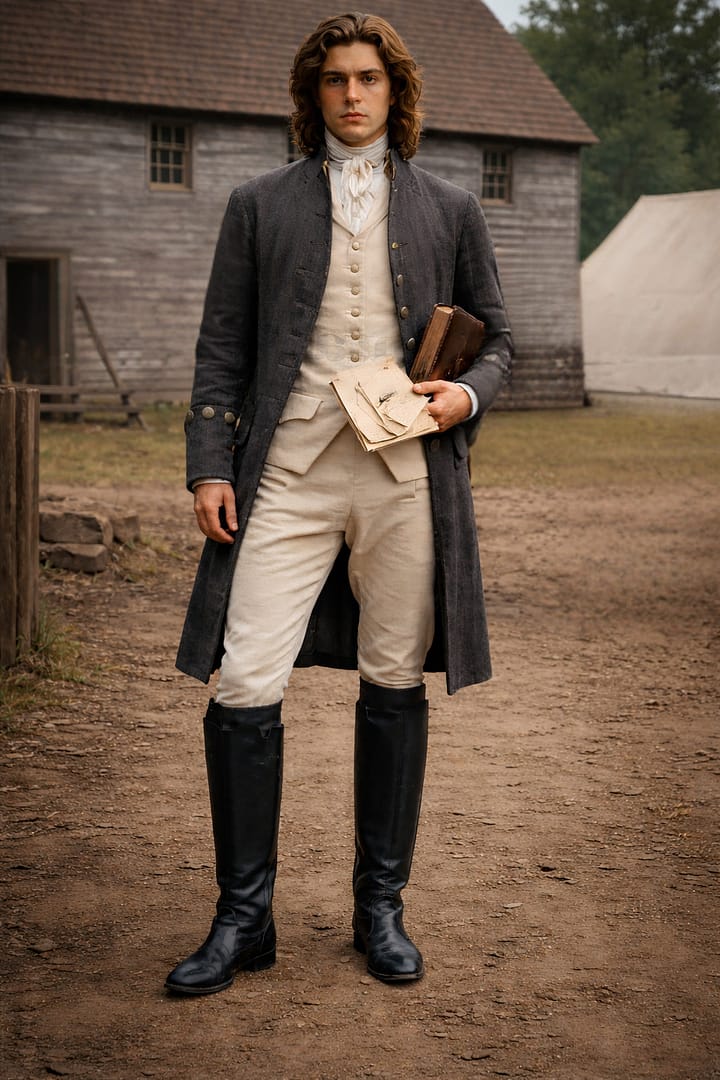
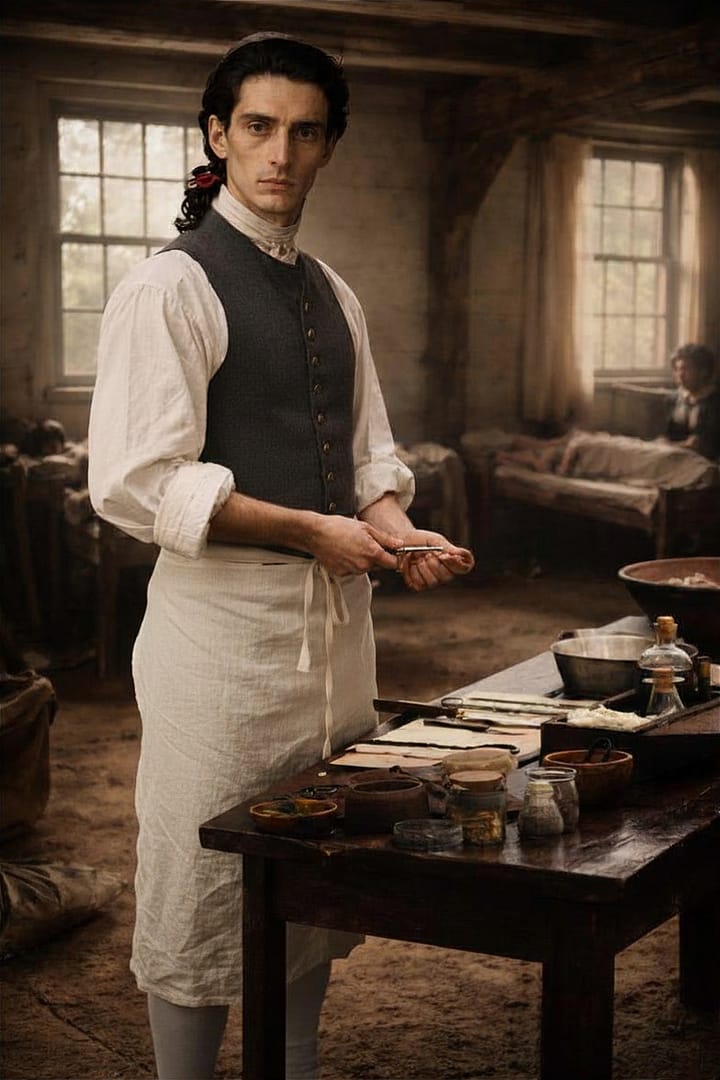
Dr. John Augustus Otto
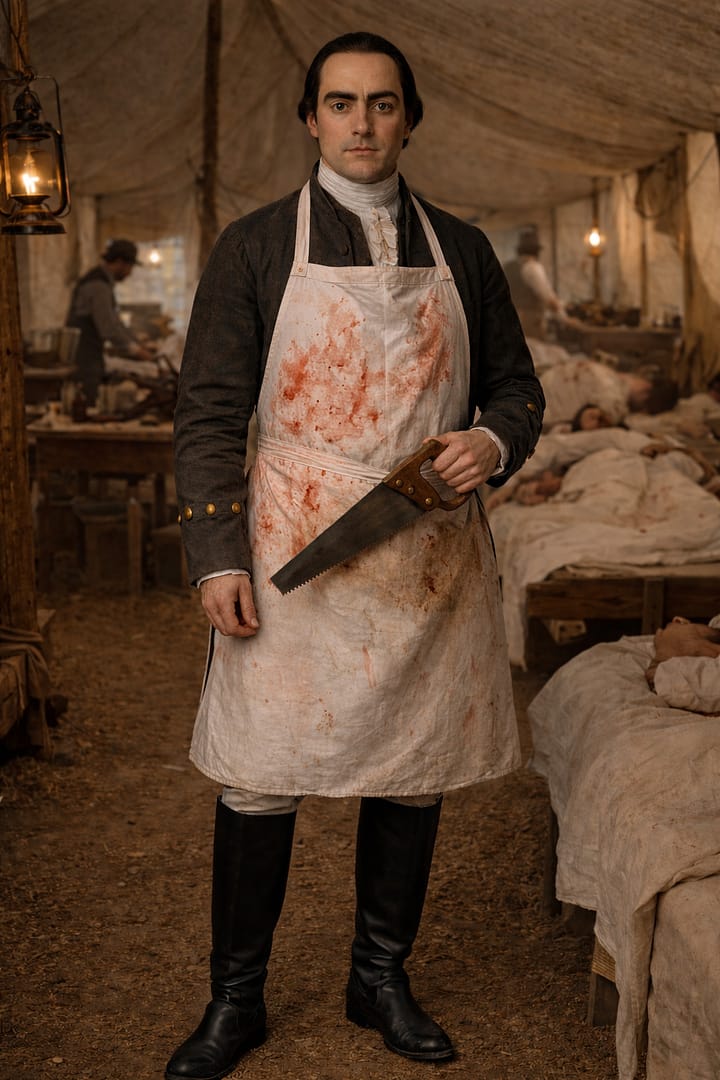
John Augustus, the youngest child of Dr. Bodo Otto Sr. and Catharina Dorothea Dahncken, was born on July 30, 1751. Like his older brothers Bodo Jr. and Frederick, John was trained as a doctor under his father’s supervision. By the winter of 1777-1778, John Otto had been trained as an apprentice in his father’s practice, had attended lectures at the College of Physicians in Philadelphia (of which his two older brothers were among the first graduating class), and had served as a Surgeon’s Mate for his father on numerous occasions. We know that John was with his father while he was stationed at Trenton, as his family bible (in which he kept records) records a gift of a sword that was given to them by a thankful Hessian soldier.
Because he was born in 1751, we know that by the time that Washington Hall was active, he would have been around 23-24 years old. This makes him rather young to have been a doctor, so we chose to depict him wearing attire that would have been fitting of a surgeon’s mate. Because, unlike his older brother and his father, no images exist of John A. Otto, we combined the facial structures of Frederick Otto and Bodo Otto Jr. to create their youngest brother.
John A. Otto, Reimagined
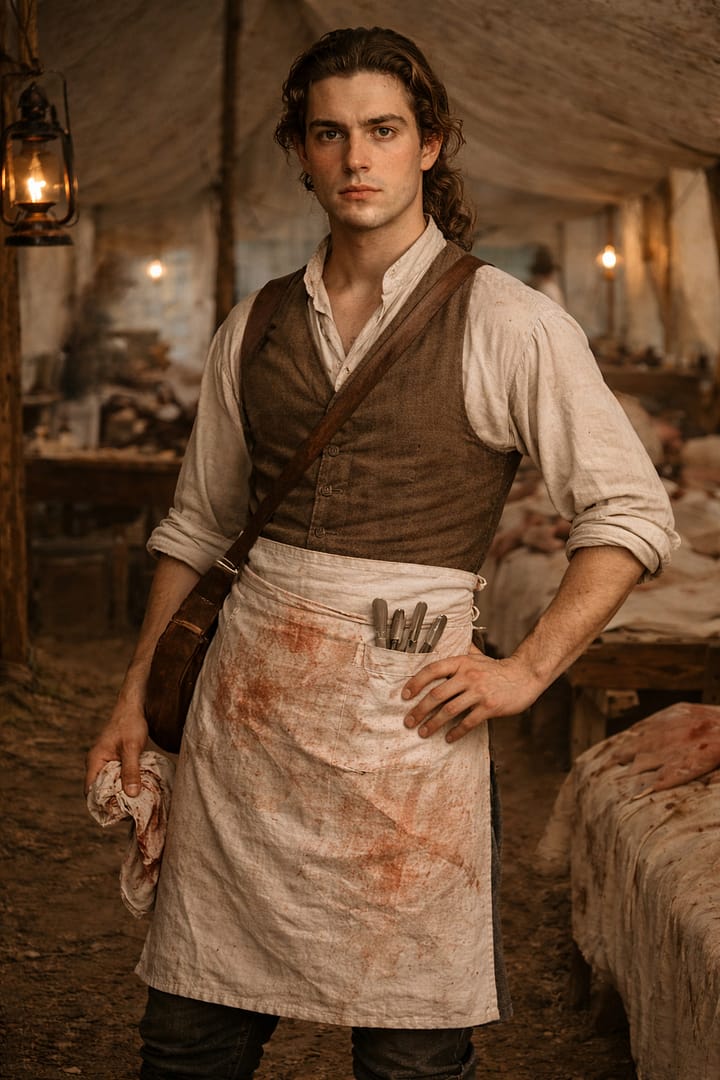
John Rose
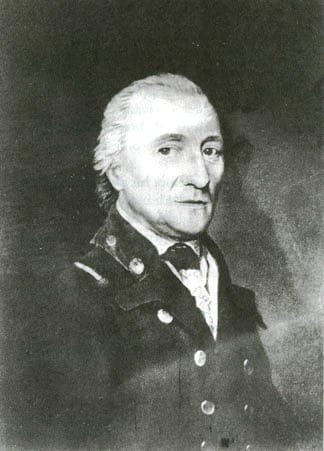
The image above is the only surviving image of John Rose- known by that point once again as Baron Gustav Heinrich von Wetter-Rosenthal. However, it depicts him in his later years, and as we have established in previous posts, John Rose was much younger during his time at Yellow Springs.
Like Dr. Bodo Otto Jr., we have done research in a previous post to best determine what John Rose most likely would have looked like while he was at Washington Hall.
You can read about that in this post, and you can also read a more in-depth version of his time at Washington Hall in this post as well.
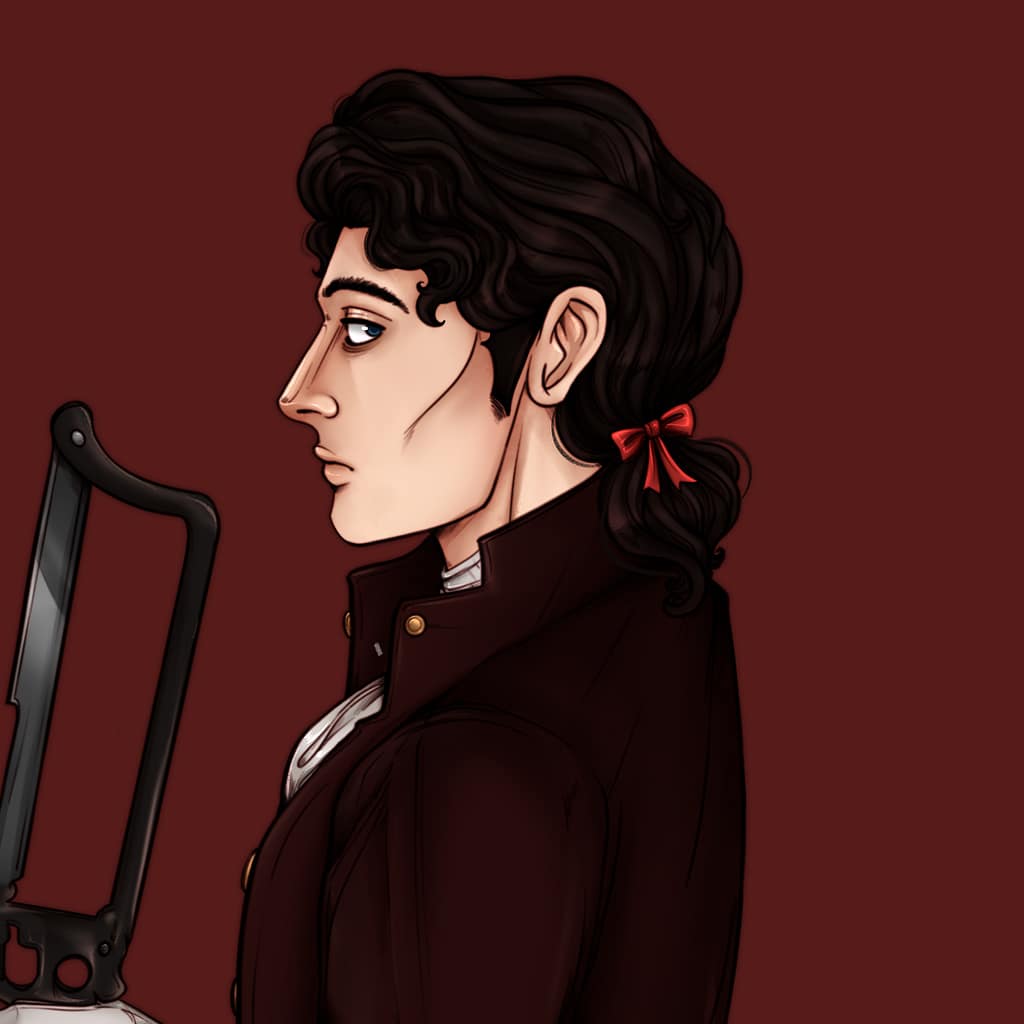
John Rose, Reimagined
🩼⚕️🌿
Learn more about the history of Yellow Springs
You can read the more in-depth version of this post here
Follow us on Substack, Instagram, and Facebook
🩼⚕️🌿