
Throwback Thursday: Archaeology Summer Camp 2026
Learning Archaeology by Digging Into the History Beneath Our Feet
Setting the Scene
This summer, Historic Yellow Springs revived our Archaeology Summer Camp after it had been absent from our educational programming for many years. While we often share discoveries from the Moore Archives, history does not exist only on paper. Sometimes, it waits quietly beneath our feet.
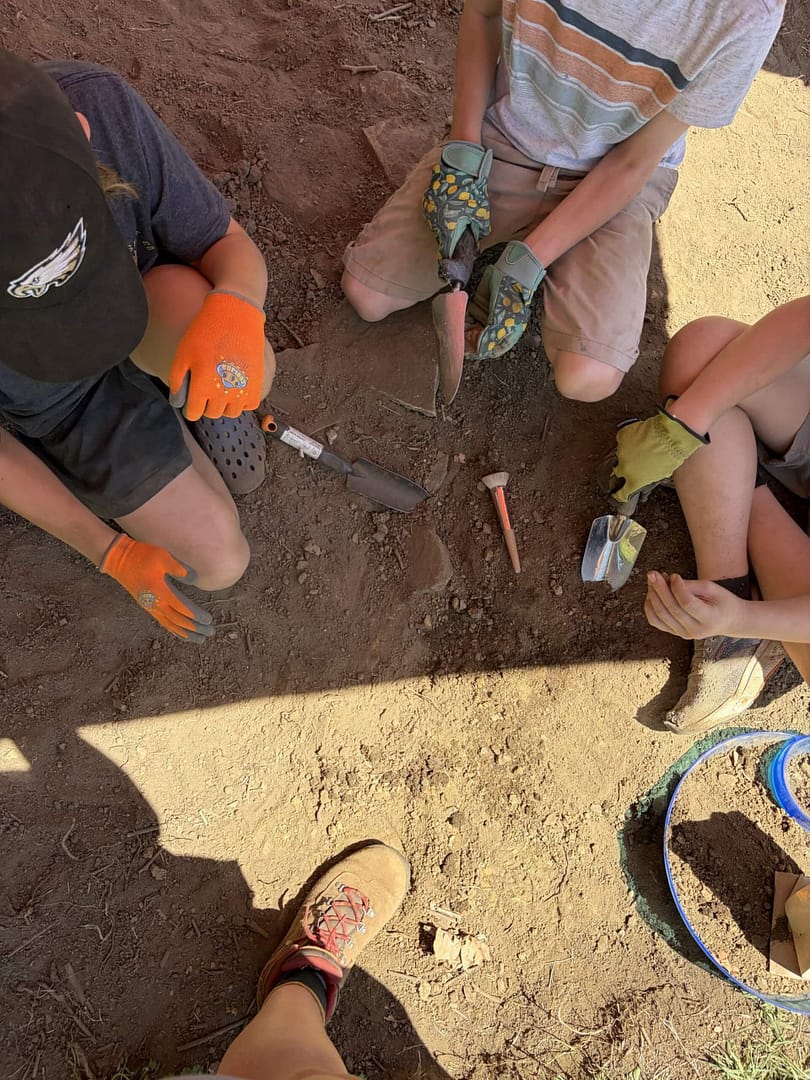
Over three weeks, campers became archaeologists. They learned how archaeology works by practicing real field methods alongside our archaeologist, who also serves as the Moore Archivist, and our counselors. The campers took part in an authentic miniature archaeological field school. They learned excavation techniques, site documentation, artifact identification, and one of archaeology’s most important lessons: an artifact’s location often tells us more than the object itself.
This article does not provide a complete report of this summer’s archaeological work. Many recovered artifacts remain in the process of cataloging, documentation, and research. We still have much work to complete before we can make broader conclusions.
Instead, we want to share a glimpse of the campers’ experience, highlight some early observations, and thank the campers, parents, and counselors who helped uncover another small piece of Yellow Springs’ history.
Learning to Read the Landscape
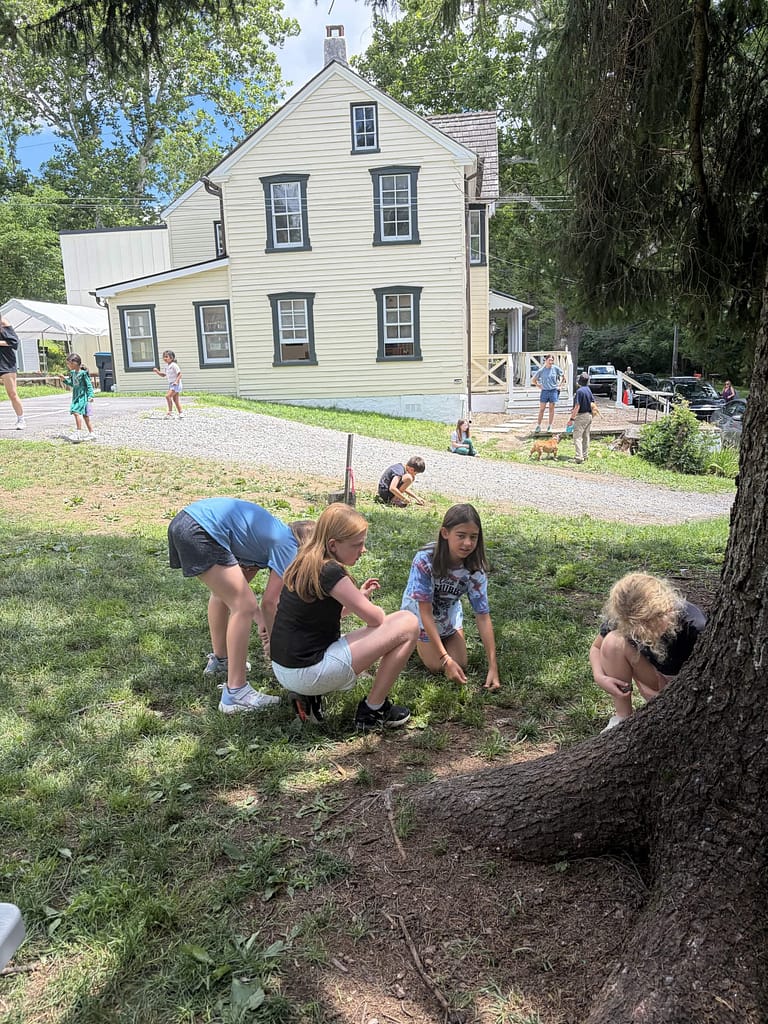
Every week began with site safety and an introduction to the history of the Yellow Springs property. Before picking up a trowel, campers learned that archaeology involves much more than digging. The first step requires understanding the landscape. To demonstrate this, we introduced campers to a Phase I archaeological survey through a field walk. We explored an area downhill from the ruins of Washington Hall, next to the Fraley Studio, which we nicknamed the Washout Lot.
The ground quickly began revealing its history.
Small pottery fragments and pieces of historic glass appeared across the surface. These discoveries were expected. Gravity, erosion, decades of landscaping, and natural runoff continually move artifacts downhill. The Washout Lot has likely served as a catchment area for centuries, collecting materials that originally belonged elsewhere on the property.
This exercise introduced one of archaeology’s most important concepts: the difference between in situ and ex situ artifacts.
An in situ artifact remains where it was originally deposited. This allows archaeologists to study its connection to surrounding soils, structures, and other artifacts. An ex situ artifact has moved from its original location through natural processes or human activity. These artifacts still hold historical value, but they often cannot answer the same questions because their original context has been disturbed.
Understanding this distinction became one of the central lessons of the week.
The Hillside Dig
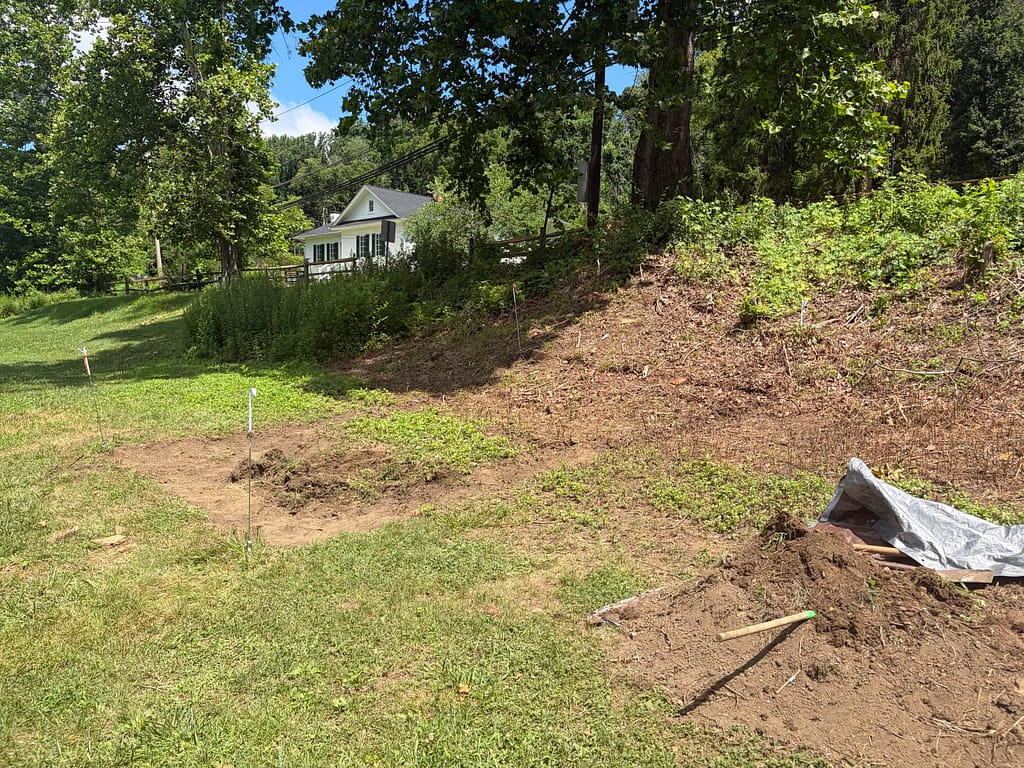
After field walking, campers spent much of each week excavating what became known as the Hillside Dig.
Historic Yellow Springs selected this location after Facilities Manager Kevin McCraw suggested that the hillside might contain the remains of one of the village’s long-lost buildings. Historical newspaper articles mention an ice cream parlor somewhere in this area during Yellow Springs’ second spa era, making the site especially intriguing.
During the excavation, campers carefully removed soil one layer at a time. They documented each stage of the process before continuing deeper into the ground.
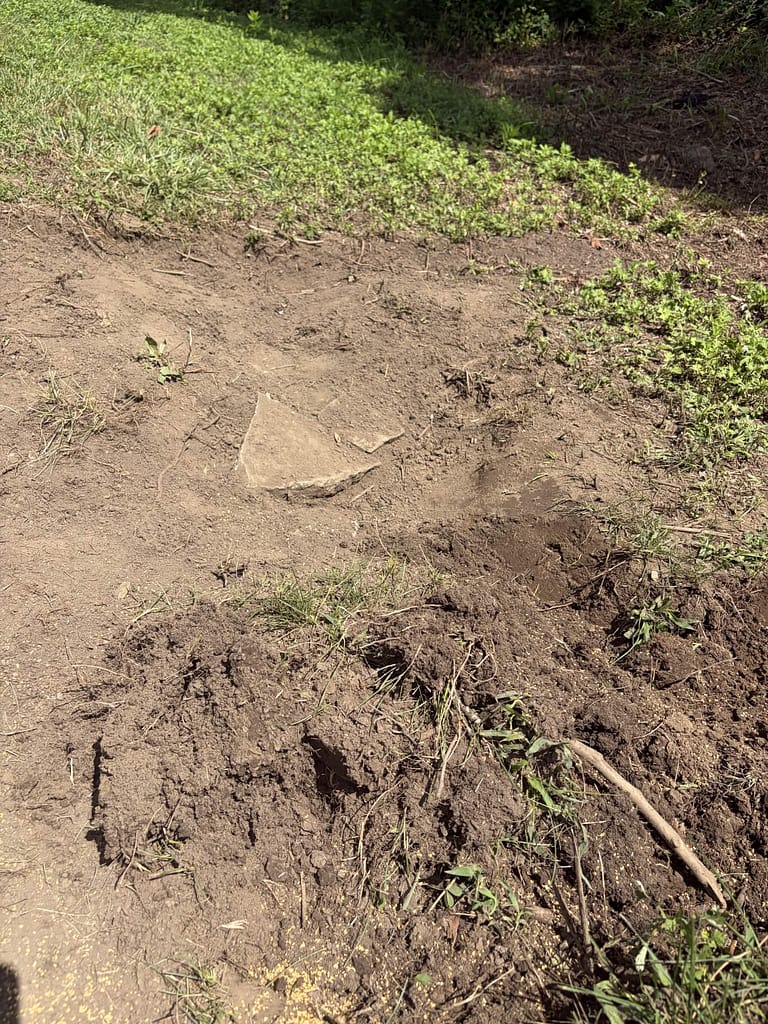
Along the way, campers uncovered many fragments of porcelain and glass, along with modern materials such as plastic that clearly entered the site more recently.
Rather than seeing these modern objects as mistakes or failures, campers learned another important archaeological lesson. Because the excavation sat on a hillside, decades of erosion likely carried newer materials downslope and mixed them with older deposits. Archaeological sites rarely remain completely undisturbed.
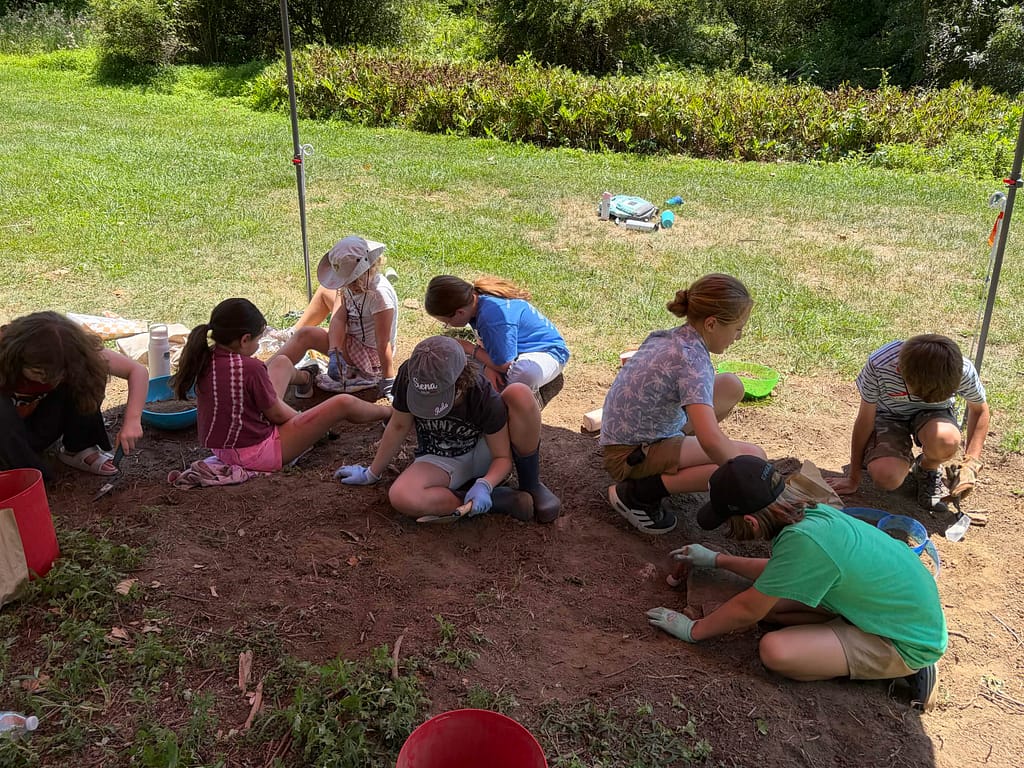
The most exciting discovery came not from an artifact, however, but from the ground itself.
Approximately one foot below the surface, the excavation exposed several large stones arranged in a distinct geometric pattern. Beneath them lay additional stonework joined by visible mortar. Rather than appearing as naturally deposited rock, these stones formed what is most likely the corner of a masonry wall.
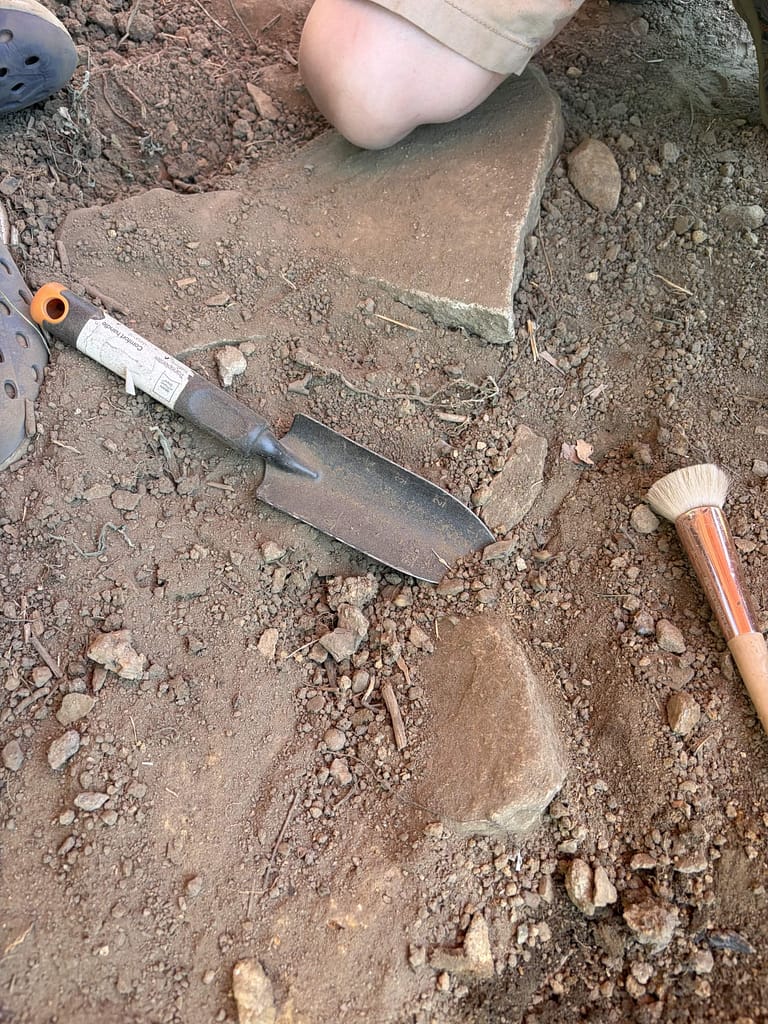
Although our excavation only reached a depth of roughly one foot, far short of the several feet that would likely be required for a full investigation, the evidence allows us to confidently conclude that a building once stood at this location.
Exactly which building, however, remains a mystery.
A Building with No Name… Yet
The site sits near what is now the Chester County Library and beside the Iron Spring and its surrounding bog.
Its location connects it to an important piece of local history.
In 1851, a notice advertised the sale of land from the estate of Margaret Holman. The property included what was known as the “shop lot.” The description listed a dwelling house large enough for two families, coachmaker and blacksmith shops, a stable, and an excellent spring of water. It also noted that a stream ran through the property, making it an established location for skilled tradespeople (American Republican, December 16, 1851).
American Republican; 12/16/1851
PUBLIC SALE
Will be sold at Public Sale, pursuant to an order of the Orphans’ Court of Chester county, a part of the Real Estate of Margaret Holman, deceased, on Saturday the 10th of January, all that Messuage and tract of Land situate at the Yellow Springs, in said county, bounded by lands of estate of Frederick Holman, deceased, Henry Gougler and others, known as the shop lot, containing 2 Acres and 80 perches, more or less, whereupon a dwelling House, sufficiently large to accommodate two families; Coachmaker and Blacksmith Shops; frame stable &c., all in good order. The land is of excellent quality, having an excellent spring of water covered by a good house, also a stream of pure water passing through the premises. This property is an old established stand and perhaps as good as any in the county, if well conducted, consequently an object to a good mechanic wishing a permanent location. It is near to places of public worship, schools, mills, &c. Any persons wishing to view the premises before the day of sale, will be shown the same by Mr. D vis Zook, residing near, or the subscriber, living in East Pikeland. Sale to commence at 2 o’clock, on said day and conditions made known by SAMUEL HOLMAN, executor.
The advertisement above is a transcription of the newspaper article that has been preserved in an extremely helpful website on West Pikeland Real Estate Transactions. This website provides additional possible identities for the building whose foundations we discovered during camp, and we can cross-reference those at a later date to narrow it down further.
The advertisement’s description broadly matches the area where we excavated. During previous field walks near the Iron Bog, Historic Yellow Springs also recovered what appears to be part of an old metal wagon wheel. This discovery suggests that transportation, blacksmithing, or wagon repair may have taken place nearby.
However, archaeology requires caution.
We cannot currently determine whether the wall we uncovered belonged to the Holman Shop Lot, an ice cream parlor, a blacksmith shop, or another building. The newspaper advertisement does not provide enough detail to confirm the connection. The excavation also did not uncover diagnostic artifacts that could identify the structure with certainty.
For now, we can only state what the evidence shows.
A building once stood here.
Identifying the building’s exact purpose will require much more archaeological work.
Putting the Pieces Back Together
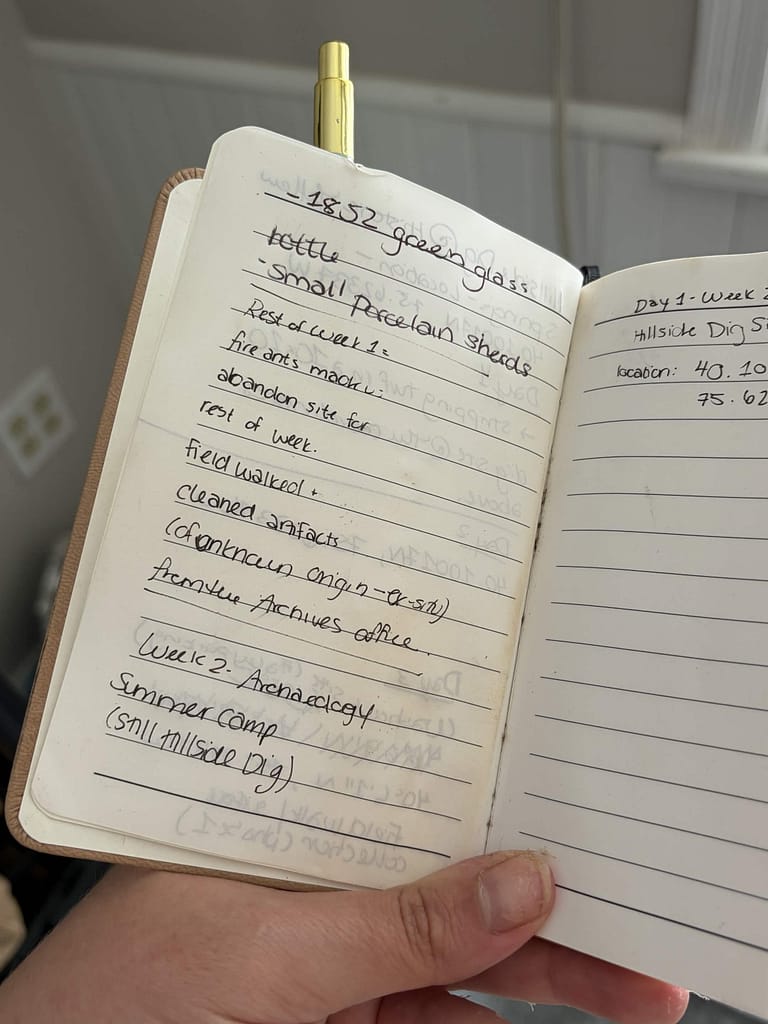
Excavation was only half of the experience.
On the last few days of camp, campers transformed our workspace into an archaeology laboratory.
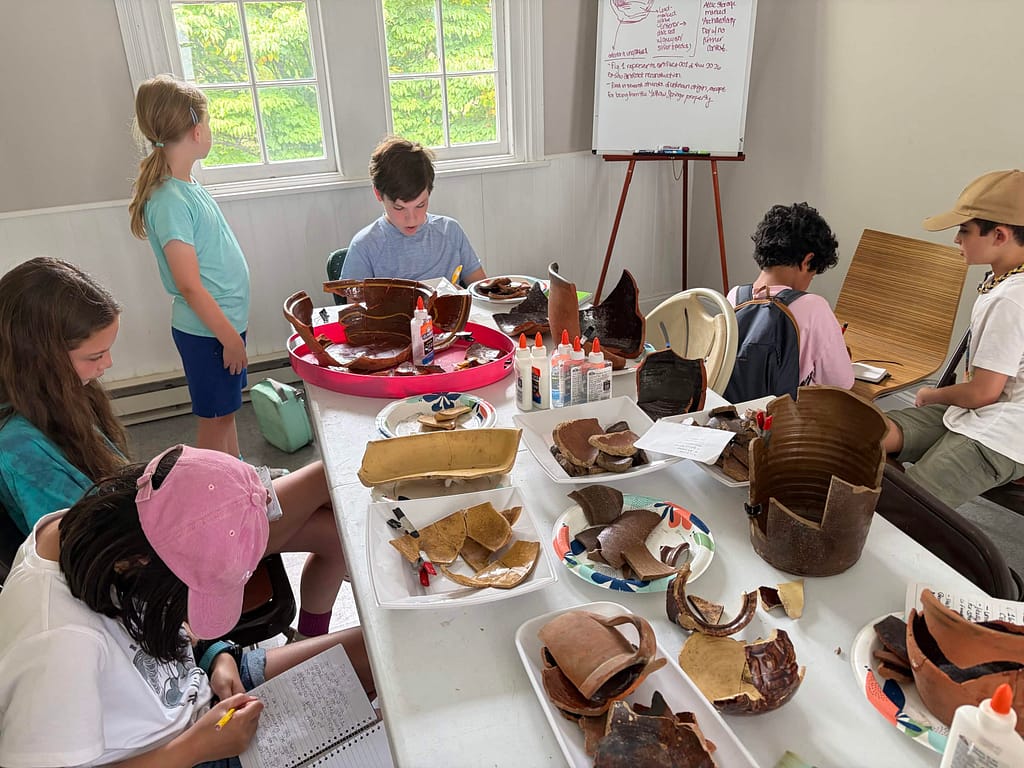
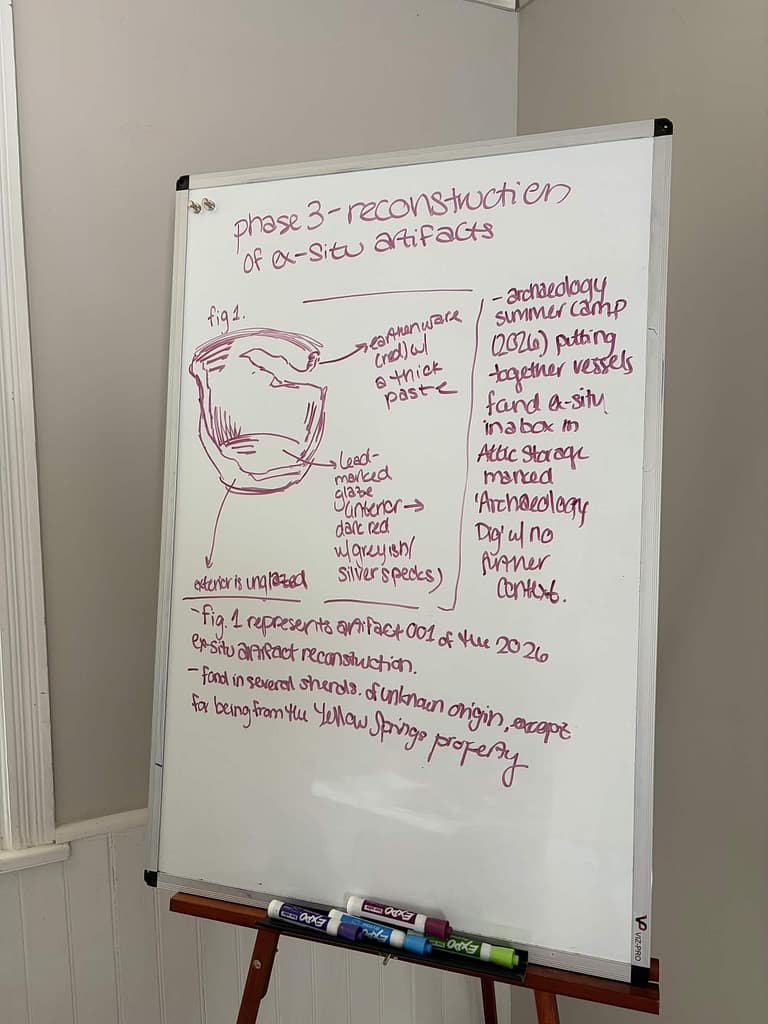
Artifacts recovered from both the excavation and previously collected ex situ materials housed in the Lincoln Building attic were cleaned, catalogued, sorted, and studied. Campers learned how archaeologists compare vessel shapes, manufacturing techniques, and decorative styles against reference collections to estimate dates and identify ceramic types.
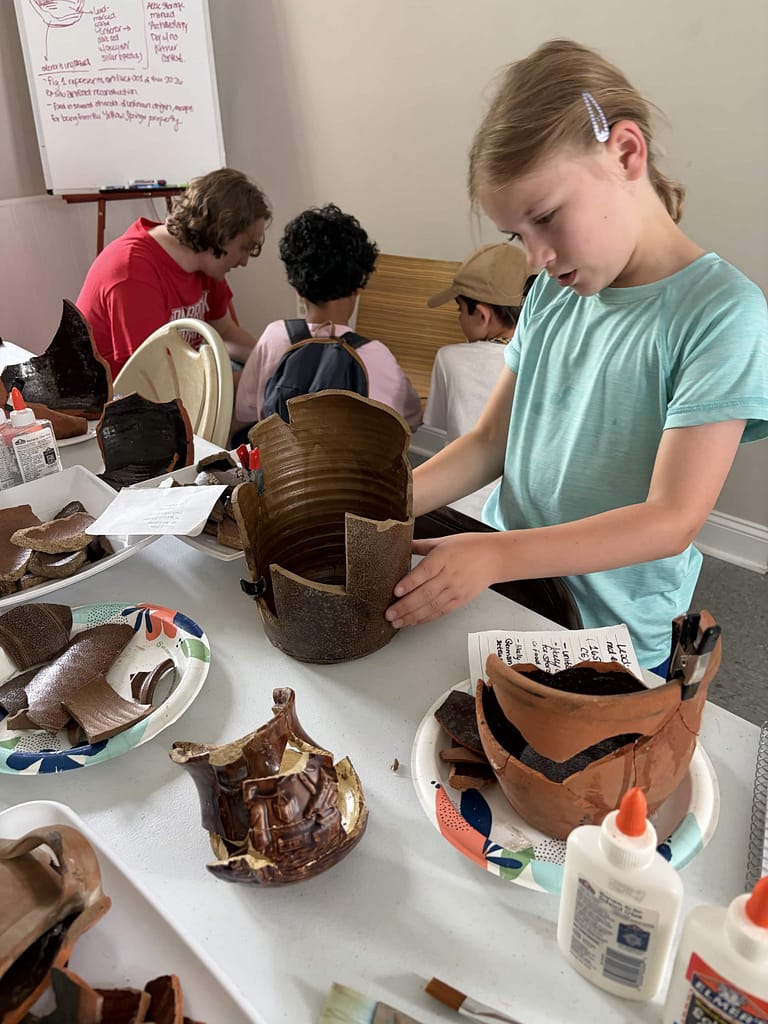
One particularly rewarding activity involved reconstructing broken pottery.
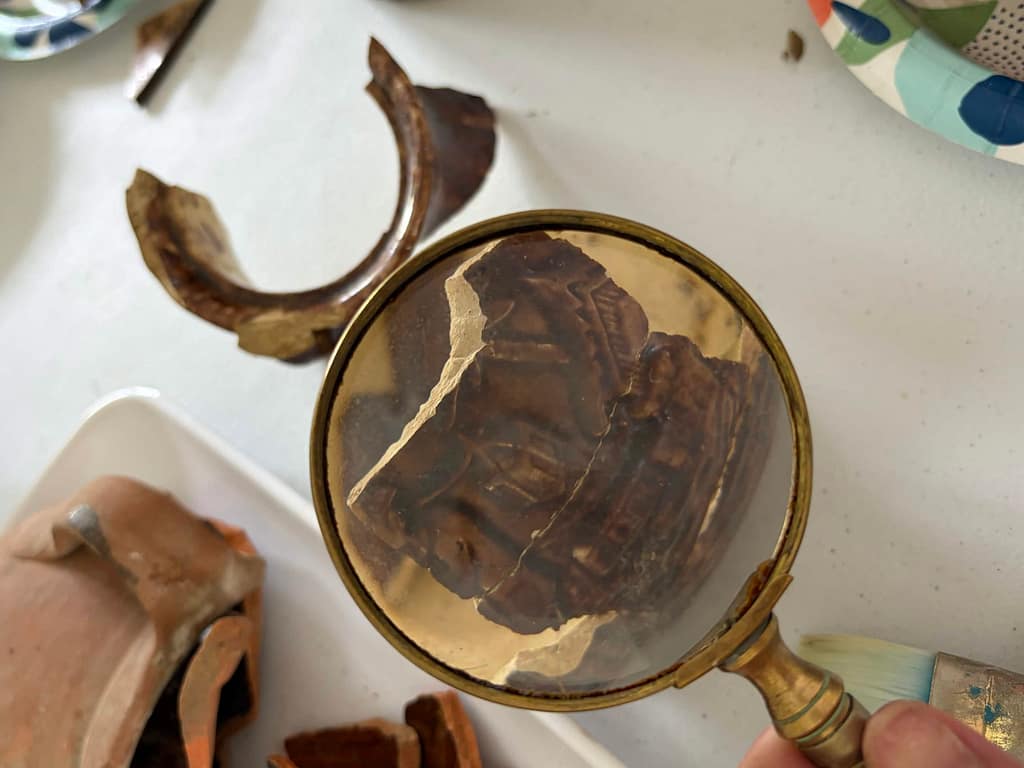
Using genuine archaeological conservation techniques, campers painstakingly matched individual sherds together, gradually rebuilding portions of vessels that had remained broken for generations.
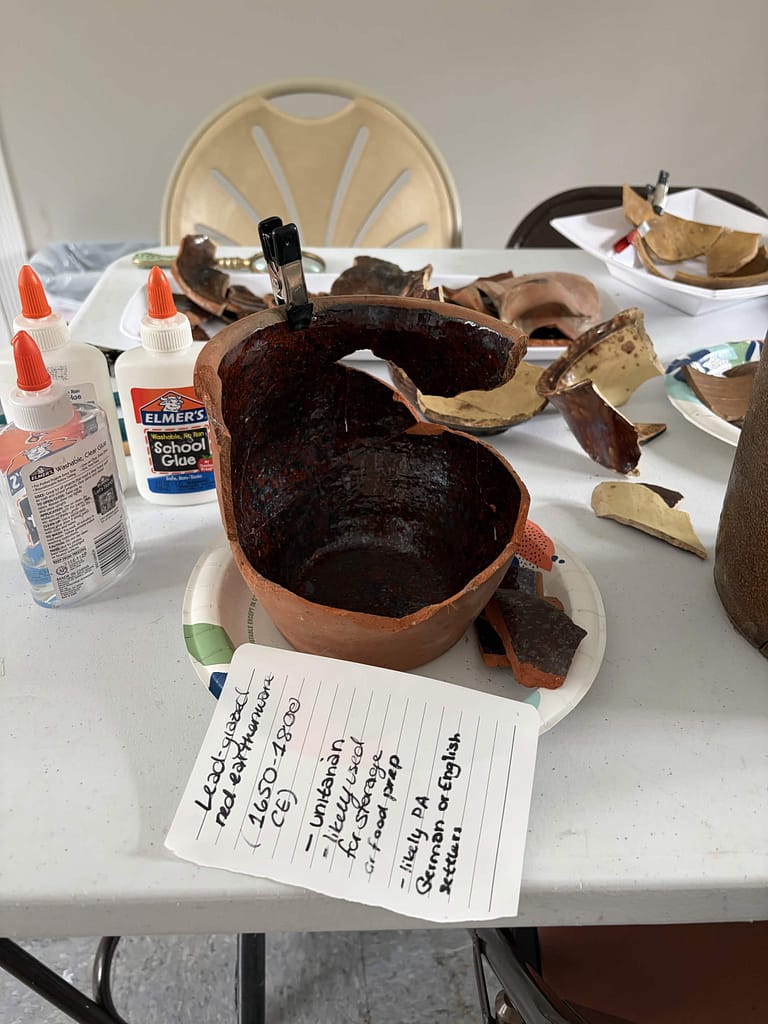
Among these were several pieces of the slip-trailed redware that we discussed in this post earlier this year.
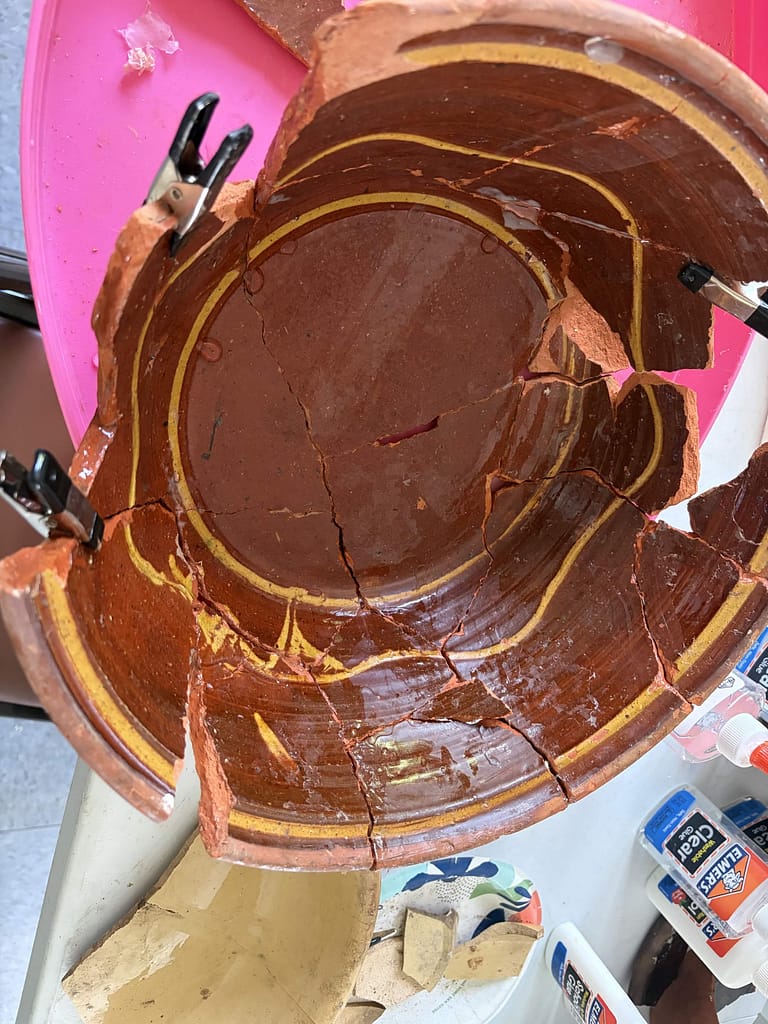
Further research during camp helped us revisit an earlier interpretation. We had previously considered whether the unglazed surfaces on several vessels resulted from centuries of burial. Comparing our fragments with reference collections suggested another explanation.
Throughout much of the colonial period, potters commonly glazed the interior surfaces of utilitarian redware vessels. This process made them waterproof while avoiding the added cost of glazing areas that served no practical purpose. Instead of losing their glaze underground, many of these vessels may have been made this way from the beginning.
Sometimes archaeology answers questions.
Other times, it teaches us to ask better ones.
History Has Stories to Tell
Not every lesson took place with a trowel in hand.
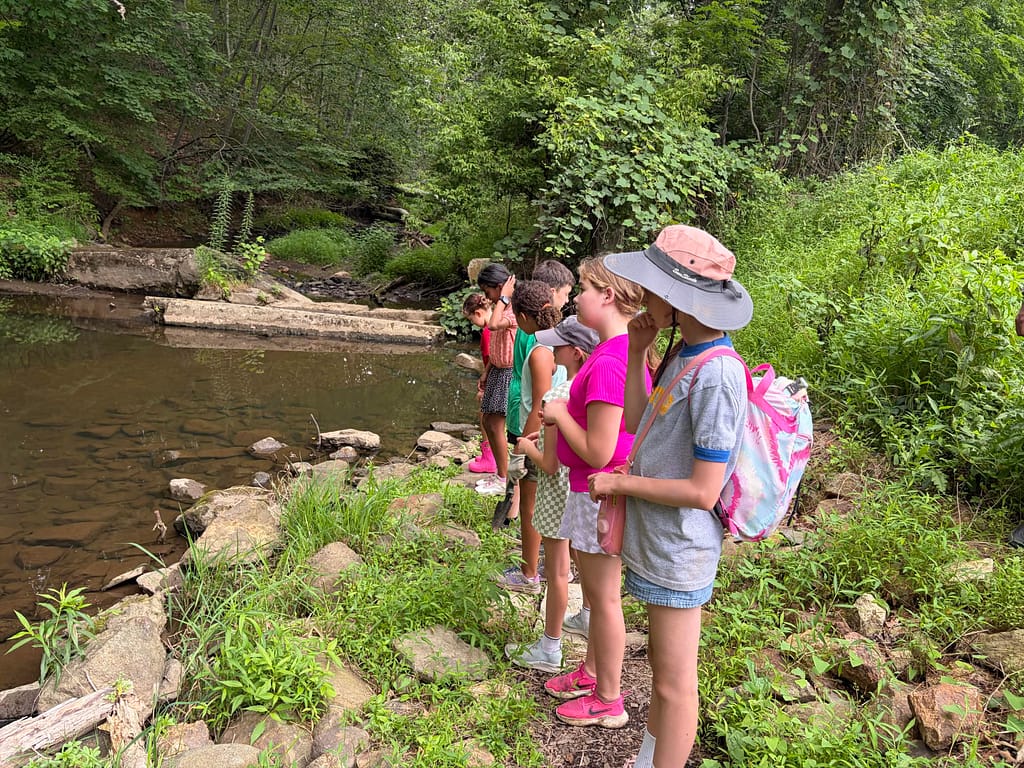
Toward the end of each session, campers explored the campus during a historical ghost tour with parental permission. While the tour offered an enjoyable experience, it also served a deeper purpose. We visited the remains of the dam built over Pickering Creek by PAFA students, viewed the ruins of Washington Hall, and explored the Brick Room in the Washington Building. This space once served as the tavern George Washington used as his headquarters during the Battle of the Clouds.
Whether someone believes in ghosts remains a personal choice, but the experience highlighted an important truth. The people whose stories we tell were real people who lived, worked, and shaped this place.
Archaeology teaches us that every artifact once belonged to someone. Every broken plate once held a person’s meal. Every stone foundation once supported walls where people worked, laughed, argued, celebrated, and mourned. Every object we uncover connects us to someone whose story deserves to be remembered.
In many ways, archaeology allows those people to speak again through the traces they left behind.
To Us, Today
Although our excavation answered an important question by confirming the presence of a historic structure near the Iron Spring, it also created many new mysteries. This is often how archaeology works. Each discovery leads to another question waiting to be explored.
For Historic Yellow Springs, this process makes the work so exciting.
The archives preserve countless stories through documents, photographs, newspapers, and letters. The landscape preserves many more beneath the soil. By studying both together, we can continue piecing together the history of this remarkable place.
We sincerely thank every camper who spent part of their summer learning how to investigate the past with patience, curiosity, and care. We also thank their parents for supporting their curiosity, our counselors for helping make the program a success, and everyone who worked behind the scenes to bring Archaeology Summer Camp back to Historic Yellow Springs.
Much of Yellow Springs’ history remains waiting to be discovered. We look forward to sharing what we learn, one excavation at a time.
🏺🔍⛏️
Learn more about the history of Yellow Springs
You can read the more in-depth version of this post here
Follow us on Substack, Instagram, and Facebook
🏺🔍⛏️
Works Cited
“West Pikeland Real Estate Transactions.” Chester County, Pennsylvania Newspaper Abstracts. RootsWeb. Accessed July 30, 2026. https://sites.rootsweb.com/~pacheste/chester_nwsprbits_wpikeland_realest2.htm.