Throwback Thursday: Flags at Yellow Springs
What We Fly at Historic Yellow Springs and Why They Matter Today
Setting the Scene
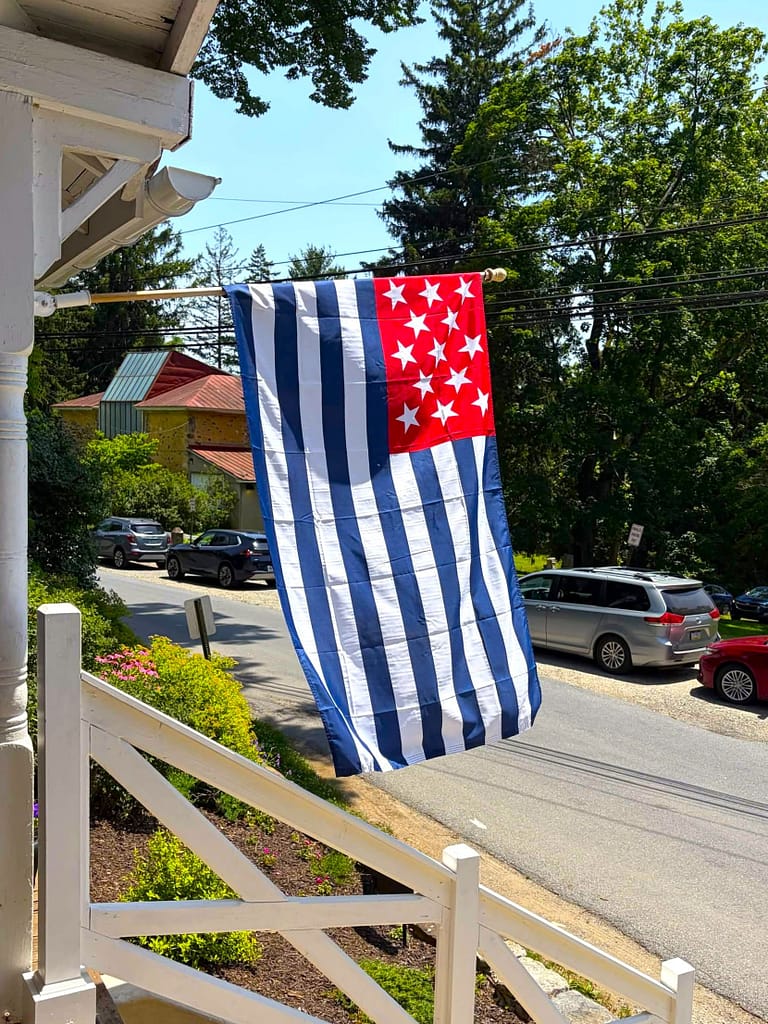
Over the past week, we have received several questions about the flag flying outside Historic Yellow Springs. One visitor even recognized it as the Fort Mercer flag and asked why we chose to fly it. We always enjoy questions like these because they give us the chance to share the stories behind the symbols visitors see around our site.
Thanks to research by Mark Ashton, a Historic Yellow Springs board member and friend of Yellow Springs, we can explain the history and meaning of the flags that fly here and why they are an important part of interpreting our Revolutionary War past.
The Flags We Fly
Since June 2022, Historic Yellow Springs has flown flags that honor our Revolutionary War heritage.
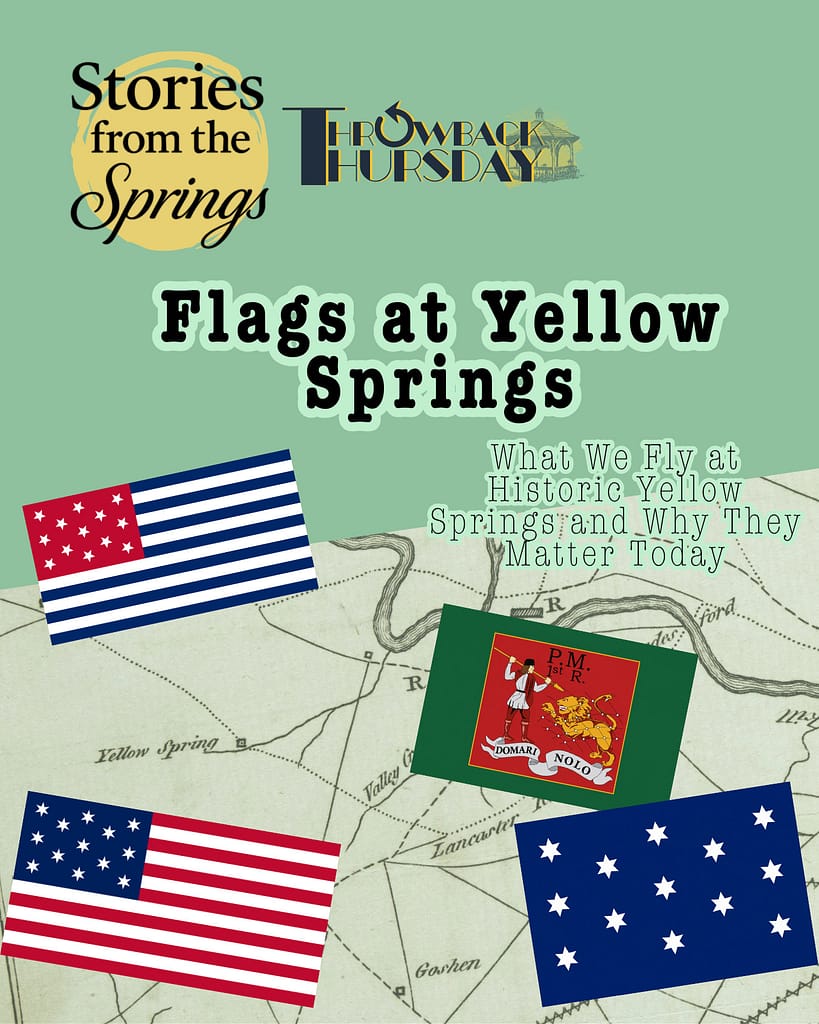
Each day, the Lincoln Building displays the flag that flew over Fort Mercer on the Delaware River in 1777. Across the street, the Main House usually flies a flag designed by Francis Hopkinson, a Philadelphia lawyer who also helped create the Great Seal of the United States.
Together, these flags remind visitors of the people, places, and events that shaped our nation’s early history and reflect the important role Yellow Springs played during the Revolutionary War.
Fort Mercer Flag
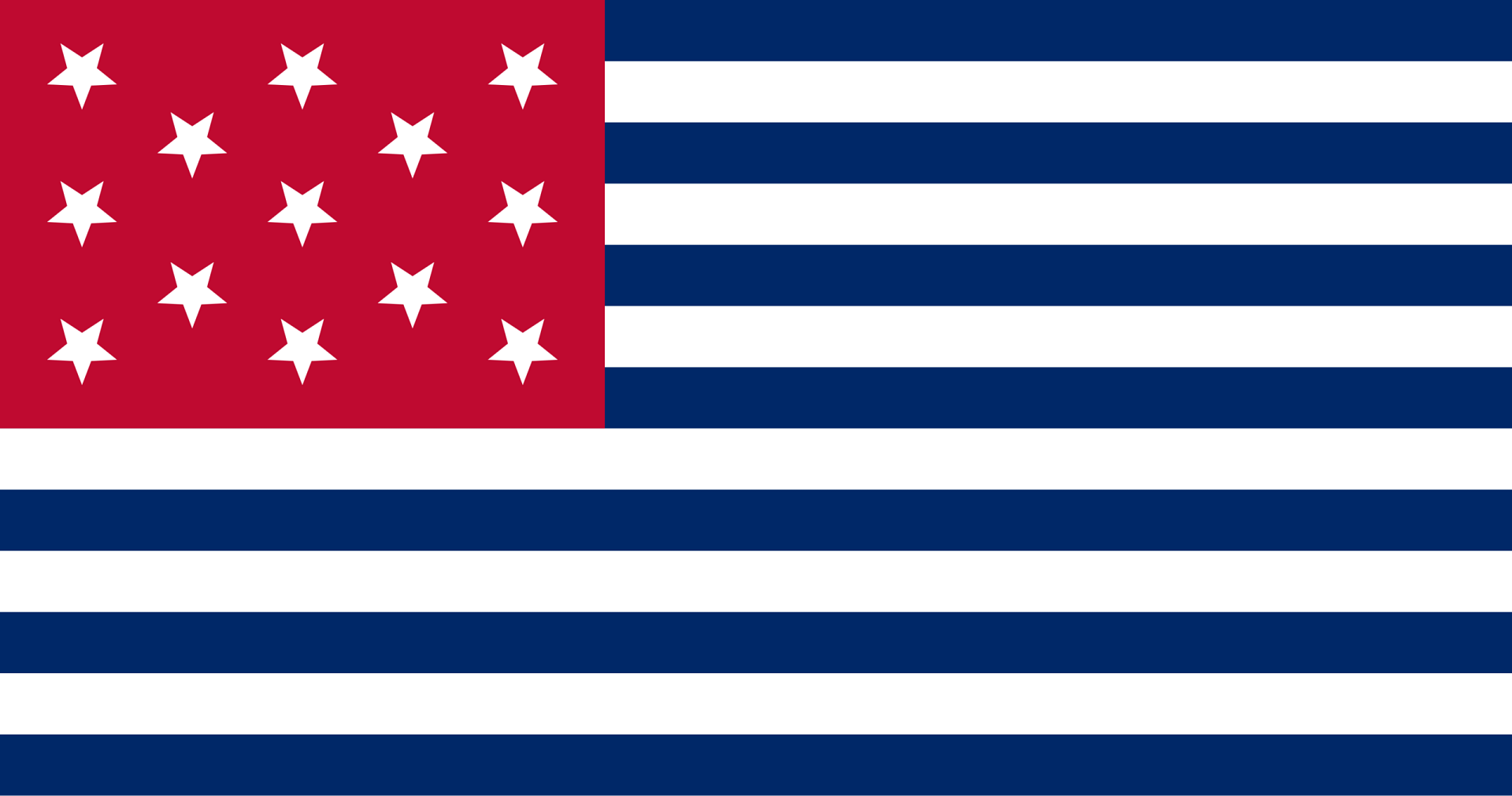

The Fort Mercer flag stands out because its colors are the reverse of the familiar early American flag. Instead of red and white stripes with a blue field, it has thirteen blue and white stripes with a red field holding white stars. Historians believe this unusual design reflects the challenges of making flags during the Revolutionary War, before Congress adopted a standard pattern. Miscommunication, limited supplies, or a desire to show defiance against British rule may have led to its distinctive appearance.
This design is especially relevant for us at Yellow Springs, as the management challenges that the Hospital Department faced meant that the hospitals at Yellow Springs were met with a lack of support from Congress and leaders of the department. You can read more about the scandal that left Yellow Springs undersupplied in one of our previous posts.
The flag flew over Fort Mercer, an earthen fort built by the Continental Army in 1777 on the New Jersey side of the Delaware River. Polish military engineer Thaddeus Kościuszko designed the fort under the command of George Washington. Together with Fort Mifflin across the river in Pennsylvania, Fort Mercer helped defend the Delaware River and slow the British advance toward Philadelphia during the Philadelphia Campaign.

Fort Mercer is shown as Red Bank on the map above. Yellow Springs is on the left.
George Washington Headquarters Flag
Because Yellows Springs was General Washington’s headquarters on Sept 17, 1777, we also will occasionally fly the flag denoting his headquarters.
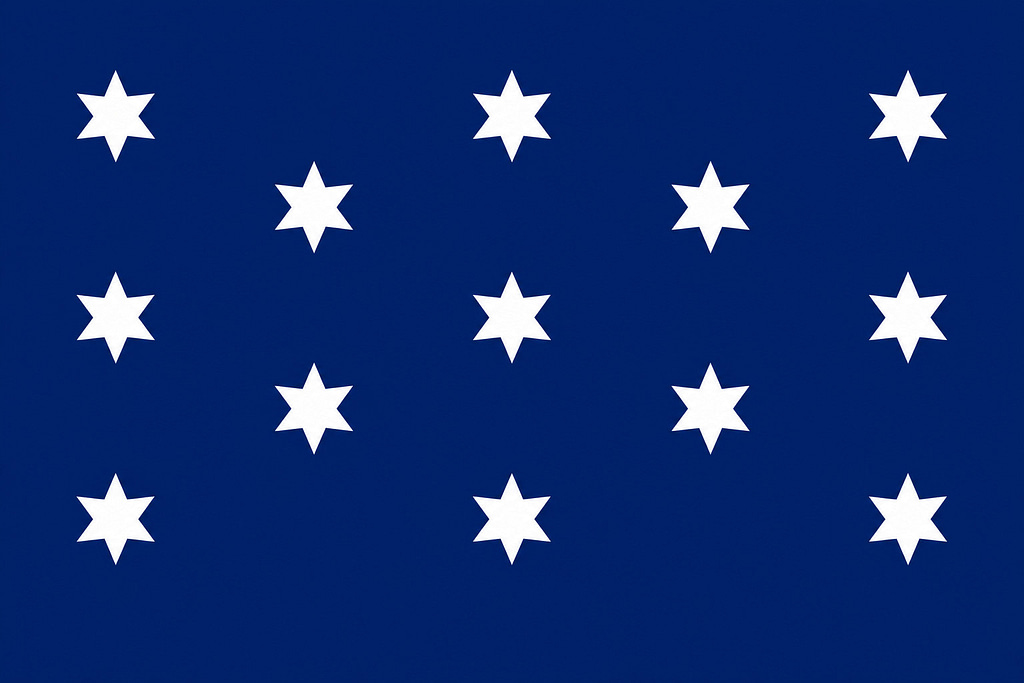
According to a post by the Museum of the American Revolution, the flag that marked George Washington’s headquarters was known as the Commander in Chief’s Standard. Soldiers used it to identify the location of Washington and his headquarters during the Revolutionary War.
After the Declaration of Independence, Americans began creating new symbols that represented their new nation and its ideals. One of those symbols was the circle of thirteen white stars on a blue field, which represented the united states as a new constellation.
Congress adopted this design in 1777, and it later became part of the American flag that is still recognized today.
First Pennsylvania Minutemen Rifle Regiment Flag
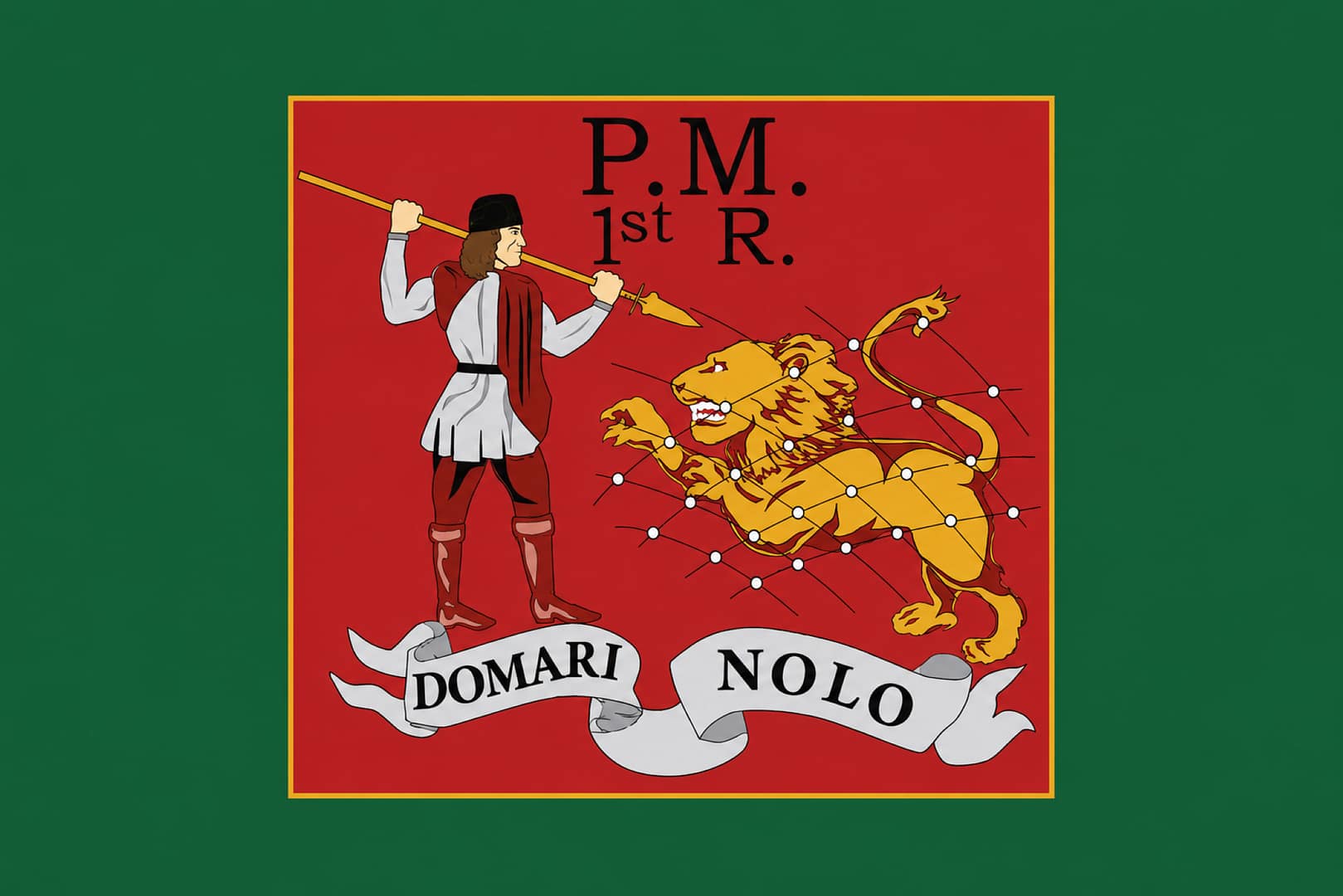
Because (as mentioned above) George Washington used the tavern at Yellow Springs as his headquarters after the Battle of the Clouds, we also display the flag of the 1st Pennsylvania Regiment on occasion. According to a post by the Virginia chapter of The Sons of the Revolution, this flag belongs to the First Continental Regiment, and is also known as the First Pennsylvania Minutemen Rifle Regiment Flag.
The regiment fought in major battles such as Bunker Hill, Trenton, Brandywine, Monmouth, and Yorktown. It also served across all thirteen colonies and is believed to be the first unit south of the Hudson River to reach Massachusetts.
According to a blog post from the website Mother Bedford, the regiment carried a green flag with a central scene of a hunter holding a lion at bay with a spear. Beneath the image, a scroll reads Domari Nolo, which means “I refuse to be subjugated” in Latin.
Above the scene appears the lettering “PM 1st R”- which stands for Pennsylvania Militia First Regiment. The unit formed in 1775 as the Pennsylvania Rifle Regiment and began as a militia force. When George Washington created the Continental Army at the Siege and Liberation of Boston, leaders renamed these militia units as Continental Line regiments.
This imagery likely carried strong meaning for Pennsylvania militiamen in 1775. During this time, the lion often represented the British Empire. Britain had used the lion as a symbol of royal authority, courage, and control since the 12th century. The lion continued to represent the British Empire into the 19th and 20th centuries.
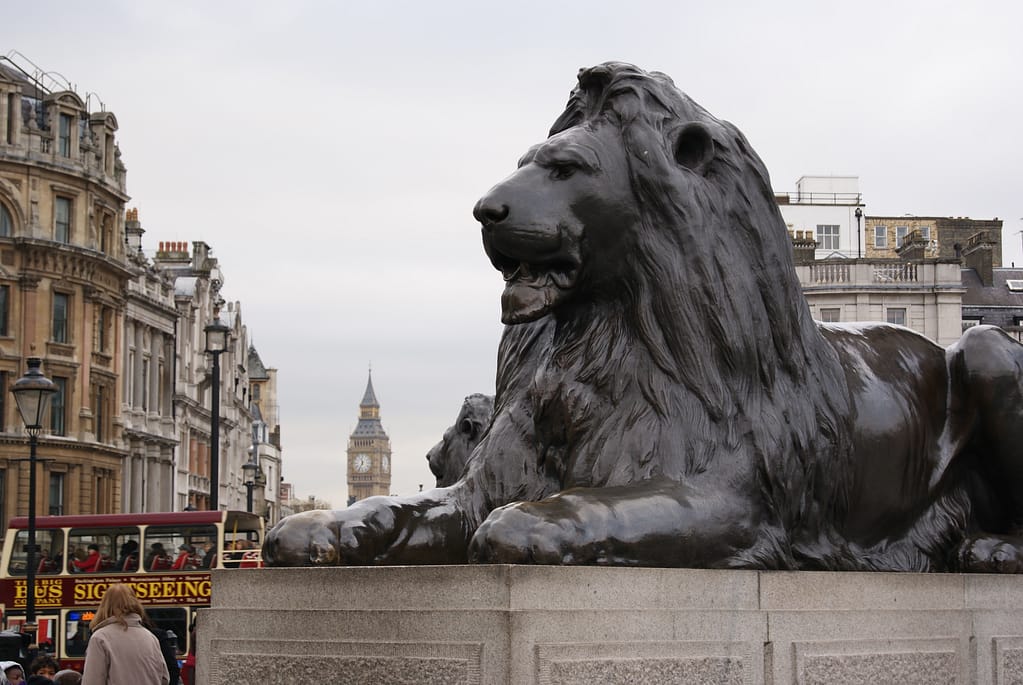
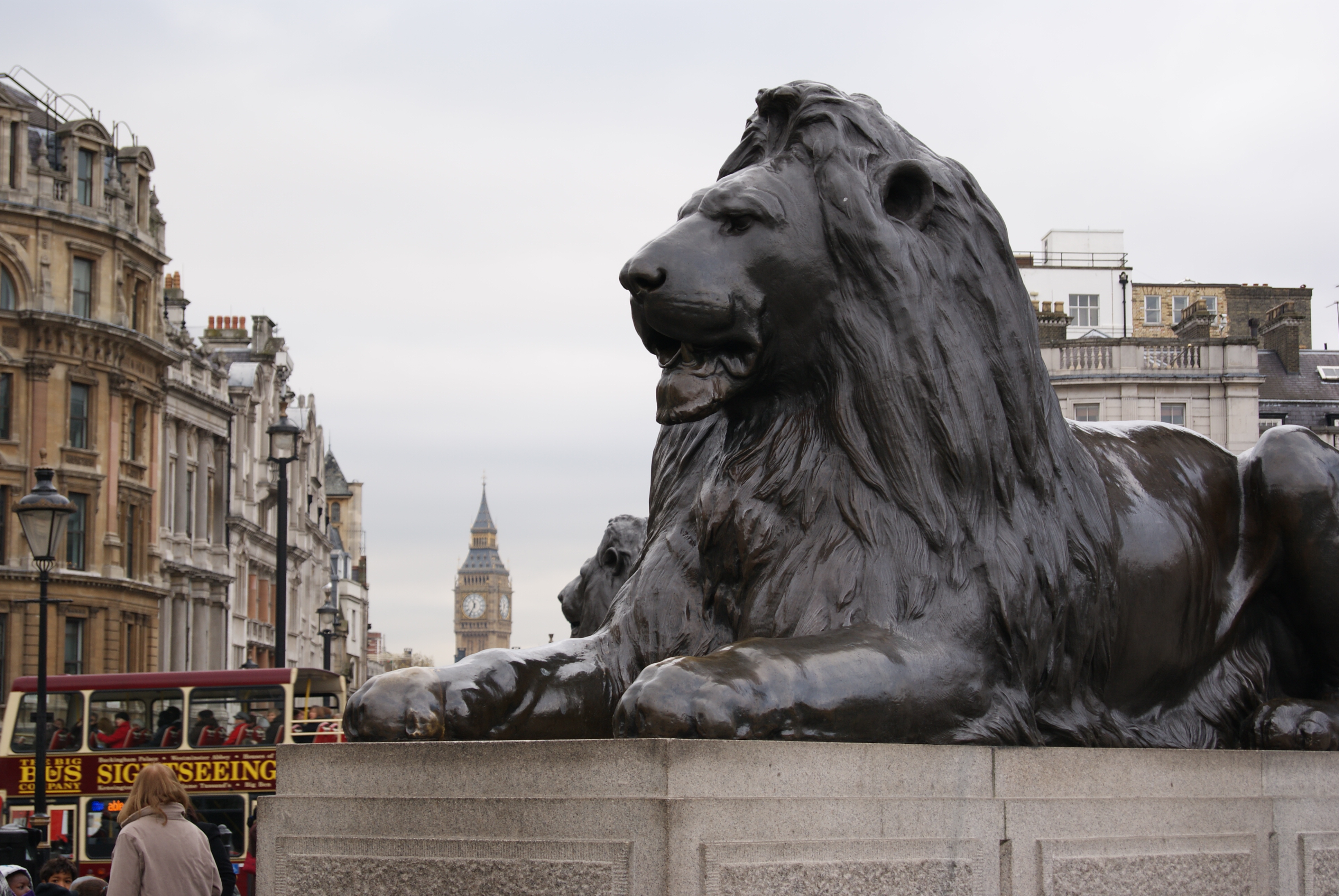
A hunter holding a lion at bay suggests resistance to that power. The motto reinforces that message by expressing a refusal to be ruled. Together, the symbols show a spirit of defiance and independence during the early fight for American liberty.
Hopkinson Flag
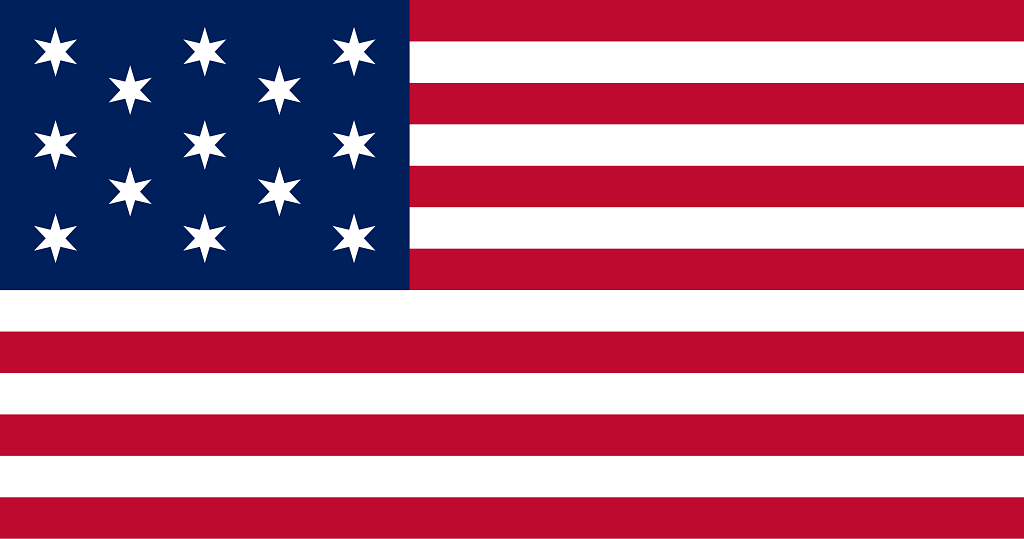

The Main House, located across the street, often flies the Hopkinson flag mentioned above. This Hopkinson Flag comes from an early American design credited to Francis Hopkinson. Hopkinson served as a Continental Congressman and signed the Declaration of Independence.
Francis Hopkinson worked as a Founding Father, lawyer, jurist, author, and composer. He also designed Continental paper money during the Revolutionary era. He created two early flag designs, one for the United States and one for the United States Navy. He signed the Declaration of Independence in July 1776 as a delegate from New Jersey.
This flag features thirteen stars and thirteen stripes. Historians often view it as the design that helped shape the Flag Act of 1777.
It also connects to the flag used for George Washington’s headquarters, which has been incorporated into this design.
To Us, Today
The flags we see at Historic Yellow Springs do more than mark buildings or recreate the past. They connect struggle, leadership, and identity into something visible in the present. Each design reflects moments when people tried to define freedom while facing war, uncertainty, and limited resources.
They also show how ideas of authority and resistance shaped everyday life, from military camps to local headquarters. When we study these symbols together, we see how history rarely moves in straight lines. It shifts through conflict, adaptation, and shared purpose across different groups.
These flags remind us that the Revolution was not only fought on battlefields, but also expressed through meaning, design, and belief.
By looking closely at them today, we better understand how people once communicated values under pressure, and how those choices still echo in the way we remember the past now.
🚩🏛️⚔️
Learn more about the history of Yellow Springs
You can read the more in-depth version of this post here
Follow us on Substack, Instagram, and Facebook
🚩🏛️⚔️
Works Cited
Francis Hopkinson. “Francis Hopkinson.” Wikipedia. Last modified 2026. https://en.wikipedia.org/wiki/Francis_Hopkinson.
“Fort Mercer.” Wikipedia. Last modified 2026. https://en.wikipedia.org/wiki/Fort_Mercer.
Museum of the American Revolution. “Washington’s Headquarters Flag.” Accessed 2026. https://www.amrevmuseum.org/collection/washington-s-headquarters-flag.
Virginia Society, Sons of the Revolution. “The First Continental Regiment – First Pennsylvania Minutemen Rifle Regiment Flag.” Accessed 2026. https://srvirginia.org/the-first-continental-regiment-first-pennsylvania-minutemen-rifle-regiment-flag/.
Mother Bedford. “Flags of the American Revolution Era.” Accessed 2026. https://www.motherbedford.com/Flags50.htm.
Leventhal Map and Education Center. “Commonwealth: z603vq58v.” Digital Collections. Accessed 2026. https://collections.leventhalmap.org/search/commonwealth:z603vq58v.