
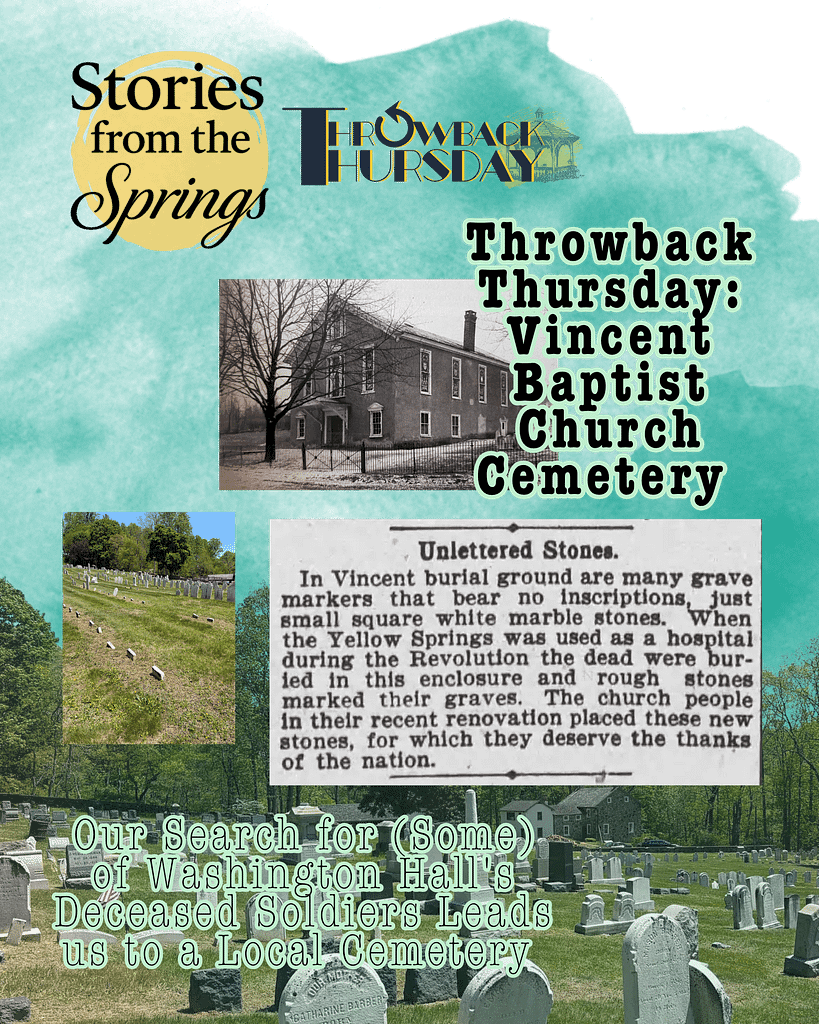
Throwback Thursday: Vincent Baptist Church Cemetery
Our Search for (Some) of Washington Hall’s Deceased Soldiers Leads us to a Local Cemetery
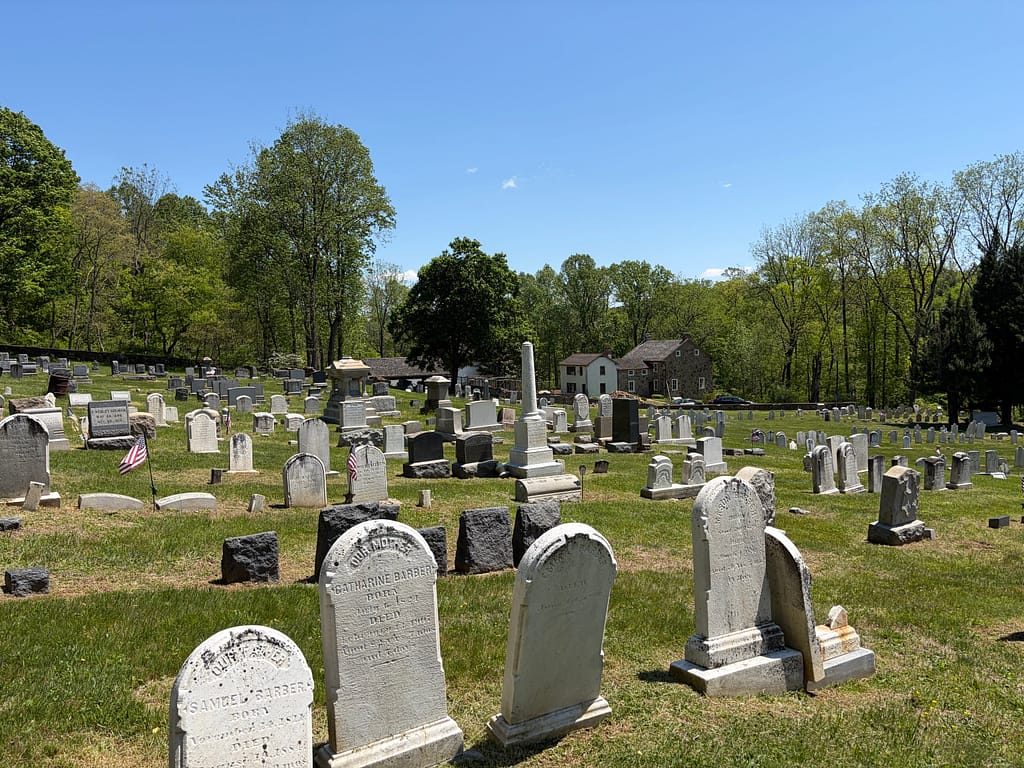
Setting the Scene
On September 24, 1902, in the newspaper the Daily Local News, it is reported on that the graves of several soldiers that died at Washington Hall at Yellow Springs, who had since been buried at the Vincent Baptist Church Cemetery, have received new grave markers.
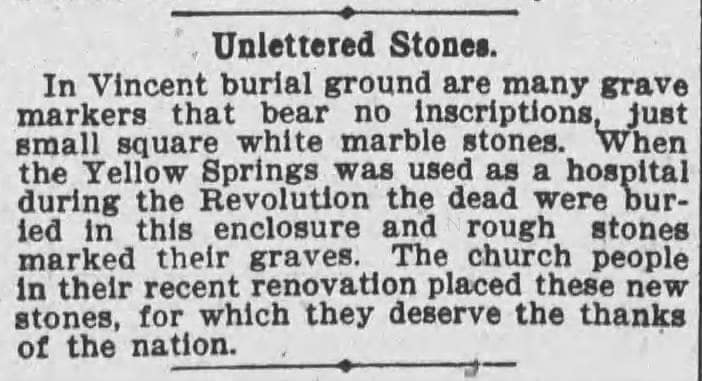
Here in the Moore Archives, we are quite familiar with the Vincent Baptist Church as a burial ground, as it is where several of the orphans who died at Yellow Springs while our campus was a Civil War Soldiers’ Orphan School were buried. We were intrigued to see if these markers for the Revolutionary War soldiers were still located at the burial ground, as the location of Washington Hall’s deceased has been a topic that has warranted much discussion in the past year.
Here in the Moore Archives, we are quite familiar with the Vincent Baptist Church as a burial ground, as it is where several of the orphans who died at Yellow Springs while our campus was a Civil War Soldiers’ Orphan School were buried. We were intrigued to see if these markers for the Revolutionary War soldiers were still located at the burial ground, as the location of Washington Hall’s deceased has been a topic that has warranted much discussion in the past year.
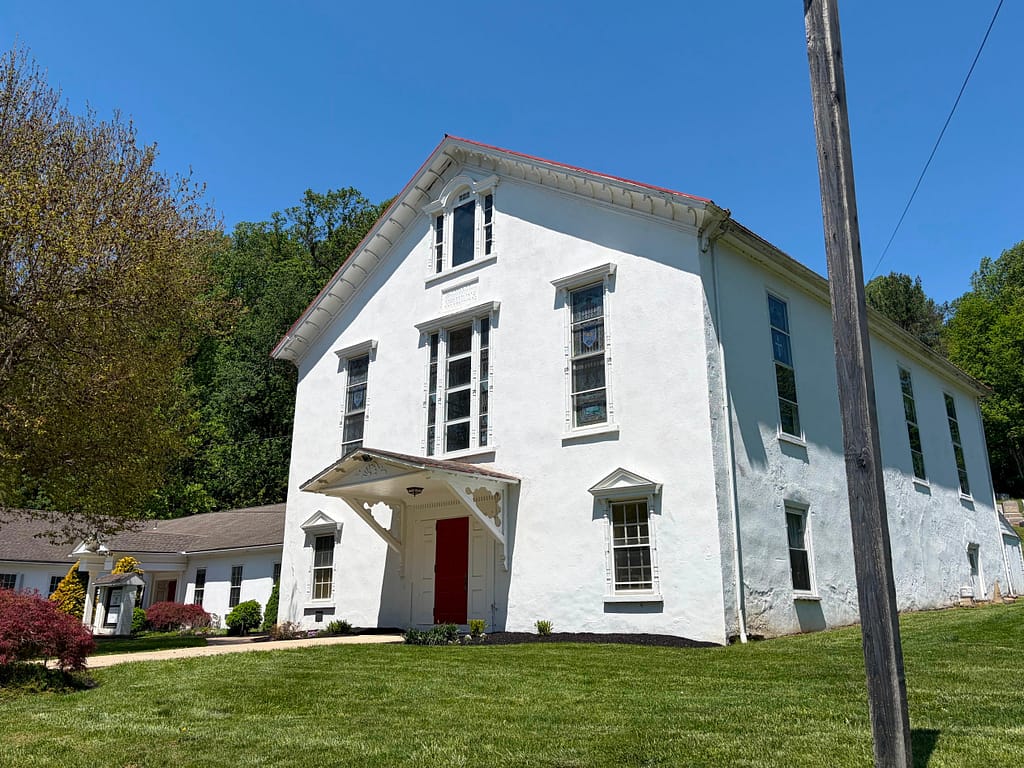
While Vincent Baptist Church is no longer a functional church, the cemetery on the grounds remains open and accessible.
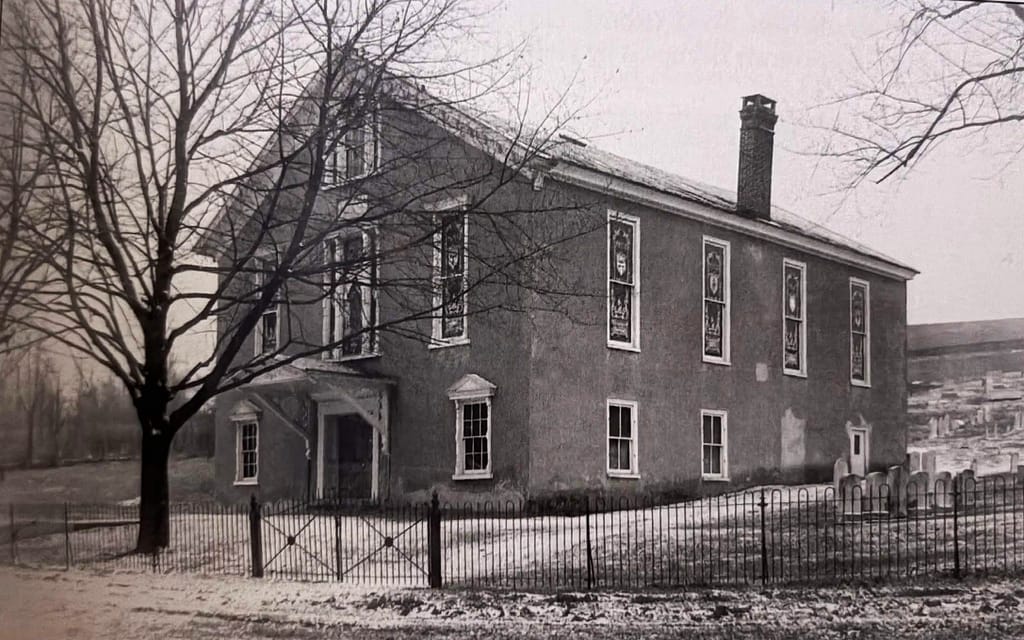
So, because the burial ground is located very close to Yellow Springs, we decided to take a “field trip” to see what we could find.
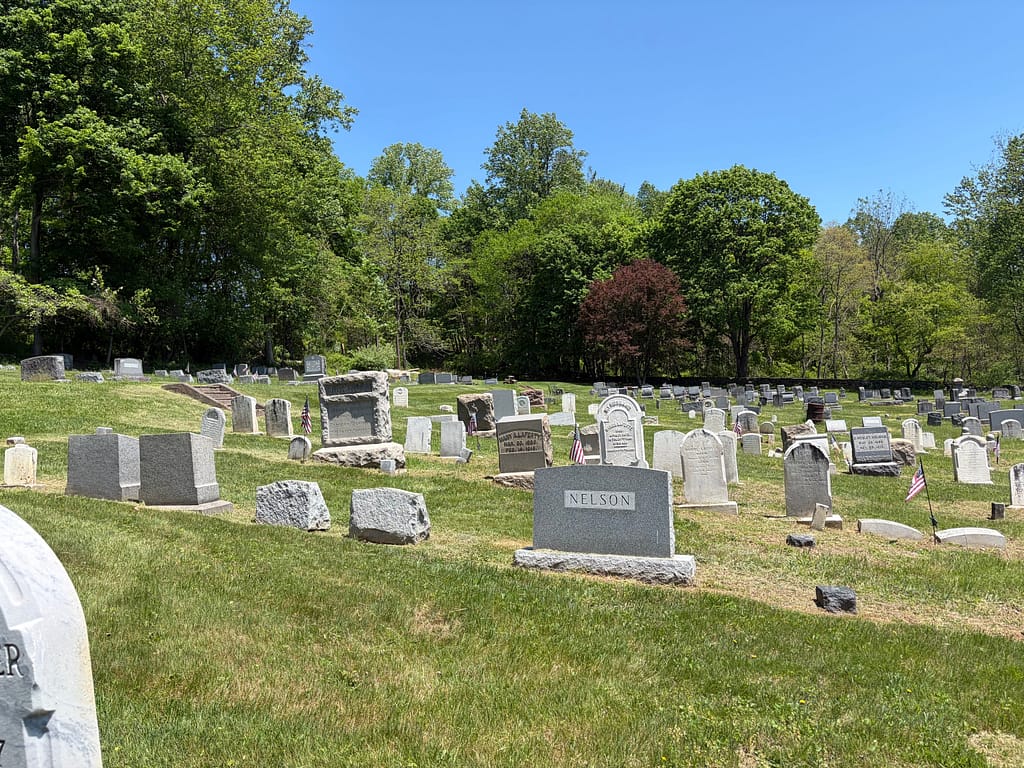
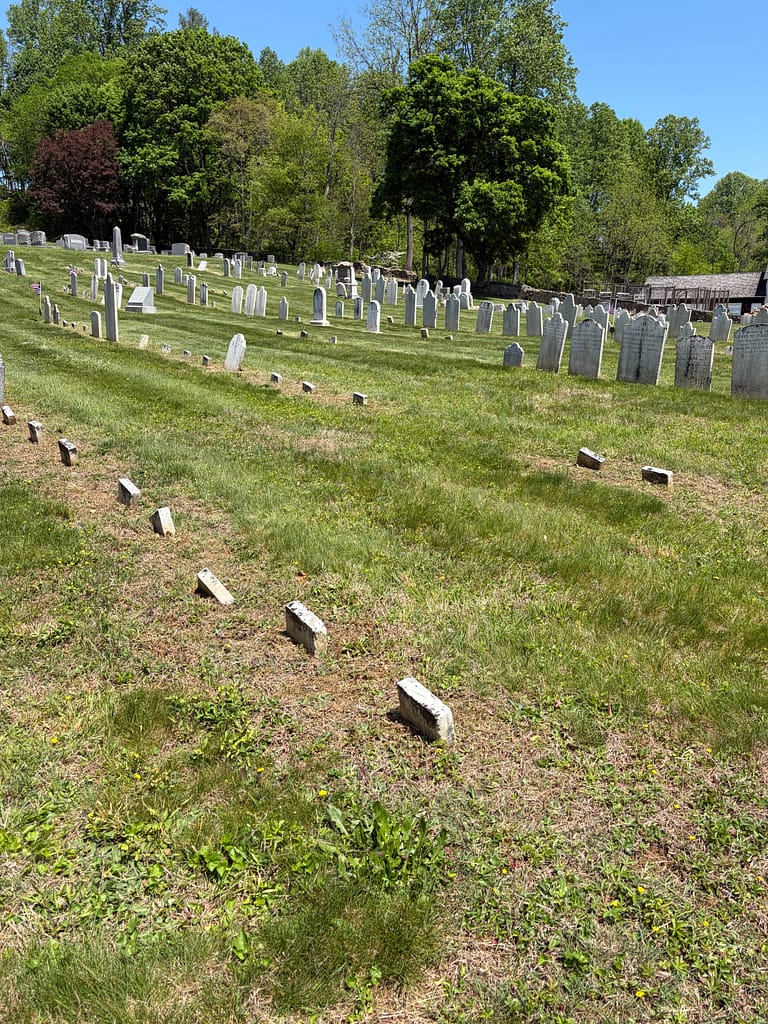
The Revolutionary Soldier’s Burial Markers
While wandering through the rows of older graves towards the middle of the burial grounds, we were able to locate two rows of small, unmarked stones. We believe these to be the reburials that the 1902 article was referring to.
Unclaimed Orphans of Yellow Springs’ Monument
Relatively near where the unmarked stones above are located, we found the monument that was erected to memorialize the students who, while at the Soldiers’ Orphan School at Yellow Springs, passed away and had no surviving family to claim them. Their monument takes the form of a small obelisk with the names of the deceased students engraved on it.
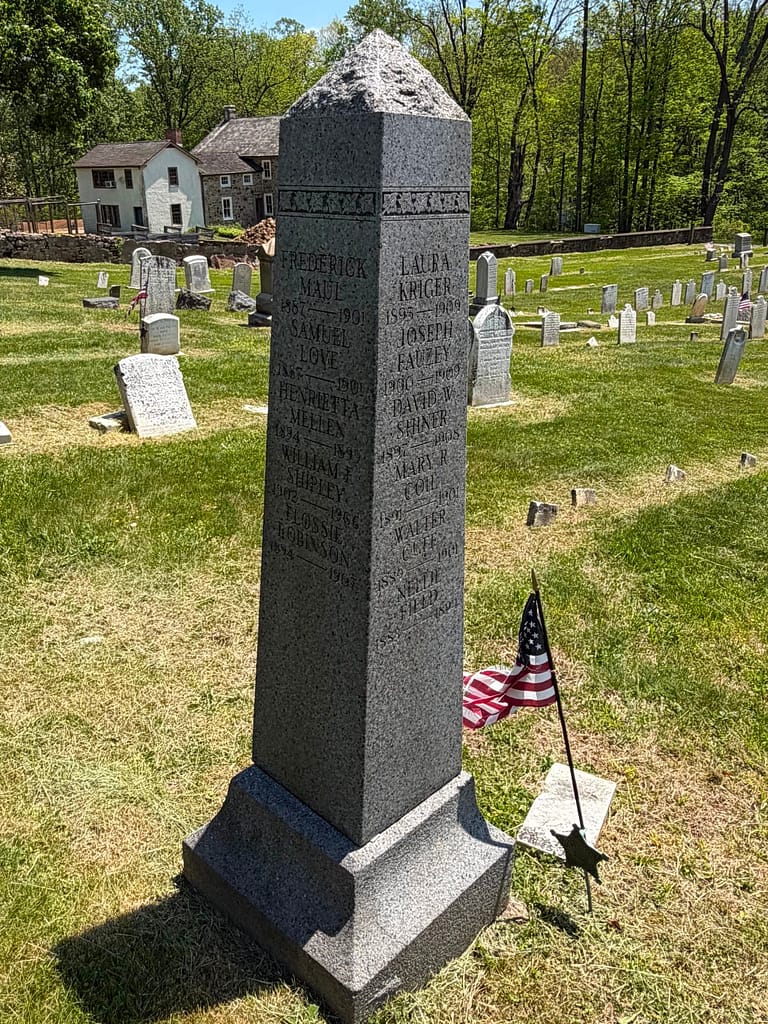
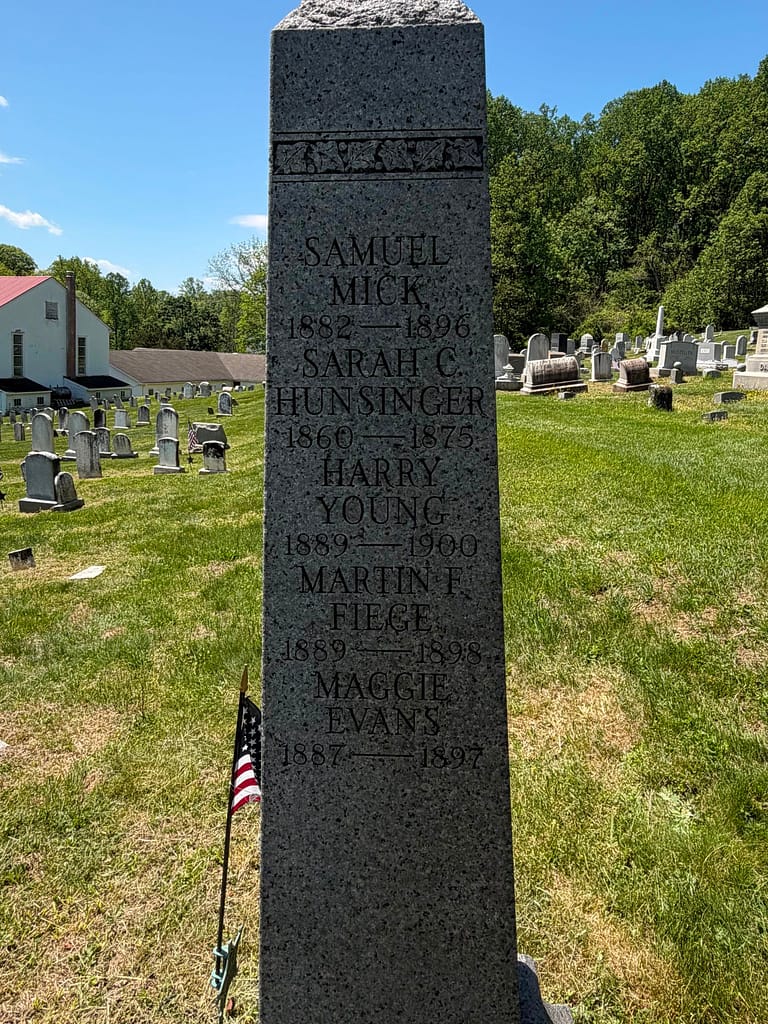
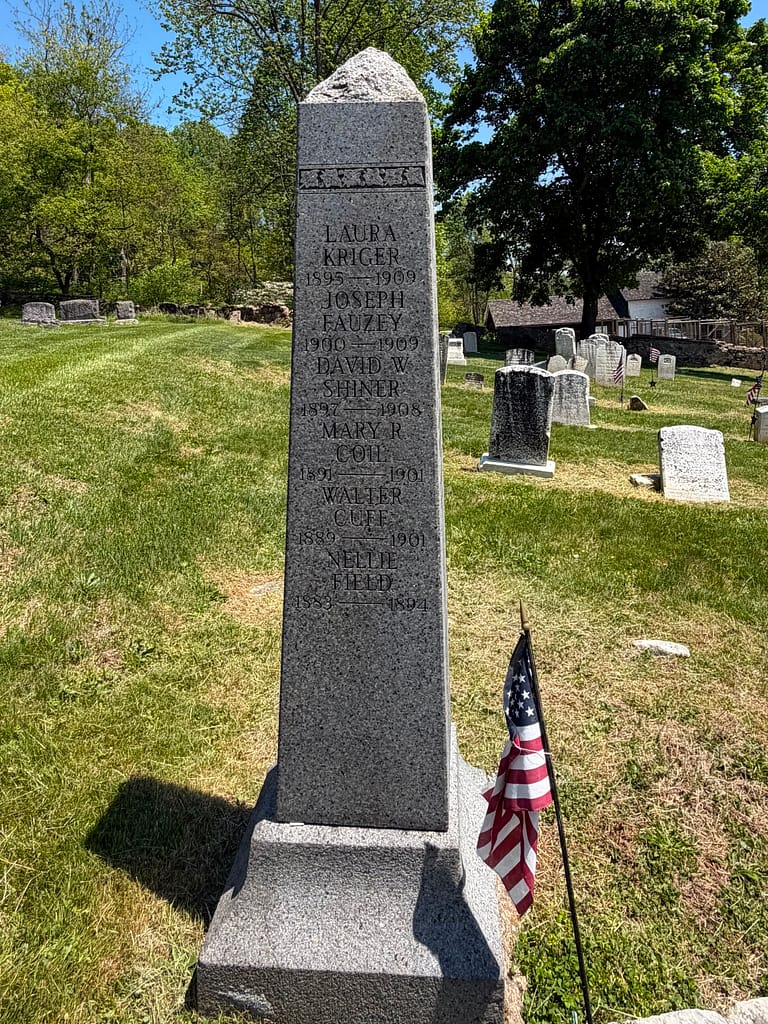
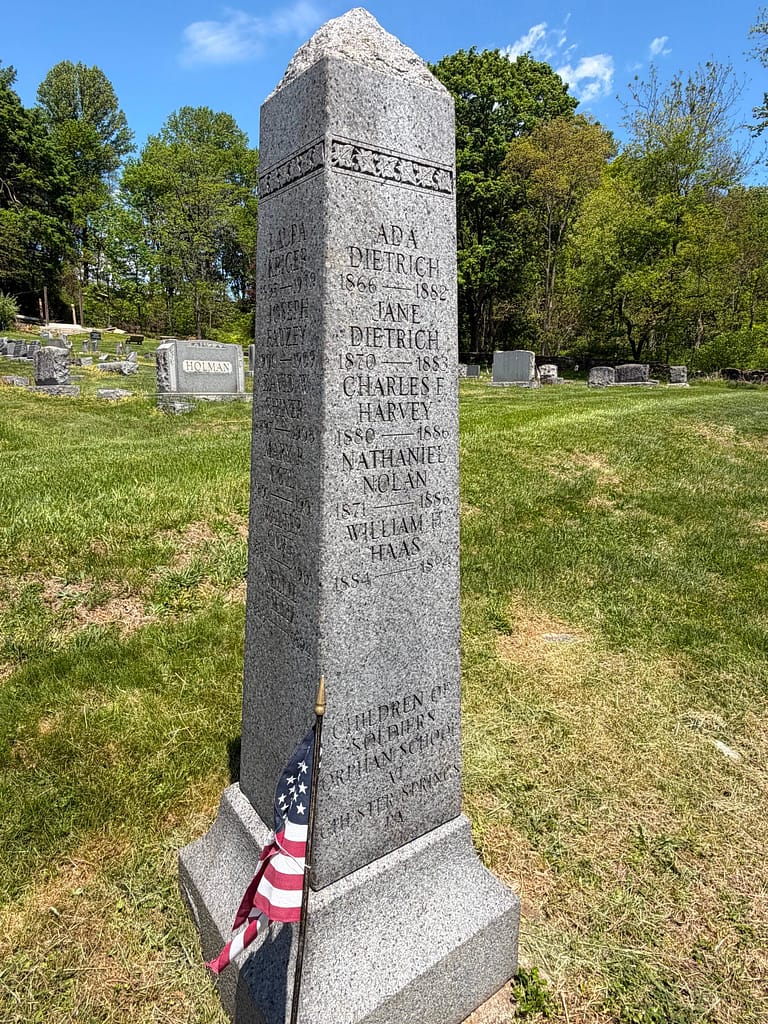
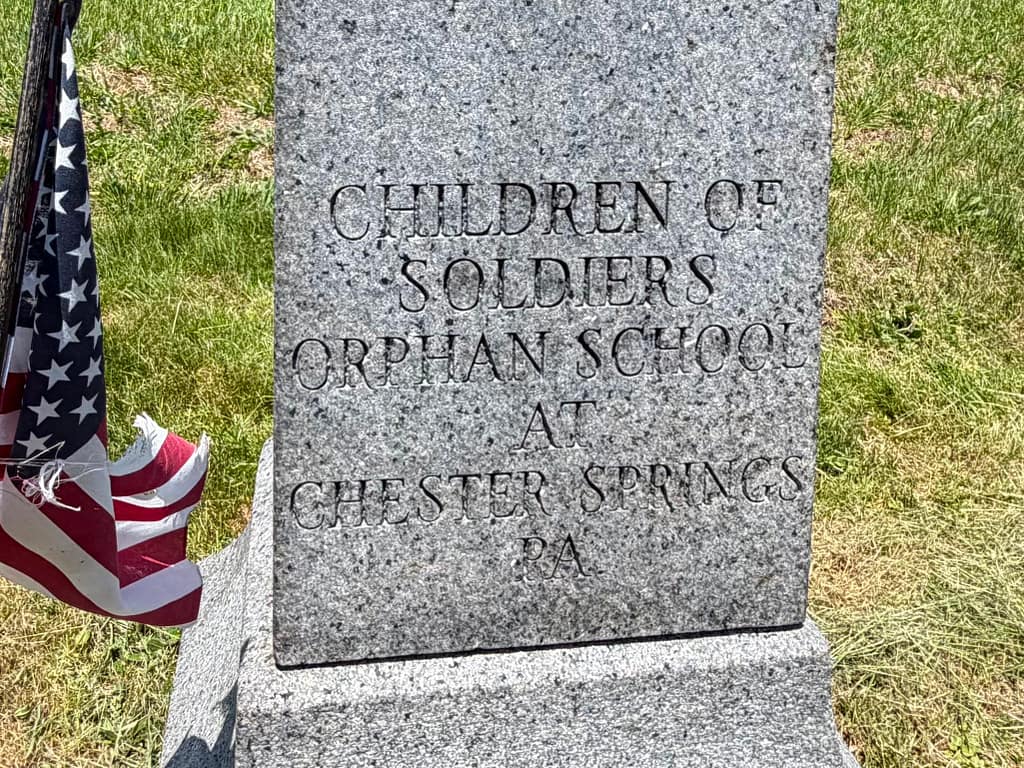
Note that during the time that the Soldier’s Orphan School was active at Yellow Springs, it was referred to as “Chester Springs” to differentiate from another town also called Yellow Springs.
Rice Family Plot
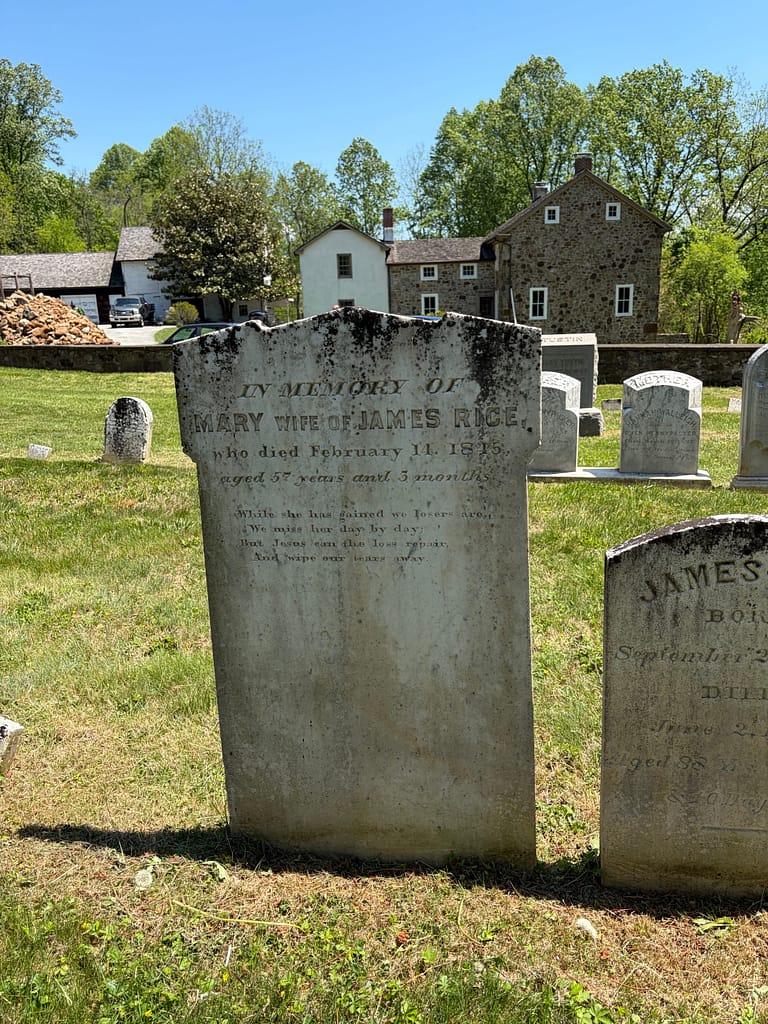
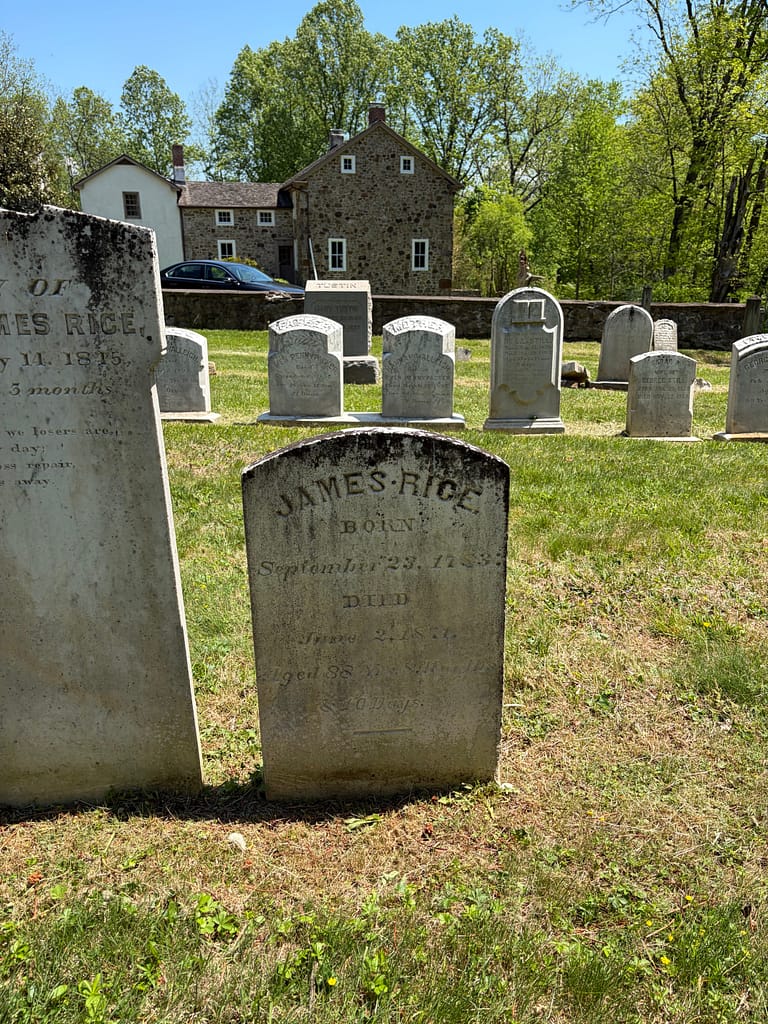
We also found a family plot containing several members of the Rice family, all of whom died in the early 1800s. Though we cannot confirm that they are related to the Rice family we have been tracking, such as the descendants of Abigail Hartman-Rice, who was a nurse at Washington Hall, we wanted to document a few of them during our visit in order to cross-reference them with our future genealogical research at a later date.
Grave Markers and Their Meanings
While we were exploring the cemetery at Vincent Baptist Church, we found several trends in the way that headstones were designed. While they are, perhaps, from families that are not directly related to the story of Yellow Springs and Washington Hall— before we start to look into who they may have been related to, we wanted to understand the symbolism behind the choices that those who loved them made when they laid them to rest.
Cut-Down Tree
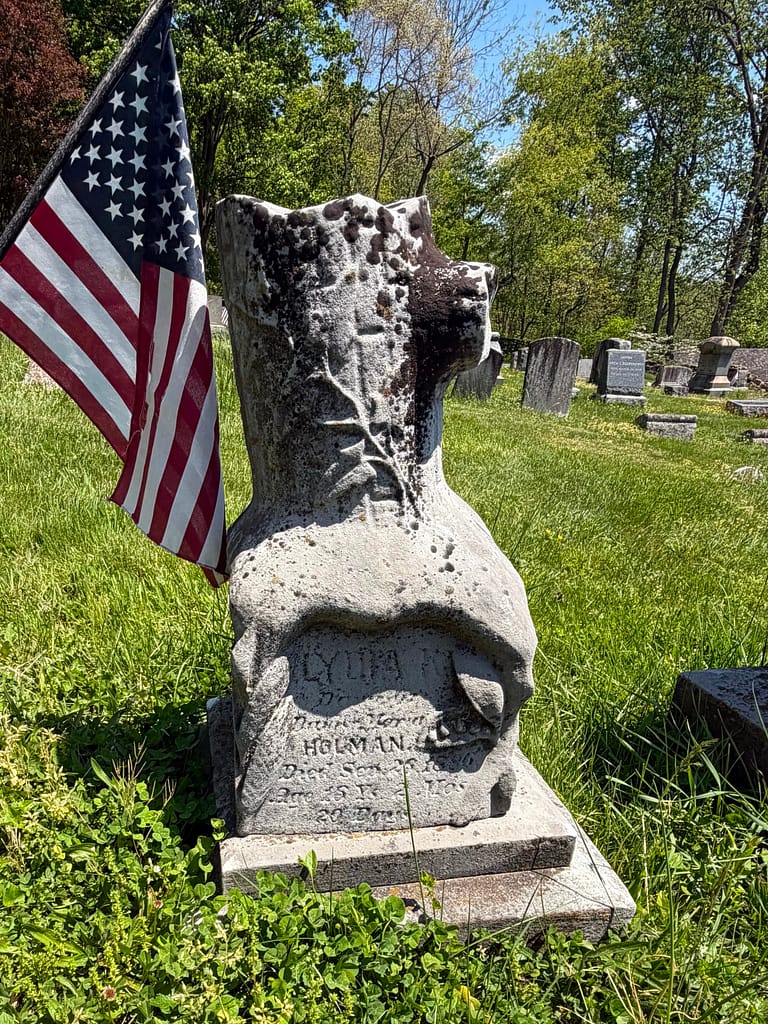
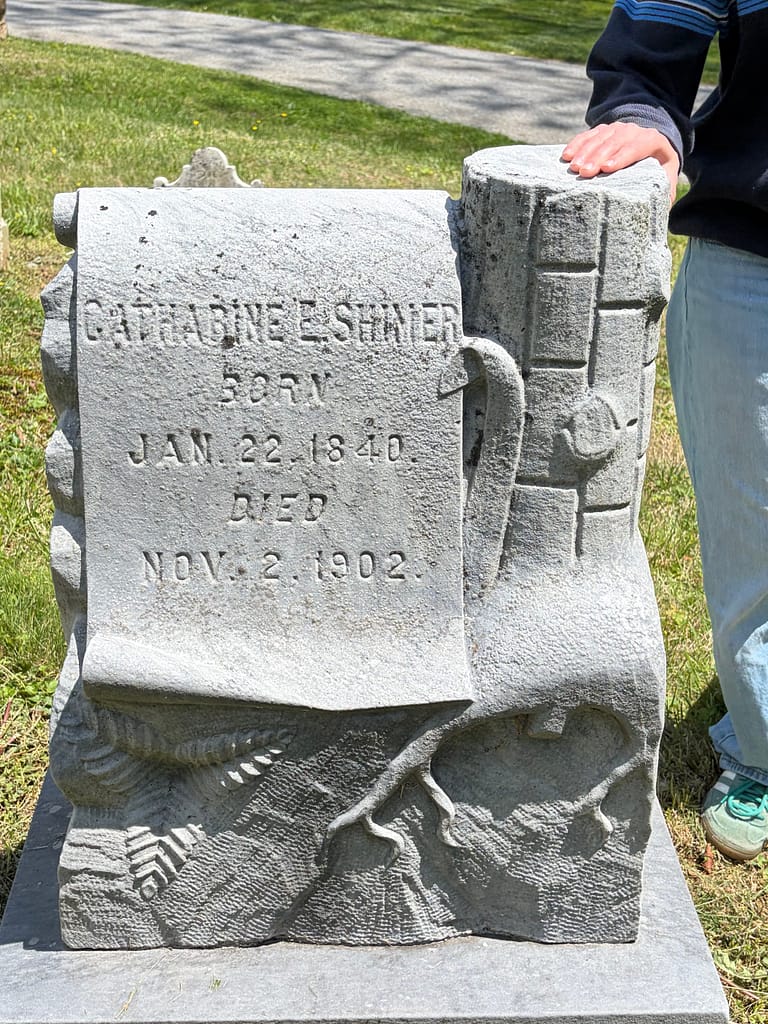
According to information found on a blog post from the website TAFOFILE (a cemetery documenting service), in Pennsylvania cemeteries from the 1890s through the early 1900s, carved images of cut-down trees symbolized lives interrupted by death. Families often chose these monuments during the Victorian era, when people used nature to express grief and memory. The severed tree suggested that a person’s growth ended before its natural time. Broken limbs or jagged cuts often strengthened that meaning. Ferns, ivy, and carved ground plants added ideas of rebirth, remembrance, and eternal life. These monuments also reflected the Rural Cemetery Movement, which treated cemeteries as peaceful natural landscapes.
Scrolls
In the above example- for the grave marker of Catharine E. Shiner, you may have noticed that there is not just a cut down tree included in the symbolism. Along with the tree and the ferns and the roots, her name has been recorded on a scroll. We noticed several other scrolls in the burial ground as well, and wanted to look further into them to see what they likely mean.
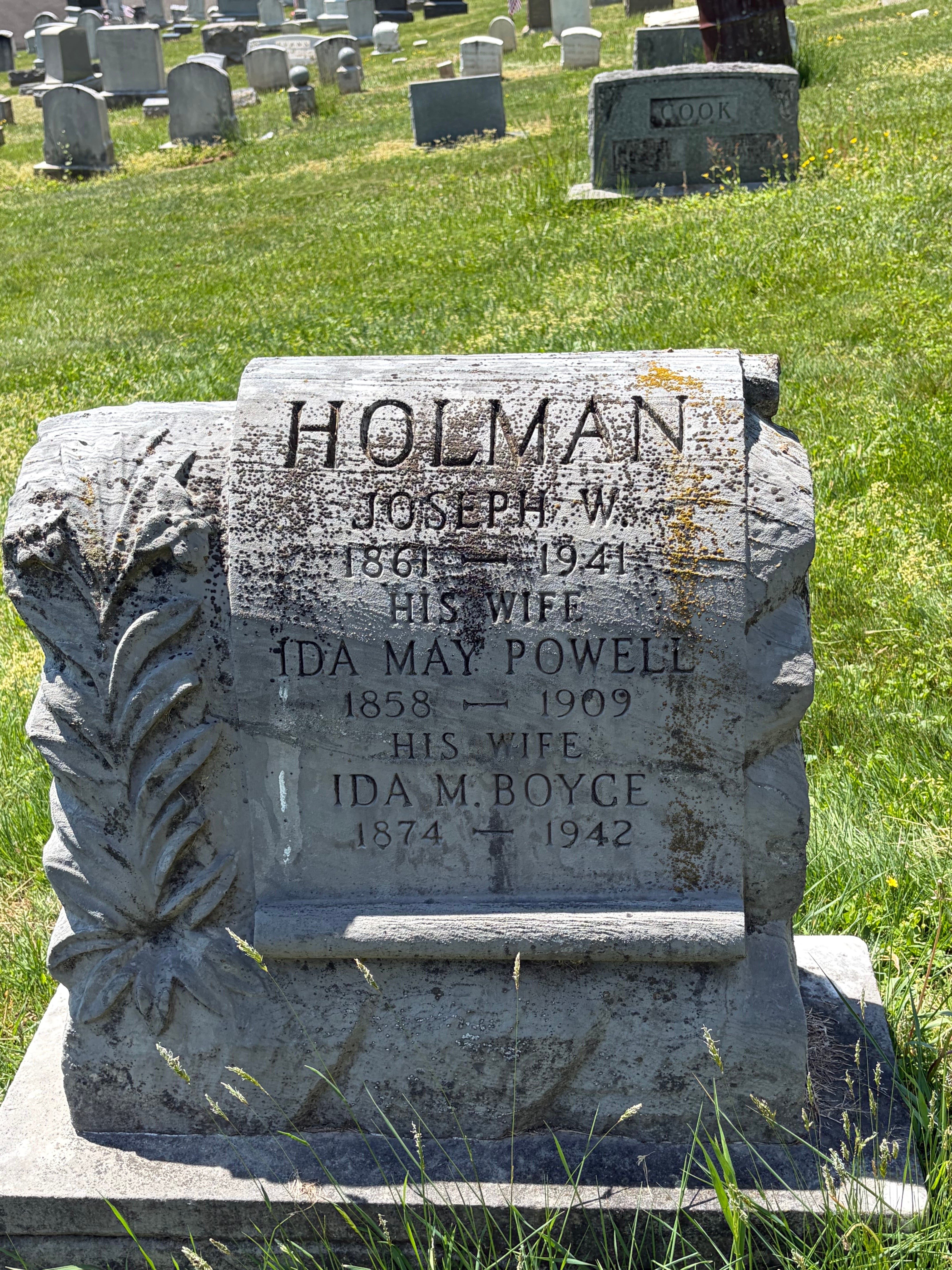
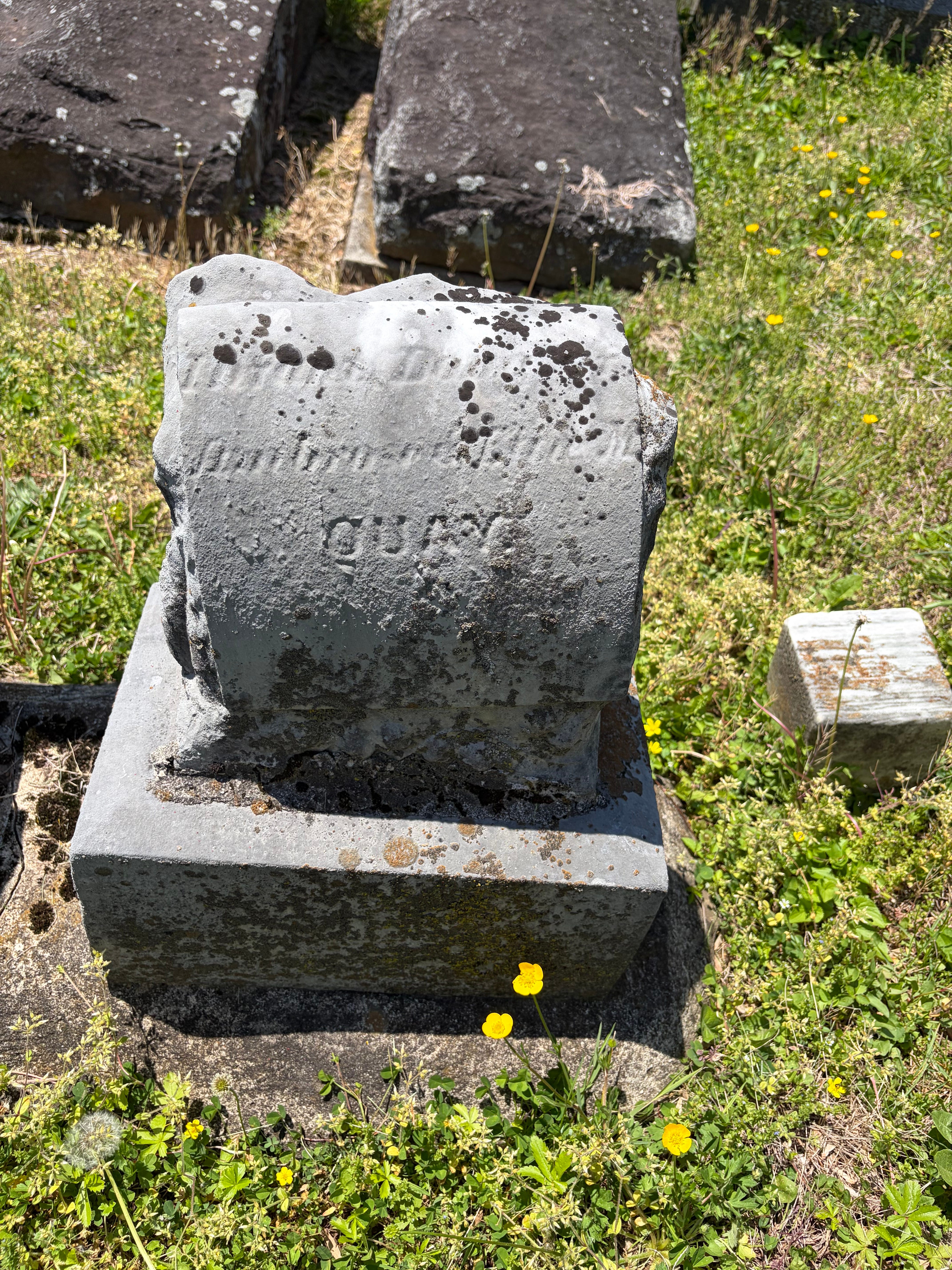
In Eastern Pennsylvania cemeteries during the 1800s and early 1900s (and as we can see above, sometimes into the 1940s), scroll imagery on headstones symbolized memory, wisdom, and the story of a person’s life.
Carvers often used scrolls to represent knowledge, religious faith, or a completed life record. The image connected closely to Victorian ideas about preserving personal legacy after death.
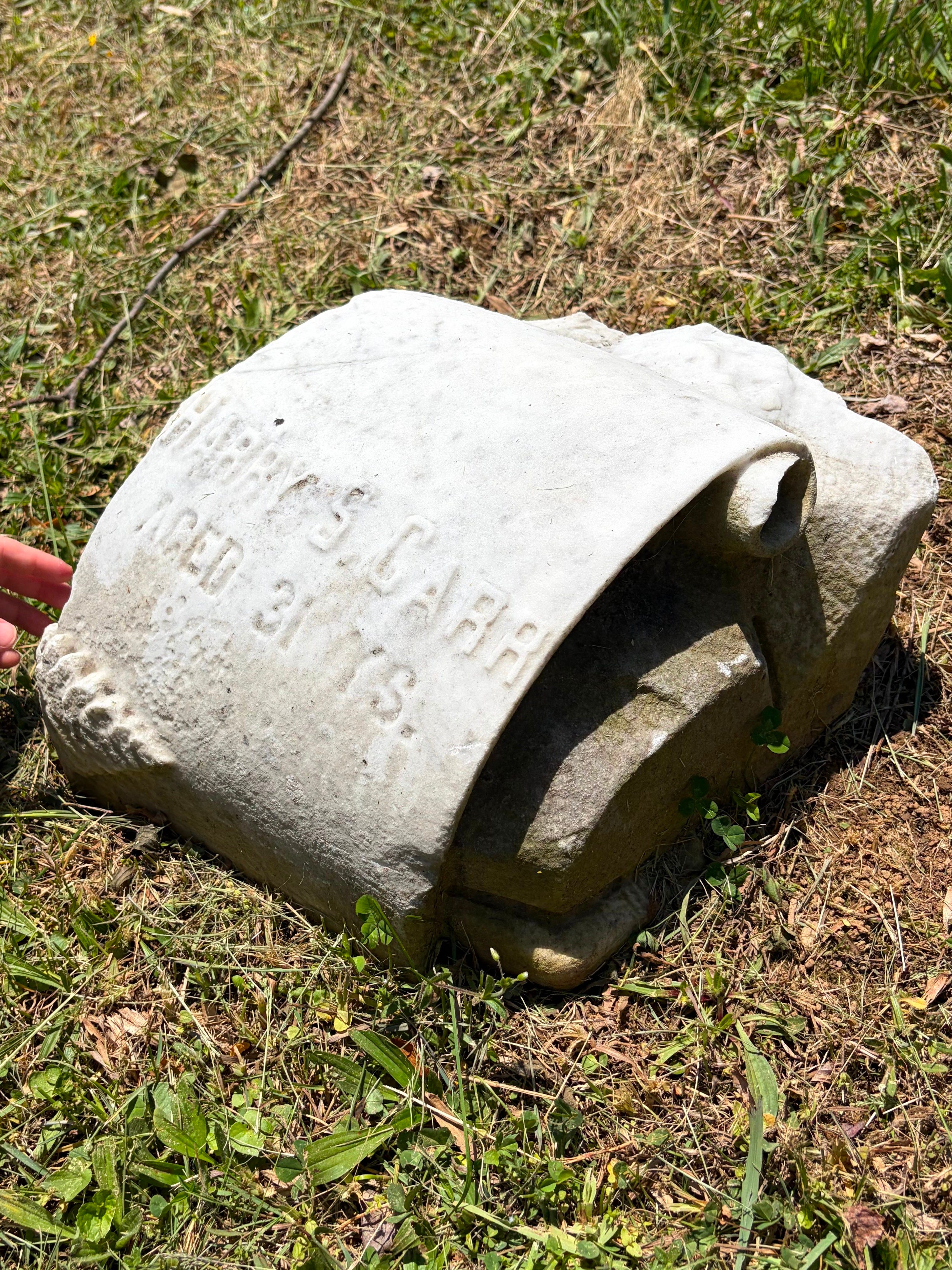
Families sometimes chose scrolls for teachers, ministers, educated individuals, or people respected within their communities. An open scroll could suggest that the deceased’s story remained remembered by future generations. A rolled or partially closed scroll often symbolized a life that had ended, while its memory continued. According to a post from the Woodland Cemetery discussing the grave imagery used in the Victorian era, scrolls were also often used to reference biblical scripture or ancient texts.
When paired with ferns, the imagery gained additional meaning. Ferns represented humility, sincerity, eternal youth, and remembrance. Together, the symbols created a message about memory surviving after death.
Urn and Willow Tree
We can see, on the headstone for Daniel Evans, that there is a carved depiction of two common images seen in funerary imagery: an urn and a weeping willow tree.
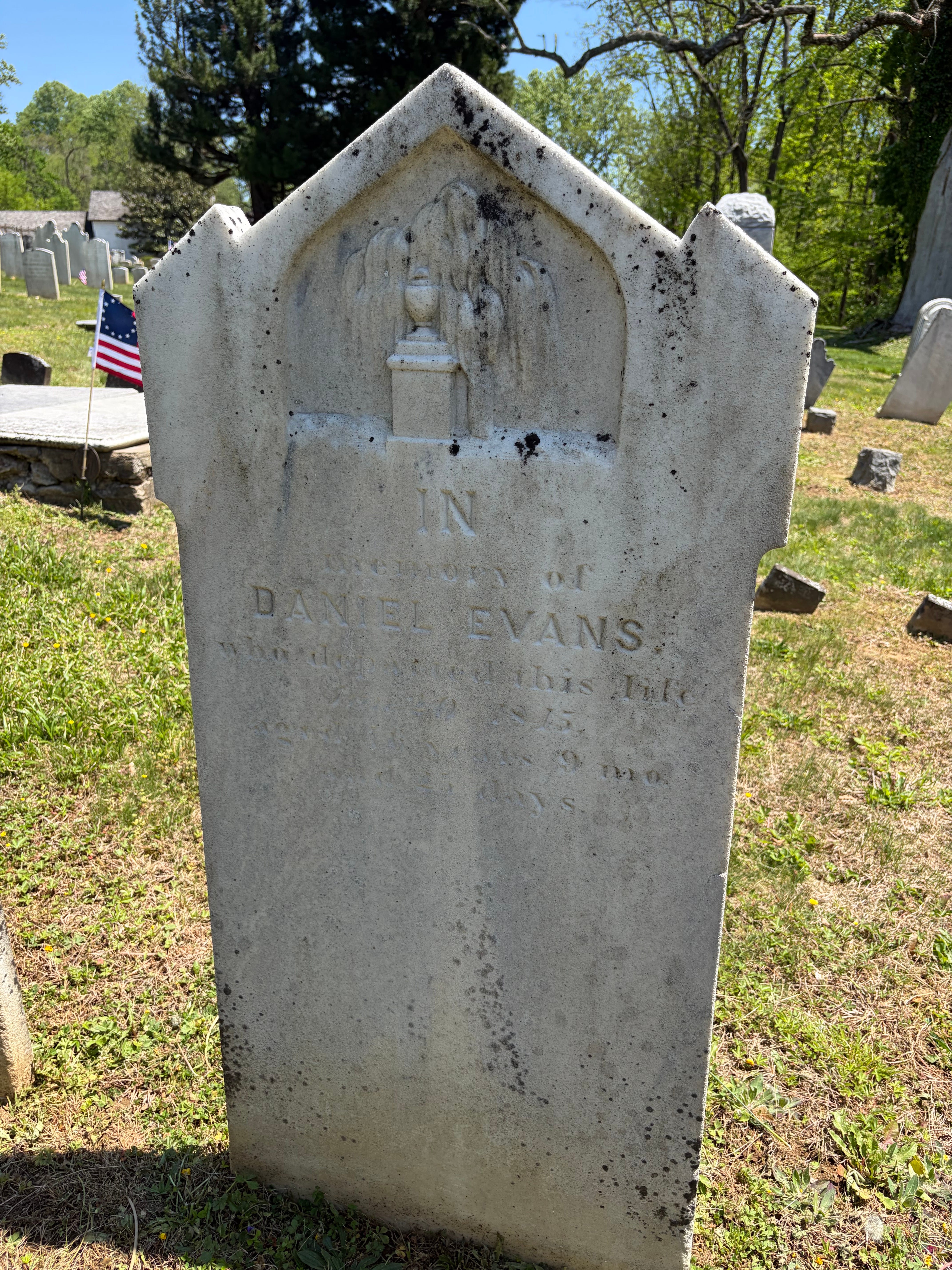
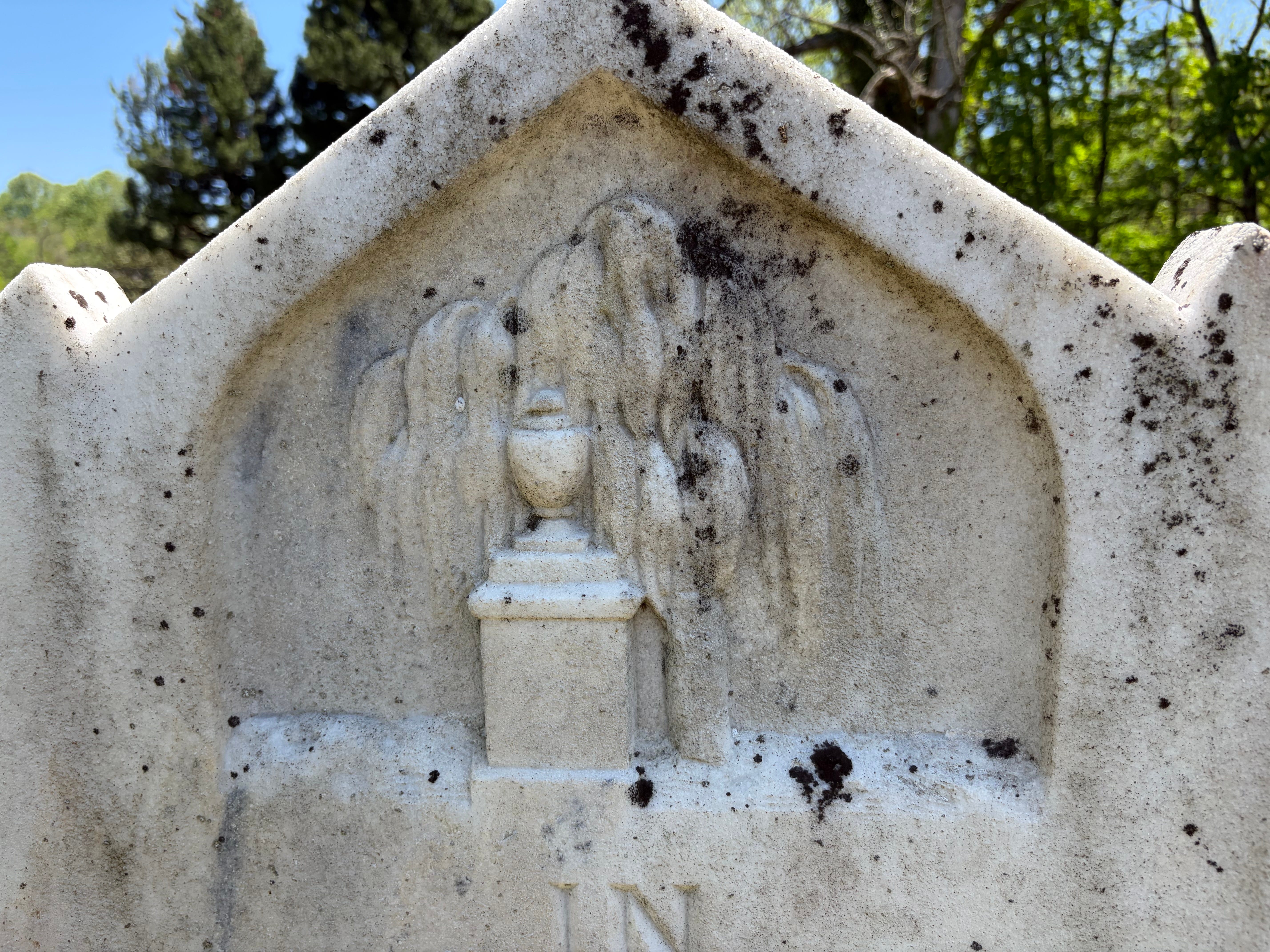
According to a summarizing post from the Parks and Rec department in the City of Boston, the willow tree and urn motif used in grave imagery was a sign of a change in the role of religion in daily life, as well as the embracing of more Neo-classical attitudes modeled on ancient Rome and Greece.
This was especially evident in the culture, philosophy, and architecture that occurred in America immediately following the Revolutionary War.
As the political beliefs of the new nation shifted, attitudes toward death and mourning changed as well. Neo-classical ideas increasingly shaped the material culture of post-Revolutionary America. Inspired by the idealized styles of ancient Greece and Rome, Americans began modeling their homes, public buildings, and gravestones after classical architecture and art. During the late eighteenth and early nineteenth centuries, the willow and urn became the most common motif used on gravestones. The urn itself calls back to this trend very strongly, since the urn was used by members of the Roman empire to hold the ashes of their cremated dead.
Crown and Cross
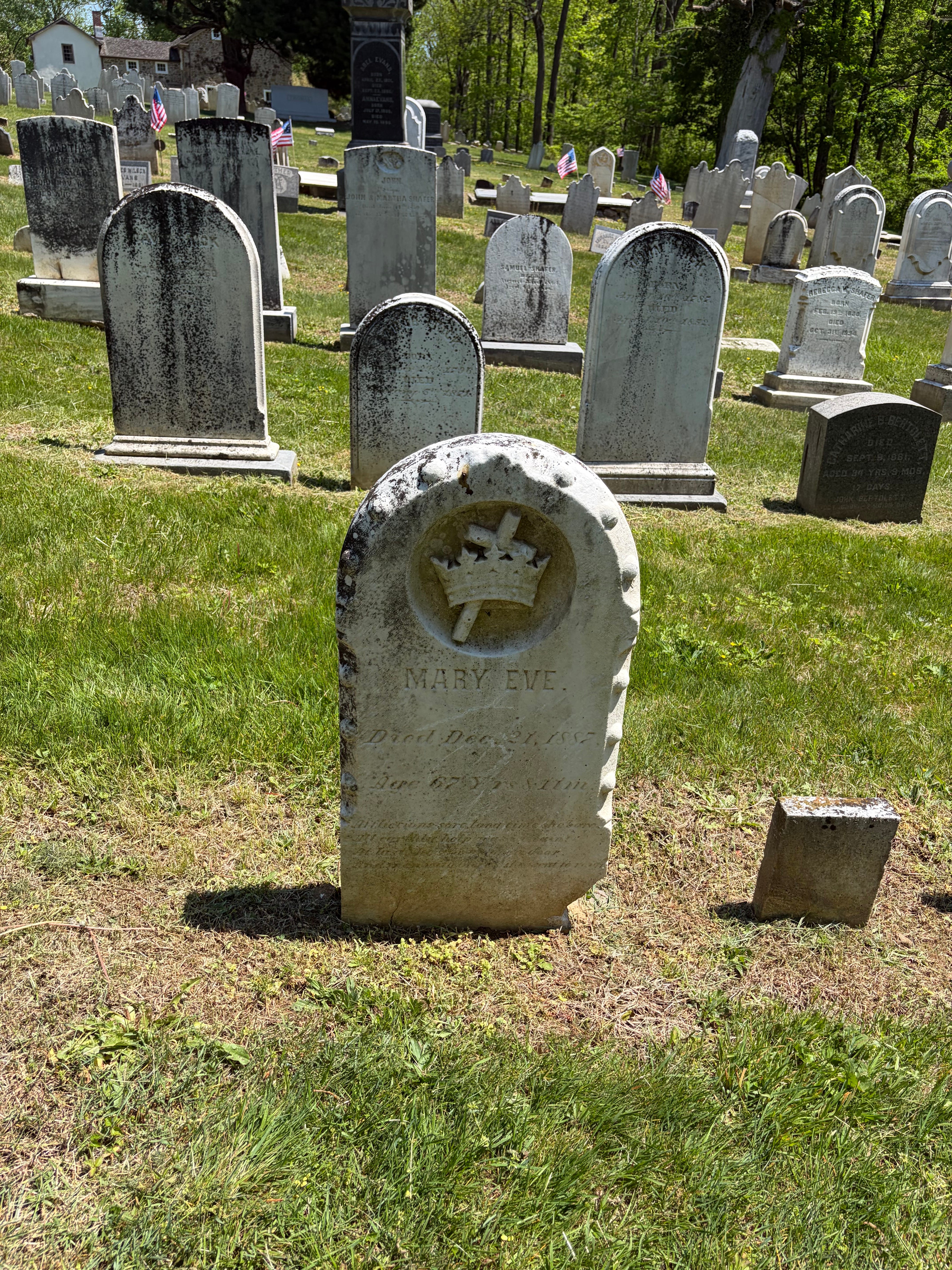
According to this helpful database from the Church Monuments Society, the interlocking crown and cross symbol on an 1887 grave likely represented victory through Christian faith and eternal salvation after death. In nineteenth-century cemetery art, the cross stood for Christ’s sacrifice and earthly suffering. Meanwhile, the crown symbolized heavenly reward and eternal life. Together, the images reflected the belief that faithful Christians would receive salvation after enduring life’s hardships. This meaning fit Baptist religious culture in Pennsylvania during the late Victorian period. At that time, gravestones became more detailed and symbolic than earlier colonial markers. Families increasingly used comforting Christian imagery instead of older warnings about death and judgment. In Chester County and other Protestant communities, cemetery art often emphasized resurrection, personal faith, and reunion in heaven.
The symbol also reflected broader Victorian attitudes toward mourning. Death was viewed as sorrowful, but also as a passage into eternal peace for believers. An interlocking crown and cross on a woman’s grave in 1887 would therefore signal both devotion and hope in salvation through Christ.
Intriguingly, this is representative of a shift back towards more religious life, which contrasts with the shift towards Neo-classical secularism that we saw with the headstone above.
Hand Pointed to Heaven
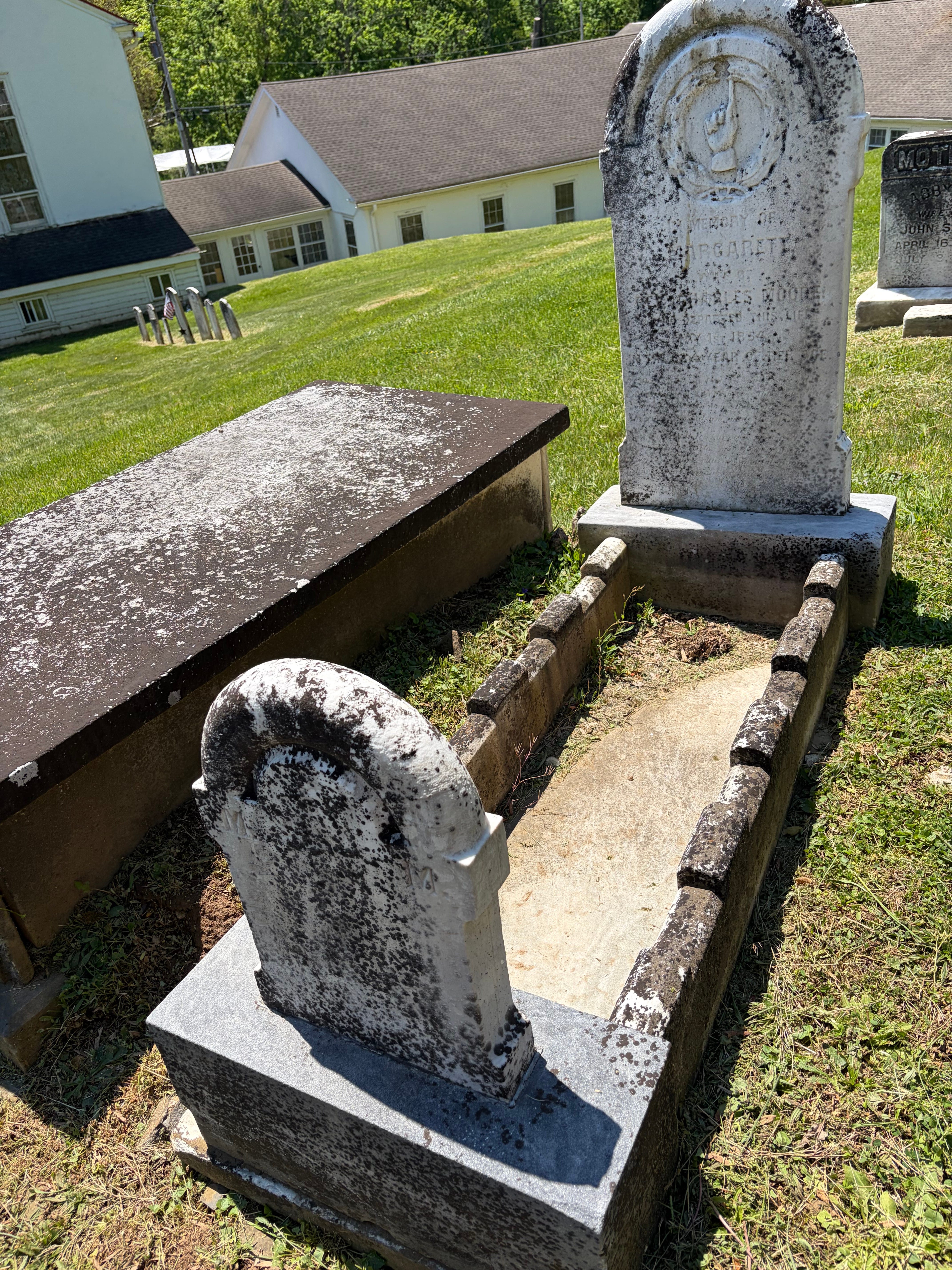
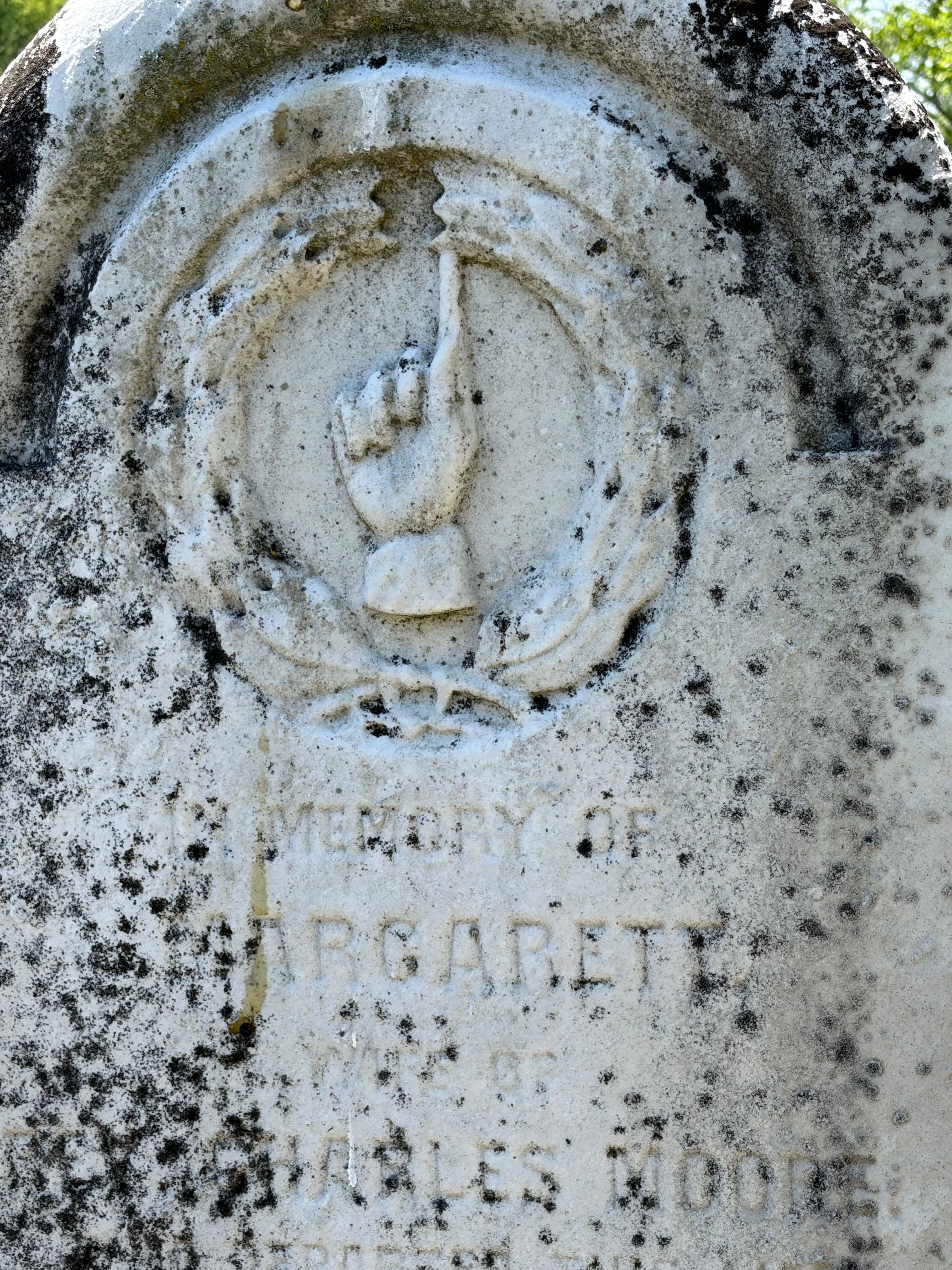
A hand pointing upward on an old gravestone symbolized the soul rising to heaven and the promise of eternal life. This image became especially common during the nineteenth century in Protestant cemeteries across Pennsylvania, including Chester County. Baptist communities often used the symbol to express faith in resurrection and salvation through God. The upward hand also reassured grieving families that death marked a passage into heaven rather than a final ending.
Victorian-era gravestones increasingly featured comforting religious symbols instead of earlier images focused on death and judgment. In Baptist churchyards, the pointing finger reflected strong beliefs about personal salvation and reunion after death. Stone carvers frequently paired the image with Bible verses about heaven or eternal rest. The symbol remained popular throughout the mid and late nineteenth century because it communicated hope in a simple visual form. In Chester County cemeteries, these carvings reflected both local Protestant traditions and broader Victorian mourning culture.
Open Books and Lambs
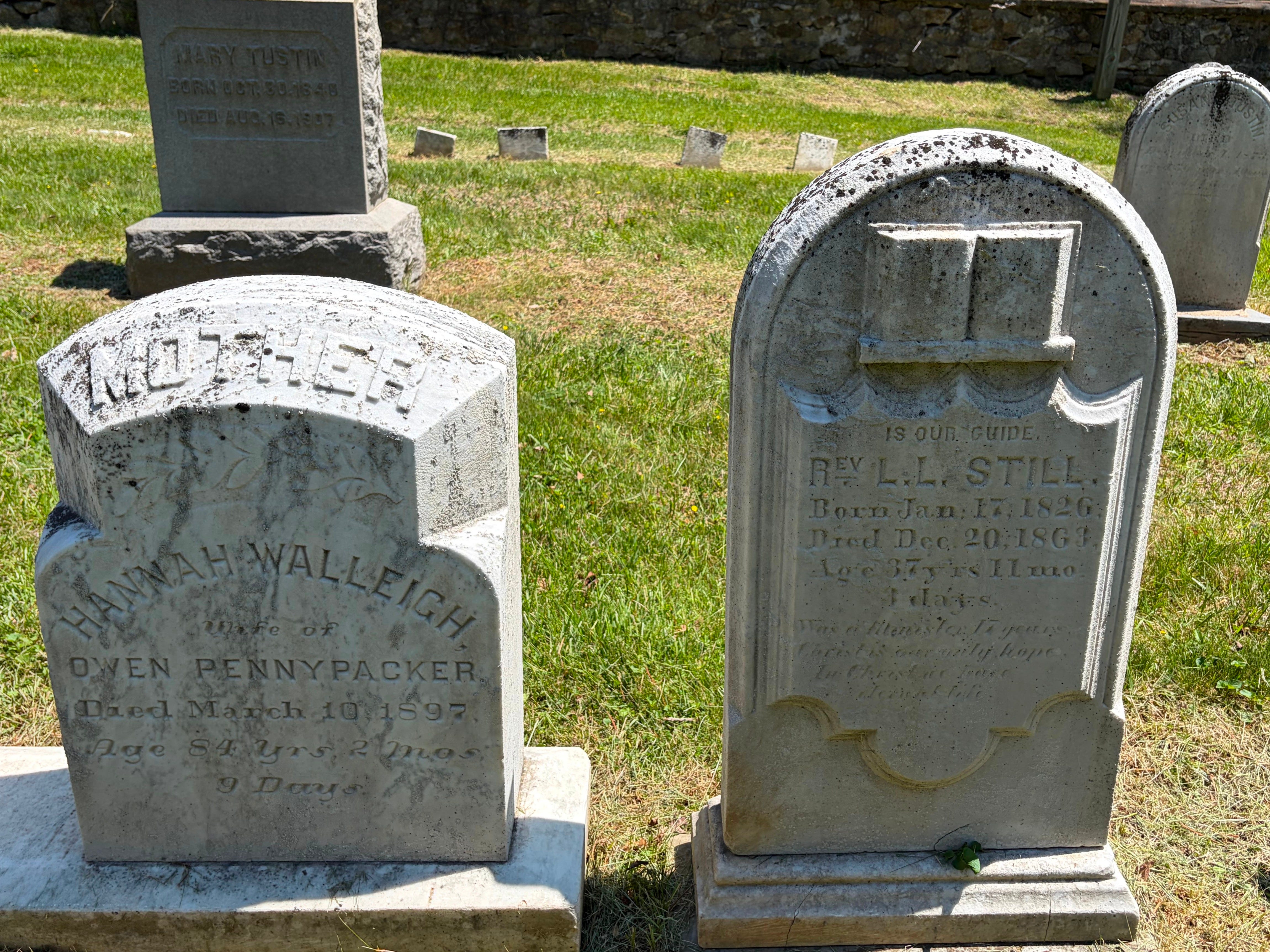
An open book on an old gravestone usually symbolized the Bible, Christian knowledge, or a life devoted to faith and learning. In Baptist cemeteries during the mid nineteenth century, the image often marked ministers, preachers, or deeply religious individuals. For Reverend L. L. Still, who died in 1863 in Chester County, Pennsylvania, the carving likely represented his role as a Baptist minister and teacher of scripture.
The open pages suggested that God’s word remained eternal, even after death. During the Victorian period, gravestone imagery became more personal and symbolic across Protestant communities. Baptist churches especially valued Bible reading, preaching, and individual faith. Because of this, the open book became a meaningful symbol in church cemeteries throughout Pennsylvania.
Some carvings also represented the “Book of Life” mentioned in the Bible, which recorded the names of the saved. In Chester County, these symbols reflected both local Baptist beliefs and broader nineteenth-century mourning traditions centered on hope and salvation.
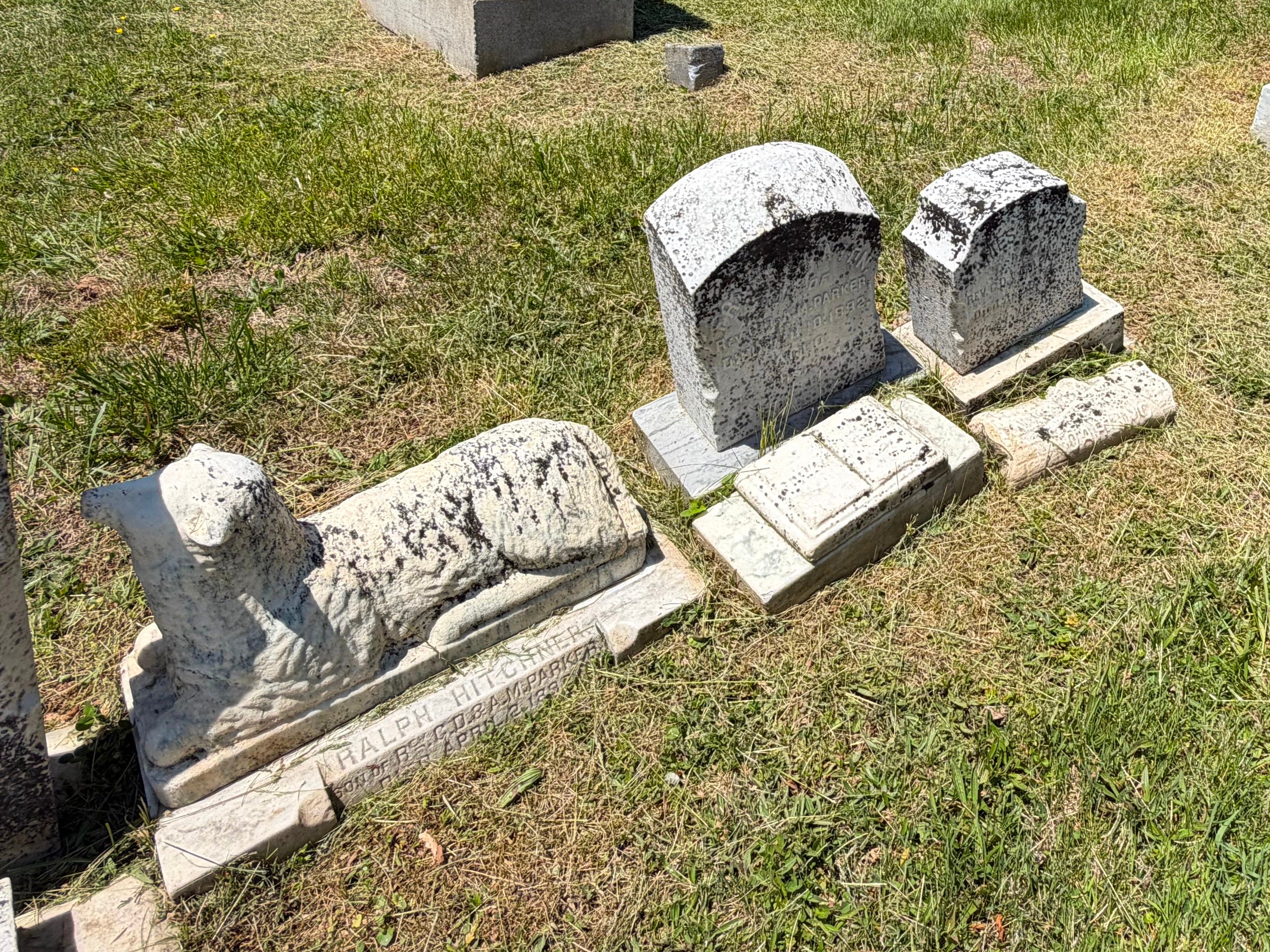
Contrastingly, a lamb on an old gravestone usually symbolized innocence, purity, and the soul’s peace in heaven. In nineteenth-century Baptist cemeteries across Pennsylvania, lamb carvings often marked the graves of children or people who died while very young. However, adults could also receive the symbol if families wanted to emphasize Christian innocence or closeness to God. In Chester County churchyards, the lamb reflected Protestant beliefs about salvation and eternal rest. The image connected closely with Jesus as the “Lamb of God” in Christian scripture.
The image above feathers the grave of Ralph Hitchner, though we do not know when he died or how old he was when he passed. During the Victorian period, cemetery art became more emotional and comforting than earlier colonial gravestones. Families increasingly chose symbols that expressed hope instead of fear of death. A simple stone showing only a name and a lamb may suggest humility, faith, or limited family resources. Its placement beside a grave marked with an open book could also reflect shared religious meaning within the cemetery. The open book on the grave next to Ralph’s (as we mentioned above) symbolized scripture and faith, while the lamb represented purity and salvation. Together, the images reflected Baptist beliefs about eternal life during the mid to late nineteenth century.
Wilting (Downwards Facing) Roses
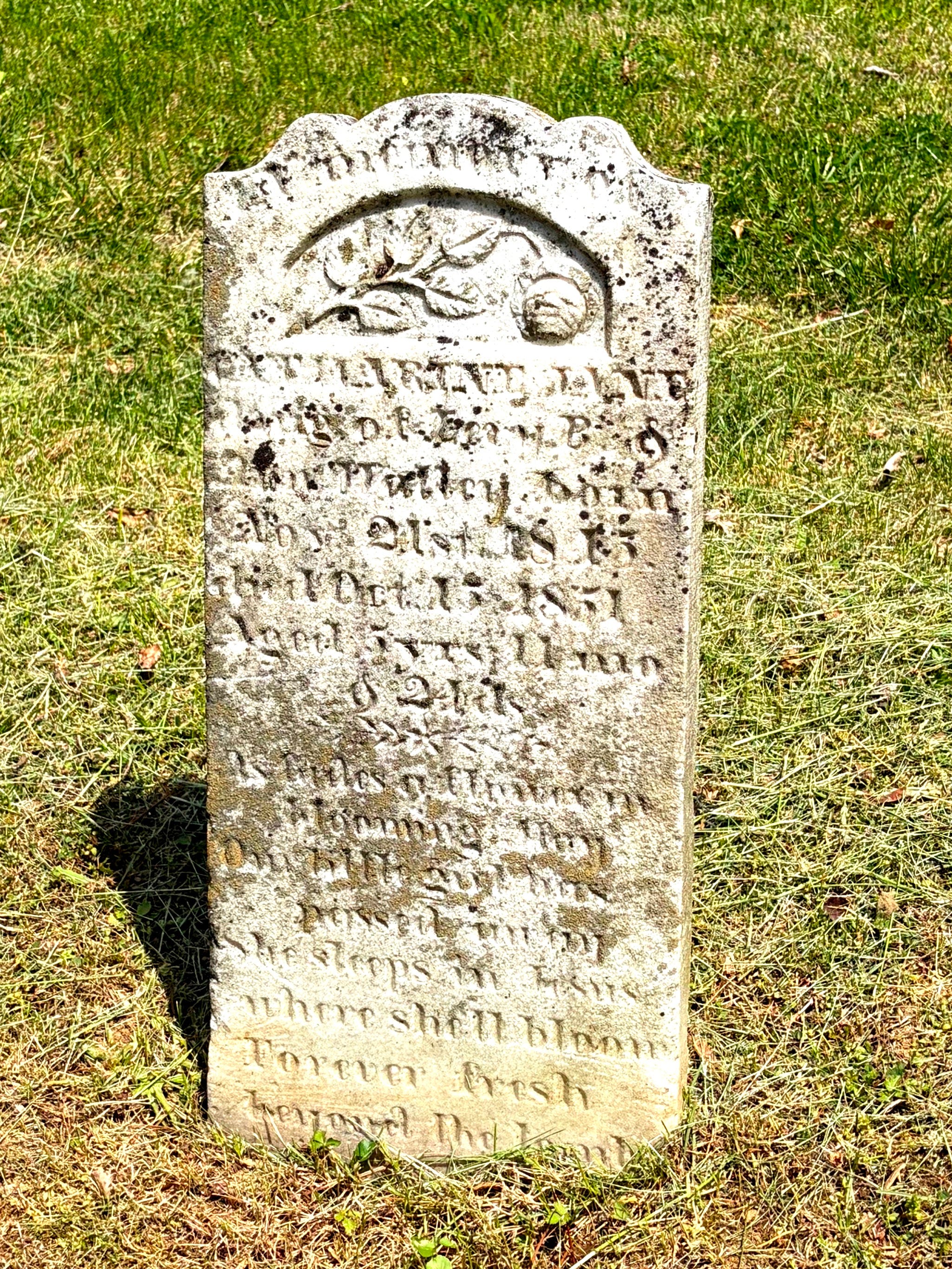
According to a post from Woodland Cemetery, roses on Victorian gravestones symbolized both earthly love and heavenly beauty. The stage of the rose’s bloom often reflected the age and life stage of the deceased. A full bloom usually marked someone in adulthood or the prime of life, while bent or drooping flowers suggested death, grief, or a life cut short. In Chester County Baptist cemeteries during the mid nineteenth century, these floral symbols became increasingly common as mourning culture grew more emotional and personal. Earlier colonial gravestones focused heavily on death and judgment. However, Victorian-era families preferred softer imagery that expressed remembrance, faith, and sorrow.
Catherine Line’s grave, above, from 1851 features a fully opened rose with a bent stem, which reportedly was reserved for women who died relatively young. However, though the dates on the headstone are very faded, from what we can read it appears that Catherine died when she was 5 years old. According to the larger trend, the full bloom is typical of people who died when in adulthood, though Catherine died as a child. This means that we should not take the grave imagery as a strict rule, but we should consider the symbolism of these headstones in the context of a broad trend.
Lydia J. Tustin’s grave, below, from 1857 used similar imagery, reflecting the same mourning traditions. Baptist communities in Pennsylvania often accepted these decorative symbols because they communicated grief and Christian hope without using elaborate religious scenes. The downward-facing rose also reflected Victorian ideas about the fragility of life and the certainty of death
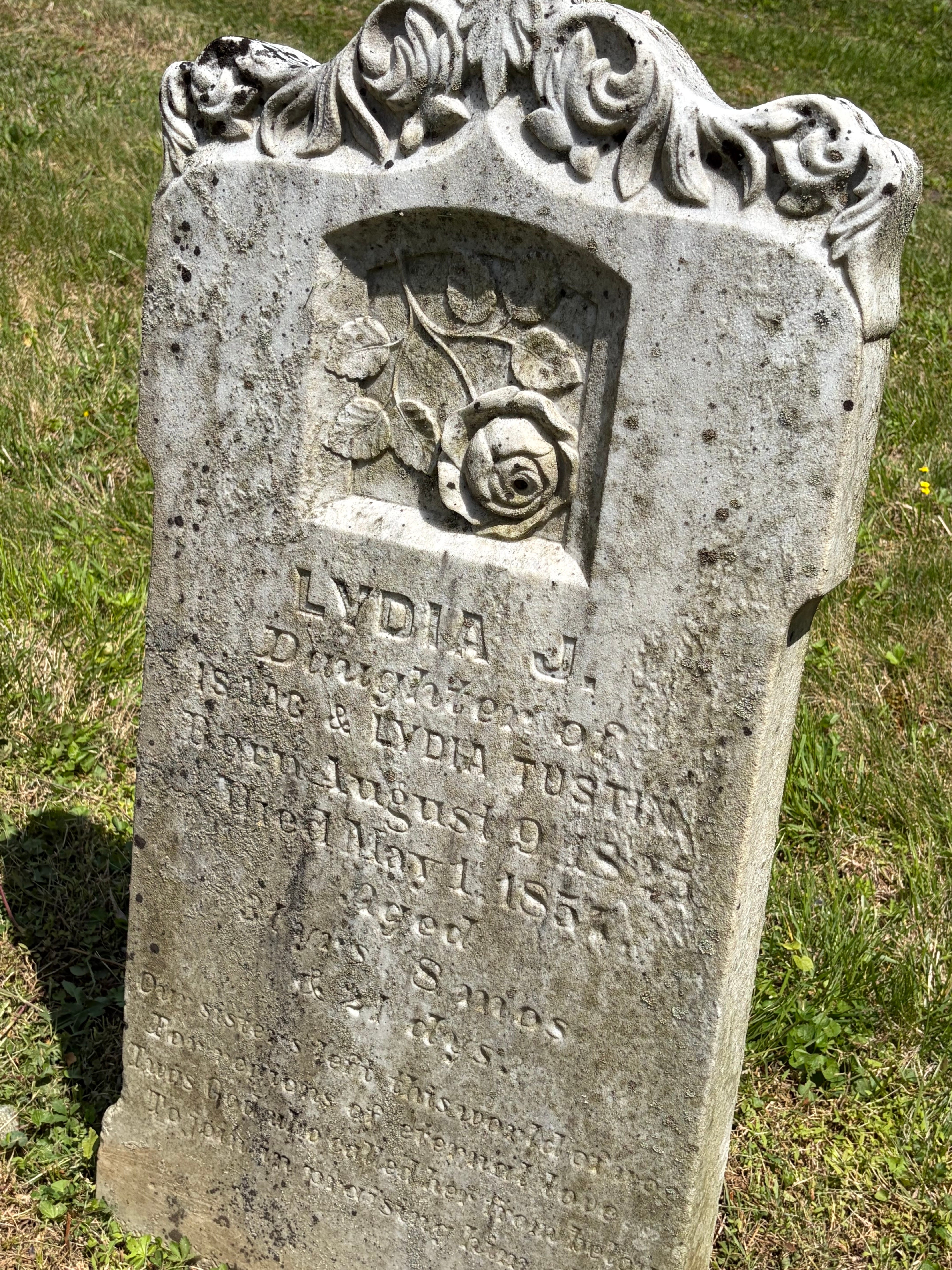
Notably, neither Lydia’s headstone does not mention that she was married, so in this context, the blooming rose may represent the concept of maidenhood in general here.
Logs
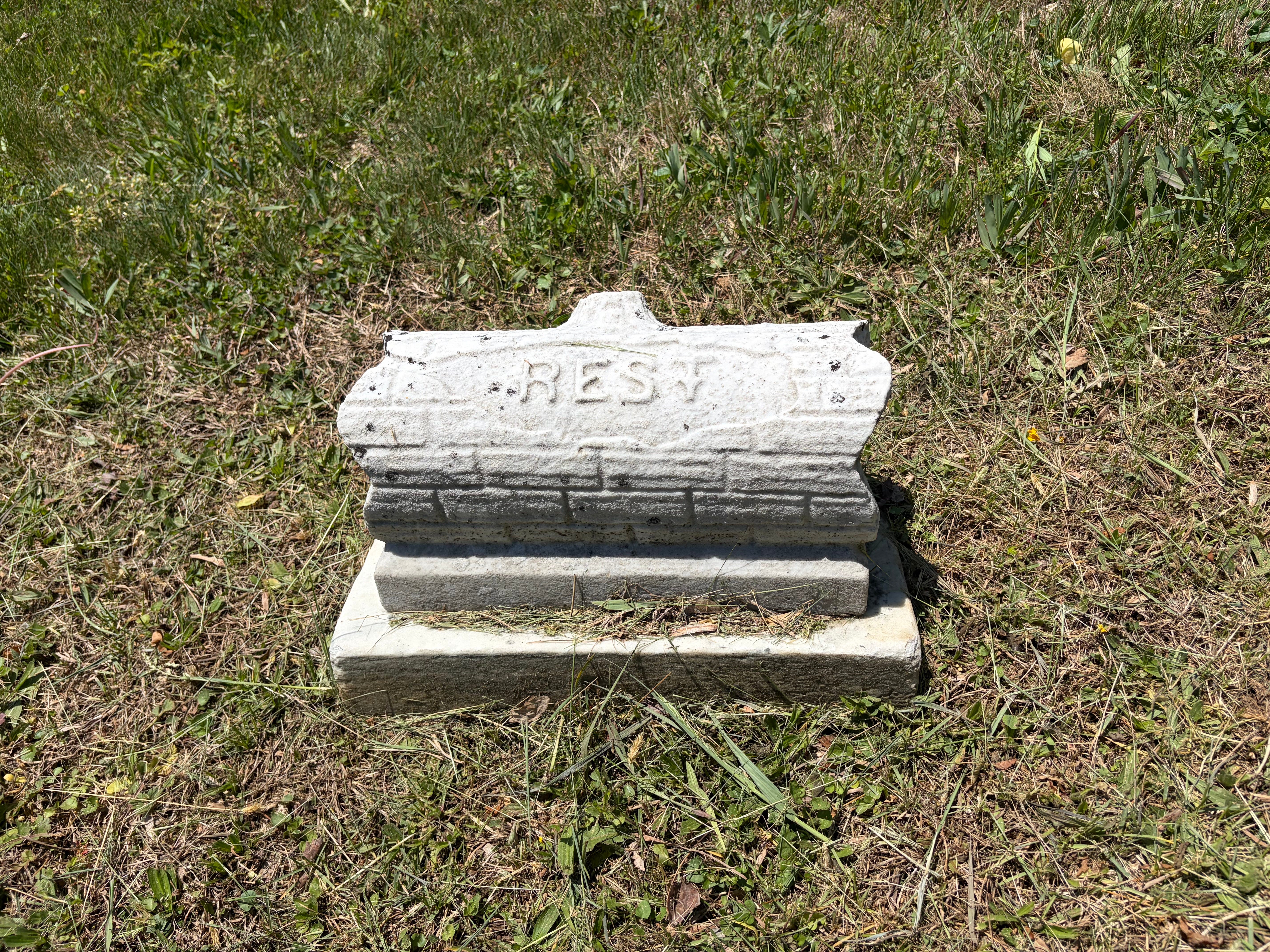
A log-shaped gravestone marked with the word “Rest” symbolized mortality, the end of earthly labor, and eternal peace after death. These rustic markers became popular during the late nineteenth and early twentieth centuries, especially through the fraternal organization Woodmen of the World, established in the 1890s. The group often provided tree stump or log monuments for members as part of their burial benefits. The imagery reflected ideas about nature, fellowship, and life being cut down like a tree.
Notably, though the Vincent Baptist Church Cemetery features several of these types of grave markers, the image we have included above has no identifying information about the deceased other than the word “Rest”. This could mean that the person buried here was identified almost exclusively by the kind of labor they (presumably he) carried out while alive.
To Us, Today
The Vincent Baptist Church Cemetery shows how a burial ground can preserve history, faith, and memory at the same time. Its graves connect Revolutionary War soldiers, Civil War orphans, and local families within one shared landscape. Each marker tells a different story, yet all reflect how people chose to honor the dead.
The 1902 reburials show that communities do not always forget the past, even after many decades. The orphan monument reflects the loss of children who died without family to claim them. Family plots reveal how genealogy and local memory still matter today. Grave symbols also help modern visitors understand these histories. A cut tree represents a life ended too soon. A scroll suggests memory, learning, or a completed life. An urn and willow tree symbolize grief and remembrance. A crown and cross point to Christian hope and salvation. A hand raised toward heaven suggests that death is not the end. An open book honors faith and scripture. A lamb represents innocence and peace. A rose can symbolize beauty, love, and the stages of life. A log marked “Rest” reflects labor ended and peace achieved.
Together, these stones reveal a major shift in American mourning traditions. Earlier warnings about death gave way to symbols of comfort, faith, and hope. That change still matters today because it shows how communities used memorials to grieve, remember, and express belief. Cemeteries are more than resting places. They are historical records and monuments to the people who came before us. Although their stories can take effort to understand today, studying these markers helps us better understand the lives, beliefs, and memories of those buried beneath them.
🪦⚰️⚱️
Learn more about the history of Yellow Springs
You can read the more in-depth version of this post here
Follow us on Substack, Instagram, and Facebook
🪦⚰️⚱️
Bibliography
- Barile, Suzy. “Woodmen of the World.” NCpedia, 2006. Accessed May 21, 2026. https://www.ncpedia.org/woodmen-world
- Diaz, David. “New England Graves: Gentling the Face of Death.” An Armchair Academic, January 15, 2014. Accessed May 21, 2026. https://anarmchairacademic.wordpress.com/2014/01/15/new-england-graves-gentling-the-face-of-death/
- Diaz, David. “New England Graves: Death’s Triumph.” An Armchair Academic, October 22, 2013. Accessed May 21, 2026. https://anarmchairacademic.wordpress.com/2013/10/22/new-england-graves-deaths-triumph/
- City of Boston Parks and Recreation. “Iconography of Gravestones at Burying Grounds.” City of Boston. Accessed May 21, 2026. https://www.boston.gov/departments/parks-and-recreation/iconography-gravestones-burying-grounds
- Levihord. “Victorian Monument Symbolism: Expressions Carved in Stone.” Woodland Cemetery History, June 1, 2017. Accessed May 21, 2026. https://woodlandcemeteryhistory.wordpress.com/2017/06/01/victorian-monument-symbolism-expressions-carved-in-stone/
- “Symbolism on Monuments.” Church Monuments Society. Accessed May 21, 2026. https://churchmonumentssociety.org/resources/symbolism-on-monuments
- “Tree Trunk Headstones: The Meaning and History Behind America’s Most Distinctive Grave Markers” TAFOFILE. February 1, 2026. Accessed May 21, 2026. https://www.tafofile.com/tree-trunk-headstones-the-meaning-and-history-behind-americas-most-distinctive-grave-markers/