
Biography of Dr. Bodo Otto Jr.
- The Otto Family of Germany and the Birth of Bodo Otto Jr.
- Immigration to Pennsylvania and Childhood in Germantown (1755â1765)
- Early Adulthood and Medical Education in Philadelphia (1765â1768)
- Marriage, Family, and Independent Medical Practice in New Jersey (1772â1775)
- Revolutionary War Service and Continental Hospitals (1775â1778)
- Yellow Springs and the Otto Medical Family During the Revolution (1777â1781)
- Final Years and Death (1781â1782)
- Legacy
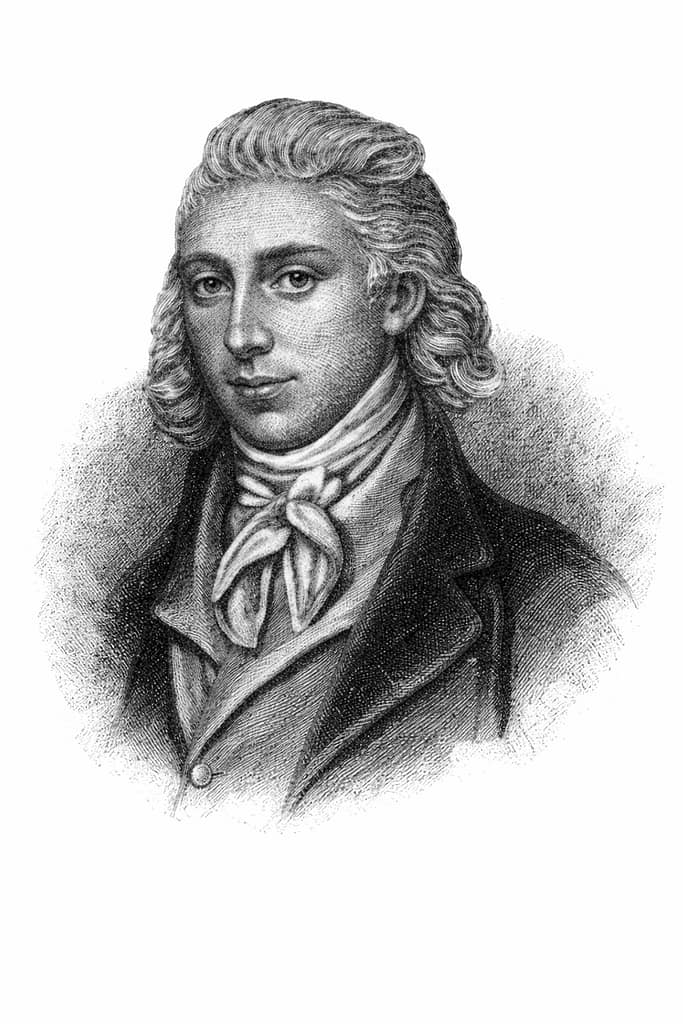
Dr. Bodo Otto Jr. was a physician whose life connected German medical traditions, colonial Pennsylvania’s emerging professional medical community, and the military hospitals of the American Revolution. Born in Lüneburg, Germany, in 1748, he was raised within a family shaped by generations of medical practice, Lutheran faith, and public service. His father, Dr. Bodo Otto Sr., was already an established physician and surgeon before bringing his family to Pennsylvania, where he continued his career and trained his sons in medicine.
Although Bodo Otto Jr.’s life was short, ending at only thirty-three years old, he became part of one of the most important medical families connected to the Revolutionary War. He received his medical education during the earliest years of formal medical training in Philadelphia, established a practice in New Jersey, and served as a military physician during the Revolution. Alongside his father and brothers, he helped care for soldiers throughout the Continental Army’s hospital system, including the hospital complex located with Yellow Springs.
The Otto Family of Germany and the Birth of Bodo Otto Jr.
Bodo Otto Jr. was born on September 14, 1748, in Lüneburg, Germany, into a family already shaped by medicine and professional service. His father, Dr. Bodo Otto Sr., had developed a respected career as a physician and surgeon in Germany before the family’s eventual migration to North America. The household into which Bodo Jr. was born reflected both his father’s professional reputation and the complex family structure created through earlier generations.
Dr. Bodo Otto Sr. first married Elizabeth Sanchen in Lüneburg in 1736. Together, they had two daughters, Maria Elizabeth Otto and Anna Marie Otto. Elizabeth died in Lüneburg between 1737 and 1738, leaving Dr. Otto Sr. to raise his daughters before his second marriage. These daughters became Bodo Otto Jr.’s older half-sisters and remained connected to the Otto family after their father remarried.
In 1742, Dr. Otto Sr. remarried to Catharina Dorothea Dahncken, the daughter of Johann Dahncken. Catharina came from a family of high social standing and prestige, and evidence suggests that she possessed personal resources of her own. Family traditions indicate that she may have had noble ancestry, and her commissioning of formal portraits of herself and her husband reflects the status and identity of the household into which Bodo Otto Jr. was born.
Dr. Otto Sr. and Catharina Dorothea Dahncken had several children together. Their first son, Frederick Christopher Otto, was born on August 22, 1743. Their daughter, Dorothea-Sophia Otto, was born on November 6, 1744. Tragically, Dorothea-Sophia died on February 28, 1748, only months before the birth of her younger brother Bodo Jr. She was buried in Lüneburg in the same cemetery as Dr. Otto Sr.’s first wife, Elizabeth.
Bodo Otto Jr. was born later that year, on September 14, 1748. His younger brother, John Augustus Otto, was born on July 30, 1751, and he would be the last child born to Bodo Otto Sr. Through these siblings, Bodo Jr. grew up in a large household that combined children from his father’s first marriage with those born during his father’s marriage to Catharina.
Dr. Otto Sr. had built a significant medical career in Germany. He served as Chief Surgeon for the District of Scharzfels at Scharzfels Castle in the Harz Mountains and previously served for twelve years as Chief Surgeon at the fortress of Kalkberg. His medical abilities and professional reliability were recognized by Dr. Henry Christian Kruger, the official physician of Lüneburg.
Between 1748 and 1750, the Otto family moved from Lüneburg to the Scharzfels district of the Harz Mountains. In 1750, Dr. Otto Sr. took an oath of fidelity for his position as Chief Surgeon of the district. This role placed him within a professional environment where medicine, military service, and government responsibility were closely connected.
However, economic stress and political instability made living in the Harz Mountains precarious for the Otto family. The death of Christopher Otto, Bodo Otto Jr.’s paternal grandfather, in 1752 became an additional turning point in the family’s circumstances and contributed to Dr. Otto Sr.’s decision that leaving Germany offered a better future for his family. No longer worried about having to care for his aging father, Dr. Otto Sr. decided that it was time to set sail for the American colonies in pursuit of better prospects.
Immigration to Pennsylvania and Childhood in Germantown (1755–1765)
On May 10, 1755, Bodo Otto Jr. left Germany with his family and traveled from Lauterberg to the American colonies. He was six years old at the time. The emigrating household included Dr. Bodo Otto Sr., Catharina Dorothea Dahncken Otto, Frederick Christopher Otto, John Augustus Otto, Maria Elizabeth Otto, Anna Marie Otto, and Bodo Otto Jr.
The family arrived in Philadelphia in October 1755 and had settled there by December 16 of that year. Their arrival placed the Otto family within one of the largest German immigrant communities in British North America.
During the winter of 1755–1756, Philadelphia experienced a severe smallpox outbreak. Following this outbreak, Dr. Otto Sr. moved his medical practice to Germantown in 1756. There, Bodo Jr. grew up surrounded by his father’s medical work and the German-speaking communities that shaped colonial Pennsylvania.
In Germantown, Dr. Otto Sr. developed professional connections with other physicians, including Dr. Christopher Witt, a physician associated with the Pietist community influenced by Johannes Kelpius. Through these relationships, the Otto family became connected to Pennsylvania’s broader traditions of German medicine, religious life, and intellectual exchange.
The family maintained connections between Pennsylvania and New Jersey throughout Bodo Otto Jr.’s childhood. They were associated with Lutheran congregations in Germantown and the Cohansey District, while Dr. Otto Sr. became involved in professional and scientific circles. His membership in the American Philosophical Society, organized by Benjamin Franklin, reflected his reputation within the intellectual community of colonial Pennsylvania.
Bodo Otto Jr.’s childhood occurred within a household where medicine was both a profession and a family tradition. From an early age, he was surrounded by physicians, medical discussions, and the practical realities of patient care. This environment prepared him to continue the medical legacy established by his father.
Early Adulthood and Medical Education in Philadelphia (1765–1768)
In August 1765, Bodo Otto Jr. experienced the death of his mother, Catharina Dorothea Dahncken. She was buried at the Evangelical Lutheran Church of the Cohansey District. Following her death, the family appears to have returned to Philadelphia, except for Maria Elizabeth Otto, who was likely residing in New Jersey.
On September 12, 1766, Dr. Bodo Otto Sr. remarried to his his third wife, Maria Margaretta Paris, at St. Michael’s Lutheran Church in Philadelphia. Otto Sr. was 55 years old, and Maria was 47. Although Maria was described as English, both were listed as being “of this city” in the marriage record. There is little recorded about what Bodo Otto Jr. thought of his new stepmother, but the loss of his biological mother must have deeply impacted him.
By 1766, Bodo Otto Jr. was continuing his medical education in Philadelphia. He attended clinics at Pennsylvania Hospital and studied at the Medical College connected with the College of Philadelphia, one of the earliest formal medical education institutions in colonial America- an institution that would later become the University of Pennsylvania. The school had been established in 1765 by Dr. John Morgan and Dr. William Shippen, creating one of the first opportunities for structured medical training in the colonies.
Bodo Otto Jr. studied alongside other future physicians, including Jonathan Elmer (who had also apprenticed under Dr. Otto Sr.) and Dr. Jonathan Potts. Around 1767, Otto Jr. and Elmer completed their medical education and became among the first graduates to receive professional degrees from the College of Philadelphia. Dr. Jonathan Potts also graduated in 1767, according to his papers. This education placed Otto Jr. among the first generation of formally trained physicians in British North America.
Tragically, in 1768, the extended Otto family suffered another loss when Bodo Jr.’s eldest half-sister, Mary Elizabeth Otto, died. The circumstances surrounding her death are unclear, and currently there is no documented evidence that recounts Bodo Jr.’s feelings on the matter. That being said, regardless of what their relationship was like at this point, the loss of his oldest sister so soon after the loss of his mother must have weighed on him heavily.
Nonetheless, Bodo Jr.’s advancement into the early medical field persisted, and in doing so, he continued the tradition established by his father. Rather than entering medicine as an independent profession disconnected from family experience, Otto Jr. joined a multigenerational medical network that combined European training, colonial practice, and emerging American medical institutions.
Marriage, Family, and Independent Medical Practice in New Jersey (1772–1775)
After completing his medical education in Philadelphia, Bodo Otto Jr. established himself as a physician in New Jersey, where the Otto family maintained strong connections. On February 6, 1772, he married Catherine Schweighauser at the German Reformed Church in Philadelphia. Catherine, born in 1752, would remain his wife until his death in 1782.
Following his marriage, Bodo Otto Jr. returned to New Jersey and began practicing medicine independently. In August 1772, Dr. Otto Sr. purchased a 100-acre farm in what is now Mickleton, New Jersey. This property became an important family residence and provided a foundation for Bodo Otto Jr.’s medical practice as he transitioned fully from student to working physician.
By 1773, Bodo Otto Jr. and his older brother Frederick Christopher Otto were both married, established as physicians, and living in New Jersey, demonstrating the success of the medical training they had received from their father.
Bodo Otto Jr. and Catherine Schweighauser established their household in Swedesboro, New Jersey. Their first child, Catherine Margaretta Otto, was born on January 20, 1773, and their son, John Conrad Otto, was born on March 15, 1774.
As tensions between Great Britain and the American colonies increased, Bodo Otto Jr. moved from private medical practice into military service. On July 24, 1775, he received an appointment as surgeon of Colonel Reed’s Battalion, formally beginning his service as a military physician during the Revolutionary War.
His transition into military medicine reflected both his professional training and his family’s long-standing relationship with military and public medical service. Like his father, who had served as a surgeon in Germany, and alongside his brothers who would also enter Continental medical service, Bodo Otto Jr. became part of the network of physicians responsible for caring for soldiers during the American Revolution.
Revolutionary War Service and Continental Hospitals (1775–1778)
During the Revolutionary War, Dr. Bodo Otto Sr. became one of the leading medical figures within the Continental Army hospital system. His sons, including Bodo Otto Jr., assisted him in treating soldiers throughout Pennsylvania and New Jersey. The Otto physicians moved between military hospitals as needed, providing care during a period when the Continental medical department faced shortages of supplies, trained physicians, and stable facilities.
The ‘Colonel Reed’s Battalion’ that was referenced above refers to Lieutenant Colonel Jacob Reed’s 1st Battalion of the Philadelphia County Militia (also known as the Pennsylvania Volunteers). This local Pennsylvania defense unit was formed to protect the American capital of Philadelphia and support General George Washington’s operations in the Mid-Atlantic. Led by Lieutenant Colonel Jacob Reed, a respected local farmer and church elder whose intimate knowledge of the region and its people made him an invaluable asset to Washington, the battalion played a vital role in contesting the British invasion. As a regimental surgeon assigned to this unit along with his brothers and father, Dr. Bodo Otto Jr. marched directly into the grueling Philadelphia Campaign. He was also deployed with Reed’s men to the intense Battles of Brandywine and Germantown to resist the advancing British army.
In 1777, Bodo Otto Jr. served with his father and brothers at the Trenton Barracks military hospital. There, the Otto physicians treated Continental soldiers as well as enemy prisoners and wounded troops. Their work demonstrated the practical demands placed upon Revolutionary War physicians, who often cared for men from both sides of the conflict while navigating the challenges of wartime medicine. Following these bloody engagements, Dr. Otto followed the forces into the infamous, freezing winter encampment of 1777–1778 at Valley Forge.
During the winter of 1777–1778, Bodo Otto Jr. served within the Continental hospital network connected to General George Washington’s army. He worked alongside his father, Dr. Bodo Otto Sr., and his brothers during the period when Washington’s army was encamped at Valley Forge and when military hospitals operated at Yellow Springs. The hospital system required physicians to move between locations, and the Otto family’s service extended beyond a single institution or site.
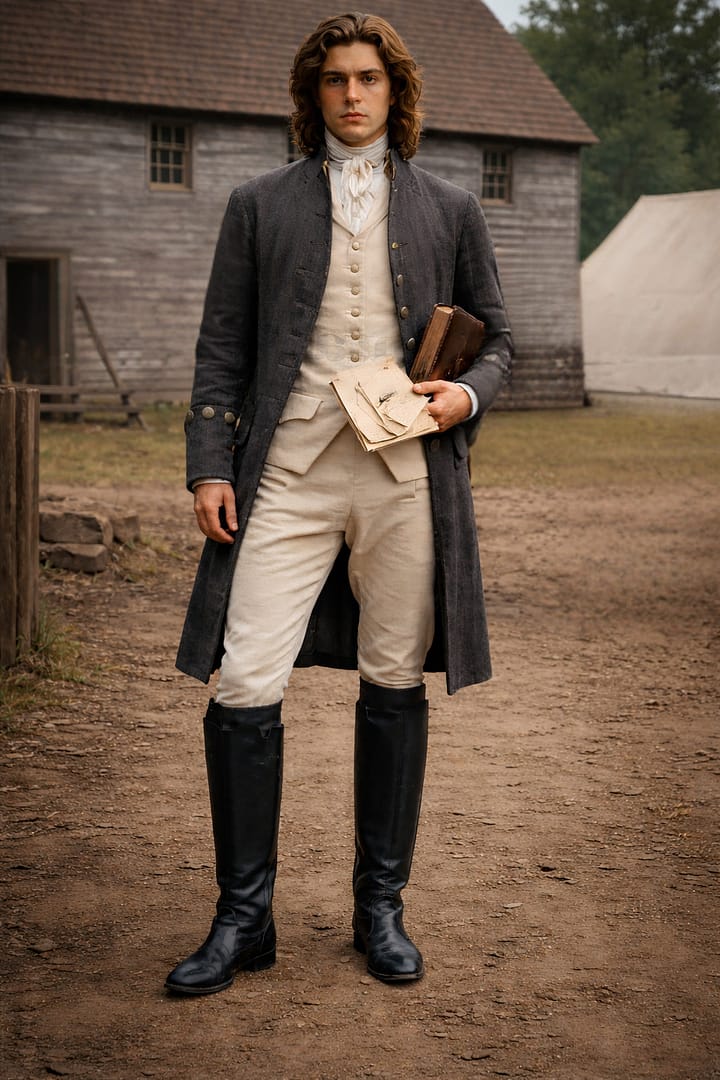
Bodo Otto Jr.’s personal life also changed during this period of military service. His wife, Catherine Schweighauser Otto, remained in New Jersey with their growing family. Their son, Bodo Otto III, was born in July 1776 in New Jersey. Their son Jacob Schweighauser Otto was born on January 17, 1778, in Swedesboro, New Jersey, followed by another son, Daniel Bodo Otto, born on July 20, 1778.
While Bodo Otto Jr. was away on military service, his home at Mickleton, New Jersey, was destroyed in March 1778 during the Battle of Saunders Run. The destruction of his house forced a permanent change in his family’s living situation, and he never returned to the destroyed home. Following the loss of the property, Bodo Otto Jr. and his family relocated to Swedesboro, New Jersey.
The movement of the Otto physicians between hospitals during this period also explains why surviving records do not always place each member of the family at the same location. When General Nathanael Greene collected signed pledges of allegiance from physicians serving at Yellow Springs in May 1778, Bodo Otto Jr.’s name does not appear among the surviving documents. His father, Dr. Bodo Otto Sr., signed his pledge at Yellow Springs on May 25, 1778, and his brother Frederick Christopher Otto also signed his pledge there on the same date. Because physicians in the Continental hospital system frequently moved between facilities, including Yellow Springs, Valley Forge, and Trenton, Bodo Otto Jr.’s absence from the surviving Yellow Springs pledges does not necessarily indicate that he was not involved in Continental medical service. The pledge may have been lost, or he may have been assisting at another hospital location at the time.
Although Bodo Otto Jr. was not continuously stationed at Yellow Springs, his service connected him directly to the hospital complex and the medical network that operated there during the Revolutionary War. The Otto family became one of the most important physician families associated with the Continental hospital system, and their presence at Yellow Springs reflected the broader movement of medical personnel between military hospitals throughout Pennsylvania and New Jersey.
Yellow Springs and the Otto Medical Family During the Revolution (1777–1781)
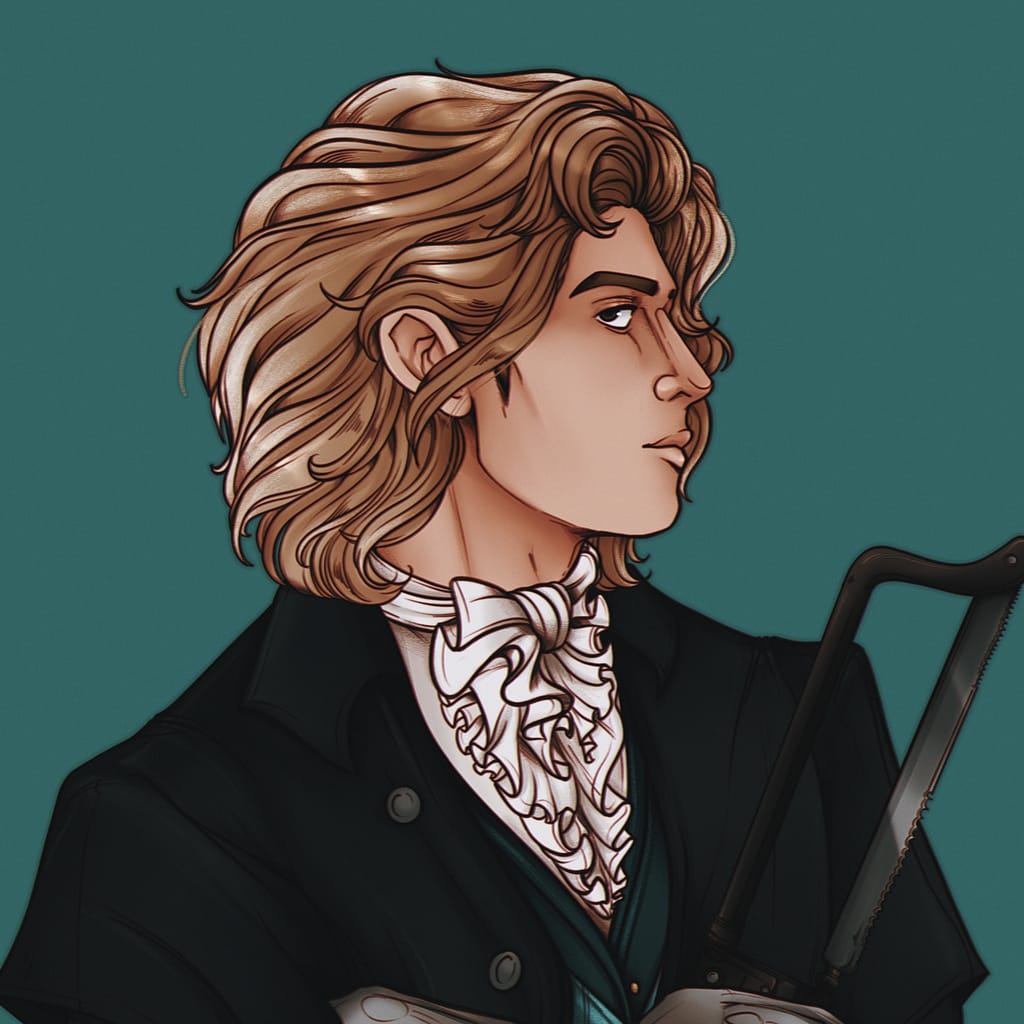
During the winter of 1777–1778, Bodo Otto Jr. served alongside his father, Dr. Bodo Otto Sr., and his brothers within the Continental hospital system connected to General George Washington’s army. At Yellow Springs, Dr. Otto Sr. had become one of the primary medical figures after Dr. Samuel Kennedy’s declining health reduced his ability to oversee the hospital operations on his property. After the death of Dr. Kennedy on June 17, 1778, the senior Dr. Bodo Otto became the director of Washington Hall and the overseer of the hospital complex at Yellow Springs. The younger Otto physicians, including Bodo Otto Jr., Major Dr. Frederick Christopher Otto, and Dr. John Augustus Otto, assisted their father and contributed to the care of soldiers receiving treatment at the hospitals there.
The records of Reverend Dr. James Sproat, Chaplain for Hospitals in the Middle Department, provide evidence of the Otto family’s continued presence within the Yellow Springs medical community. On September 14, 1778, Sproat returned to the area after visiting the French Creek hospital. He recorded:
“Rode to the Yellow Springs and preached in the hospital. Old Dr. Otto behaved politely. Then rode to Mrs. Pritchard’s and lodged there.”
Sproat’s reference to “old Dr. Otto” reflects the respect he held for Dr. Bodo Otto Sr.’s leadership and service, while also confirming that multiple physicians named Otto were active within the hospital system. These younger Dr. Ottos were Dr. Otto Sr.’s three physician sons: Major Dr. Frederick Otto, Dr. Bodo Otto Jr., and Dr. John A. Otto.
The surviving records demonstrate that Bodo Otto Jr. and his brothers did not remain permanently assigned to one location. Instead, they moved between hospitals according to the needs of the Continental Army. Their work required flexibility as wounded and ill soldiers were transferred between facilities, physicians were reassigned, and hospitals adapted to changing military conditions.
On June 12, 1780, Reverend Sproat again recorded his visit to Yellow Springs while traveling through the Middle Department hospitals. He wrote:
“Rode to Yellow Springs [from Philadelphia]. Mr. [Montgomery] Kennedy accompanied me part of the way. Dined with the young Doctors Otto. Lodged with the old doctor.”
This entry provides further evidence of the continued importance of the Otto family at Yellow Springs. By 1780, the younger physicians, including Bodo Otto Jr., remained recognized members of the medical community connected to the hospital. Sproat’s distinction between “the young Doctors Otto” and “the old doctor” demonstrates the continuing presence of Dr. Otto Sr. alongside his sons and highlights the family’s collective role in Revolutionary War medicine.
Bodo Otto Jr. continued serving as a military physician through the later years of the war. From 1778 through 1781, he assisted within Continental hospitals during some of the most difficult years of the conflict. His service placed him among the physicians responsible for maintaining military medical care while the Continental Army struggled with disease, injury, supply shortages, and the challenges of treating large numbers of soldiers.
During these years, Bodo Otto Jr. also experienced personal loss. His son, Bodo Otto III, died on September 25, 1778, in New Jersey at a young age. Despite the demands of military service, Bodo Otto Jr. remained connected to his family in New Jersey, where his wife Catherine cared for their children during the war. The loss of their child must have been devastating to them both.
By the conclusion of his military service, Dr. Bodo Otto Jr. had established a reputation as a physician who combined European medical traditions, formal Philadelphia training, and practical wartime experience. His work alongside his father and brothers represented one of the most significant family contributions to the medical system of the American Revolution.
Final Years and Death (1781–1782)
After years of military medical service, Bodo Otto Jr. returned to civilian life in New Jersey while remaining connected to the medical traditions established by his family. By 1780, he was living in Gloucester County, New Jersey, and by 1781 he was residing in Greenwich Township. Although the Revolutionary War was nearing its conclusion, Otto Jr.’s health had begun to decline.
Bodo Otto Jr. died on January 20, 1782, at the age of thirty-three, from consumption at the Death of the Fox Inn in Clarksboro, New Jersey. He likely caught the disease- now known as tuberculosis- as a result of working in the hospitals and wards during the Revolutionary war. He was buried at Trinity Church in Swedesboro, New Jersey. His death ended the life of a physician whose career had spanned the earliest years of formal medical education in Philadelphia, private medical practice in New Jersey, and service within the Continental Army hospital system.
At the time of his death, Bodo Otto Jr. left behind his wife, Catherine Schweighauser Otto, and their surviving children. Their children included Catherine Margaretta Otto (1773–1815), John Conrad Otto (1774–1844), and Jacob Schweighauser Otto (1778–1827). Tragically, two of their sons, Bodo Otto III (1776–1778) and Daniel Bodo Otto (1778–1780), had died during Otto Jr.’s lifetime.
Following his death, Bodo Otto Jr.’s property, including his home in Mickleton, New Jersey, was divided among his surviving children. This settlement marked the closing chapter of his brief but active life and reflected the lasting ties his family maintained in the region.
Legacy
Although Bodo Otto Jr. died young, his legacy remained connected to the larger history of medicine during the American Revolution. As the son of Dr. Bodo Otto Sr. and brother to Frederick Christopher Otto and John Augustus Otto, he belonged to a family that helped shape the medical response of the Continental Army. His service at hospitals throughout Pennsylvania and New Jersey, including his connection to the Yellow Springs hospital complex, demonstrates the important role physicians played in sustaining the Revolutionary cause. Today, Bodo Otto Jr. is remembered as part of the generation of physicians who transformed colonial medical practice into an organized military and professional system during the founding era of the United States.
Further research ongoing!
See our reconstruction of Dr. Otto’s family tree on Ancestry.com here!
Bibliography
Gibson, James E. Dr. Bodo Otto and the Medical Background of the American Revolution. Springfield, IL: Charles C. Thomas, 1937.
Historical Society of Pennsylvania. “Jonathan Potts Papers, 1766–1780.” Collection 521. Historical Society of Pennsylvania. Accessed August 4, 2026. https://www2.hsp.org/collections/manuscripts/p/Potts0521.html.
Historic Yellow Springs. “Bodo Otto Jr. Family Tree Research.” Ancestry.com Family Tree. Research database compiled by Historic Yellow Springs. Accessed August 4, 2026. https://www.ancestry.com/family-tree/person/tree/207774139/person/132737320825/
“Dr. Bodo Otto Jr.” Find a Grave. Accessed August 4, 2026. https://www.findagrave.com/memorial/67547777/bodo-otto.
“Bodo Otto and Revolutionary War Sites in Mickleton, New Jersey.” Revolutionary War New Jersey. Accessed August 4, 2026. https://www.revolutionarywarnewjersey.com/new_jersey_revolutionary_war_sites/towns/mickleton_nj_revolutionary_war_sites.htm.
University Archives and Records Center, University of Pennsylvania. “Penn in the 18th Century: Medical School.” University of Pennsylvania Archives. Accessed August 4, 2026. https://archives.upenn.edu/exhibits/penn-history/18th-century/medical-school/.
Copyright Disclaimer: Under Section 107 of the Copyright Act 1976, allowance is made for ‘fair use’ for purposes such as criticism, comment, news reporting, teaching, scholarship, and research. All materials sourced from sources indicated throughout this post are referenced for the purposes of education for reference purposes.