
Biography of Dr. Bodo Otto Sr.
General Background
Early Life
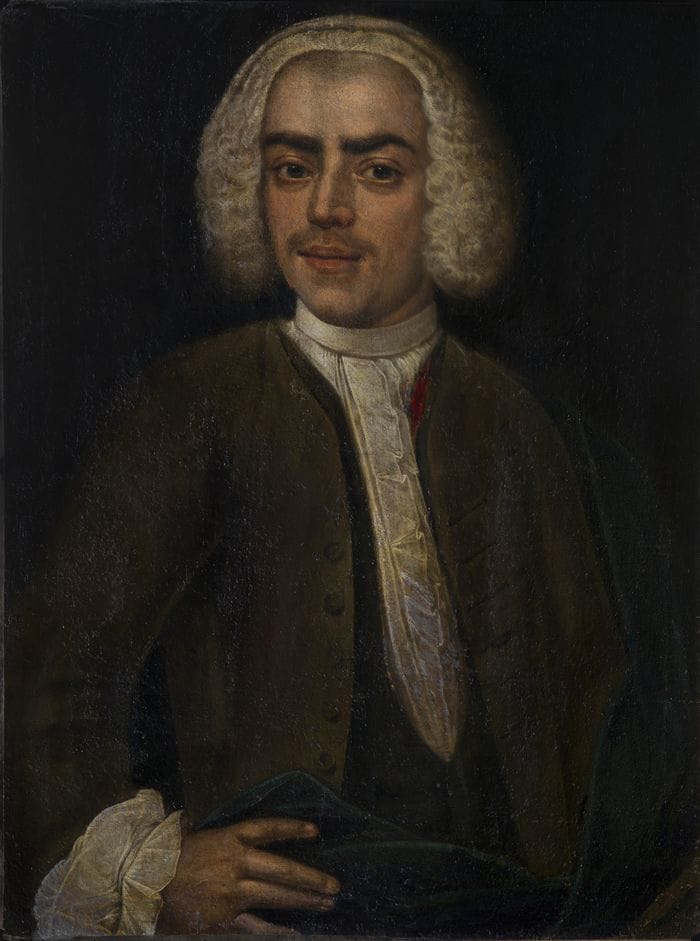
Dr. Bodo Otto was born in Hanover, Germany, in 1711 into a family whose social position was rooted in forestry service and noble estates. He was the grandson of Hans Claus Otto, who served as the chief forester of the Otto family. The Lauterburg Ottos were of southern German origin and Saxon ethnicity.
Following the Peace of Westphalia, members of the Otto family relocated to Hanover in pursuit of forestry opportunities created by political and territorial reorganization. Bodo Otto Sr. is recorded as having been born in Hanover, Stadt Hannover, Niedersachsen, Germany, in 1711. However, his father, Christopher Otto, had been serving the estate of the Counts of Oberg for many years prior to Bodo Otto’s birth.
Christopher was in service to Baron Bodo von Oberg, Count of Lauterburg. This relationship later became significant in Bodo Otto’s life through godparentage and naming. Bodo Otto’s mother was Maria Magdalena Menechen. Her exact date of birth is unknown, and she was likely significantly younger than her husband. She was probably from Kranz, near the Baltic Sea, a region that was considered part of Prussia rather than Hanover at the time. There may have been relatives of Christopher Otto living in this area, which likely explains how Christopher and Maria met while Christopher was away from his home parish.
Christopher Otto and Maria Magdalena Menechen married while Christopher was away from his home parish. Because of this, their marriage was not recorded in parish registers. As a result, when Bodo Otto was born in 1711, there was no birth certificate on file. When the family later returned to Hanover, Baron Bodo von Oberg served as Bodo Otto’s godfather, which explains the origin of his given name. Maria Magdalena Menechen is not listed on Bodo Otto’s christening record, indicating that she likely died during childbirth or shortly afterward, before July 20, 1711.
Christopher Otto later remarried and remained an influential figure in his son’s life. He arranged for Bodo Otto to be apprenticed to a surgeon, a process that normally required documentary proof of birth and legitimacy. Because Bodo Otto lacked a standard parish birth record, his ability to enter apprenticeship suggests that Christopher Otto’s status, connections, and intervention played a decisive role, along with that- potentially- of his namesake, Baron Bodo von Oberg. Christopher Otto remained relevant in his son’ life until he died on August 21, 1752, at the age of 85.
Medical Training
Marriages
Bodo Otto married three times. His first wife was Elizabeth Sanchen, whom he married in Lüneburg in 1736. Together, they had two daughters, Maria Elizabeth Otto and Anna Marie Otto. Elizabeth died in Lüneburg between 1737 and 1738. Otto’s second wife was Catharina Dorothea Dahncken, daughter of Johann Dahncken, whom he married in 1742. Catharina may have been of noble birth and appears to have had personal wealth, as she commissioned formal portraits of herself and her husband. Together they had several children. Catharina died in 1765. Otto’s third wife was Maria Margaretta Paris, an Englishwoman, whom he married in Philadelphia in 1766.
Immigration to Pennsylvania
Throughout his life, Otto was affiliated with Lutheran congregations in Germany and Pennsylvania and later became a member of the American Philosophical Society organized by Benjamin Franklin, reflecting his standing within Philadelphia’s intellectual and medical community.
The Revolutionary War and Yellow Springs
Biographical Timeline
July 20th, 1711
Birth and Family Context
- Bodo Otto was born in Hanover, Germany. Because his parents’ marriage had not been recorded in parish registers, no formal birth certificate was filed for him. Bodo Otto was born to Christopher Otto, the chief forester for the estate of the Counts of Oberg, and Maria Magdalena Menechen, a poorly-documented woman likely from Cranz, near the Baltic Sea.
- According to the genealogical research done on the paternal Otto line by James E. Gibson and published in his 1937 book Dr. Bodo Otto and the Medical Background of the American Revolution, Christopher Otto’s family line originated in the southern area of the Saxony region in Germany.

- However, Gibson also mentions that Christopher Otto had long served as the chief forester for the Baron Bodo von Oberg, Count of Lauterburg. Genealogical research from modern genealogy websites, such as Ancestry.com, indicate that Christopher Otto himself was born in 1667 in Bad Lauterberg, Osterode am Harz, Niedersachsen, Germany. This suggests that though Christopher had ancestry in the southern part of Saxony, the side of his family that he was born into would have migrated up to the southern Harz mountains in the Lower Saxony region (confusingly located higher up in Germany than Saxony) prior to his birth. Christopher Otto’s father, Hans Claus Otto, served as chief forester of the Otto family.
- Intriguingly, Bad Lauterberg, where Bodo Otto’s father was born, is a historically well-known spa town. It would reach its peak in popularity in the 19th century, so at the time of Christopher Otto’s birth it would not have necessarily been renown, but this is an interesting connection to Yellow Springs nonetheless.
- Christopher Otto’s Cultural background at Birth:
- In 1667 in Bad Lauterberg, within the Holy Roman Empire, Christopher Otto was born into a small Harz mountain settlement shaped by forestry, mining, and territorial administration. Daily life setting in Bad Lauterberg during the 17th century centered on extractive and resource-based work, especially mining in the Harz mountains and forestry tied to surrounding princely and ducal lands. The region was economically dependent on the management of timber and mineral resources controlled by territorial authorities rather than independent local estates. Households were typically structured under strong paternal authority, with the male head responsible for labor organization, discipline, and representation of the family in dealings with officials. As the son of Hans Michael Otto, a chief forester, Christopher Otto would have grown up in a skilled occupational household connected to woodland regulation, timber supply, and the enforcement of hunting and forestry rights on behalf of territorial rulers. Religion was Lutheran and deeply integrated into daily life. Local pastors conducted services, maintained official records such as baptisms and marriages, and reinforced moral expectations and social discipline within the community. Marriage patterns were generally local or regional and remained within the same confession, reflecting the stability and close-knit structure of small Harz settlements. Community life revolved around seasonal labor cycles tied to forestry and mining, with cooperation required for wood cutting, transport, and resource management in a difficult mountainous environment. Language and customs reflected regional Lower Saxon and Harz dialects, with daily life shaped by mountain geography, rural traditions, and the practical demands of resource work. Work followed strict seasonal and industrial rhythms. Forestry required careful scheduling of timber harvesting, transport, and land regulation, often coordinated with broader territorial economic needs. Mining activity in the Harz also shaped employment patterns and regional stability, linking small settlements like Bad Lauterberg into wider supply networks across central German states. The broader context of his birth was shaped by the aftermath of the Thirty Years’ War and the Peace of Westphalia, which had caused severe population loss and economic disruption across the German territories. In the decades following the war, regions such as the Harz saw continued reliance on skilled labor in mining and forestry, and movement of families seeking stable employment within the fragmented political structure of the Holy Roman Empire.


- Little is known about Bodo Otto’s mother, Maria Magdalena Menechen, other than her marriage to Christopher Otto, which is recorded by Gibson to have most probably occurred in the town of Cranz, near the Baltic Sea. This means that their marriage likely occurred while Christopher was away from his home parish in Lauterberg, which may explain why Bodo Otto’s parents lacked an official marriage record in the Lauterberg parish and why on Bodo Otto’s baptismal record, there needed to be additional verification to assure the church that he was not born out of wedlock. It is highly probable that Maria was significantly younger than her husband at the time of their marriage. For purposes of imagining what kind of cultural context a young Maria would have lived in, we are giving her a speculative birthdate in the mid 1680s.

- Cranz, which is now known in the modern day as Zelenogradsk, Kaliningrad, Russia, crucially would not have been considered part of the Holy Roman Empire. At that time, Cranz lay within the Duchy of Prussia, which had a very specific political status. Originally, this territory had been part of the State of the Teutonic Order, but in 1525 it was secularized into the Duchy of Prussia under Albert of Hohenzollern. Crucially, the Duchy of Prussia was not inside the Holy Roman Empire. Instead, it was held as a fief of the Polish crown. Gibson notes that it is possible that part of the Otto family migrated to this region, which might have been who Christopher Otto was visiting, which allowed Maria and Christopher to meet. However, this remains fairly speculative at the moment. Also intriguingly, in the later centuries (especially the 19th century), Cranz would become a popular beach resort on the Baltic sea.
- Maria Magdalena Menechen’s Cultural background at Birth:
- In around 1685 in Cranz, in the Duchy of Prussia, Maria Magdalena Menechen was born in a small Baltic settlement that had long been an Old Prussian fishing village. Households in this region of rural Prussia generally functioned as family labor units, with a patriarchal structure in which adult men handled outside obligations while women and children contributed to domestic and seasonal work, a pattern historians describe for early modern rural society. Coastal East Prussian life also depended on a mix of small-scale agriculture, fishing, and local resource use, all within Prussian territorial administration. Religious life in Prussia at this time was Lutheran, and parish churches mattered not just for worship but for the keeping of baptism, marriage, and burial records. The double given name Maria Magdalena fits common German Protestant naming habits, while her surname of “Menechen” is harder to pin down securely; the closest readily documented surnames that are comparable are German forms such as “Mensch” and “Mensching”, which are described as South German or North German variants, so the safest conclusion is that the name points to a Germanic naming environment without proving one exact hometown. That being said, Maria’s surname and naming conventions suggest an origin for her family in the German States, which would potentially place her ancestry in a similar culture group as her eventual husband, Christopher Otto- though this remains speculative at the moment. However, it important to note that we source Maria’s name from a document that originated within the German states, so her recorded surname could be a result of the person keeping the record translating it into the German language, and thus we cannot conclude if this means she had family from the German sates back in her lineage or if it is simply a translation of a more strictly Baltic surname into the more German-sounding “Menechen”.
Prior to Bodo Otto’s Birth
- Prior to Christopher Otto meeting Maria Magdalena Menechen, Gibson notes that he does not seem to have had an other marriages or children. Gibson also notes that Christopher met (and reportedly married) Maria while away from the court of Baron Bodo von Oberg, and this occurred relatively late in Christopher’s life.
- Christopher Otto and Baron Bodo von Oberg
- His father, Christopher Otto, was the chief forester for the court of Baron Bodo von Oberg, the Count of Lauterburg. To understand the kind of place in society that Christopher Otto would have been part of, we have to understand the way that the man he served, Baron Bodo von Oberg, would have fit into German society following the Peace of Westphalia.
- That peace settlement, signed in 1648, ended the devastating Thirty Years’ War, a conflict that had torn apart much of Central Europe, especially the lands of the Holy Roman Empire. The war began as a religious struggle between Protestant and Catholic states but evolved into a broader political struggle over authority within the Empire. At this time, the German states were not unified but existed as part of the Holy Roman Empire. By the time peace was reached, large parts of these lands were economically devastated, populations had declined significantly, and political authority had shifted toward territorial rulers.
- The Peace of Westphalia did not create a unified Germany; instead, it confirmed that the Empire would remain a decentralized system made up of hundreds of semi-independent territories ruled by princes, bishops, and counts. These rulers, known as imperial estates, gained extensive rights to govern their own lands, including authority over taxation, military organization, and religion.
- This settlement reinforced a clearly defined social and political hierarchy. At the top were powerful territorial rulers such as princes (Fürsten), prince-electors, and ruling counts (Reichsgrafen), who controlled recognized territories and exercised real political authority. Beneath them were lesser nobles, including barons (Freiherren), some of whom held smaller lordships or exercised local authority but generally did not possess the same level of sovereignty.
- Below this upper tier stood the broad class of lower nobility, often referred to as the Ritterstand, or knightly estate. These were families who were noble by birth and often landholders, but who did not rule independent territories.
- Families like “von Oberg” fit most plausibly within this level of the nobility. The name itself is toponymic, derived from a place in Lower Saxony, and while the “von” particle indicates noble status, surviving historical references associate individuals of this name with military, ecclesiastical, and administrative roles rather than with large-scale territorial rule.
- Around the time of the Peace of Westphalia, German noble society was shaped both by rank and by function. Some families belonged to the Uradel, meaning their noble status dated back to the medieval period, while others were part of the Briefadel, having been elevated by rulers, often in recognition of service. In addition, many nobles served in administrative and governmental roles within princely states, sometimes described as Beamtenadel. These distinctions mattered, but they did not always align cleanly with rank; a family could be ancient in origin yet still occupy a relatively modest position within the broader hierarchy.
- In this context, Baron Bodo von Oberg, as Count of Lauterburg, would have been situated within the noble hierarchy as a territorial or titular count operating within the decentralized political framework confirmed after 1648. Whether his authority over Lauterburg was extensive or limited, his status placed him above the lower nobility but still within a system where even counts were often constrained by larger regional powers. His household, like those of other nobles of similar standing, would have relied on a network of officials and servants to manage land, resources, and daily operations.
- For Christopher Otto, serving as chief forester meant occupying an important and trusted role within this structure. Forestry in early modern German states was economically and socially significant, involving the management of timber resources, hunting grounds, and land use, all of which were closely tied to noble privilege and income. His position placed him within the administrative world of the noble estate, connecting him directly to the functions that sustained aristocratic authority in the post-Westphalian order.
- His father, Christopher Otto, was the chief forester for the court of Baron Bodo von Oberg, the Count of Lauterburg. To understand the kind of place in society that Christopher Otto would have been part of, we have to understand the way that the man he served, Baron Bodo von Oberg, would have fit into German society following the Peace of Westphalia.
- Christopher Otto and Baron Bodo von Oberg
Bodo Otto’s Birth
Before July 20, 1711
- Otto’s mother, Maria Magdalena Menechen, likely died during childbirth or shortly afterward, as she does not appear on his christening record.
By May 5, 1727
- Otto was formally apprenticed to a physician in Hildesheim. Entering apprenticeship normally required documentary proof of birth and legitimacy, meaning Otto’s lack of a standard birth record had to be addressed through other means, likely by his father’s intervention and status.
By 1729
- Otto was working as a surgeon’s assistant at a pest house, or lazaretto, in Hamburg, where he would have treated infectious disease like the plague.
- By this year at the latest, Otto was also registered with the Duke of Celle’s Dragoons, indicating early service connected to military medical structures.
July 19, 1736
- Otto married his first wife, Elizabeth Sanchen, in Lüneburg, prior to completing his final professional examinations.
May 1, 1737
- Otto’s daughter, Maria Elizabeth Otto, was born, likely in Lüneburg, Germany.
Between 1737 and 1738
- Bodo Otto and Elizabeth Sanchen Otto’s second daughter, Anna Marie Otto, is born on July 20th, 1738 in Mainz, Rheinland-Pfalz, Germany
- Elizabeth Sanchen Otto died and was buried in Lüneburg, leaving Otto a widower with two young daughters.
June 13, 1739
- Otto presented himself for his final medical examinations in Lüneburg, completing his formal training as a physician-surgeon.
April 1742
- Otto married his second wife, Catharina Dorothea Dahncken, in Lüneburg. She was the daughter of Johann Dahncken and may have been of noble birth.
August 22, 1743
- Otto’s first son with Catharina, Frederick Christopher Otto, was born in Lüneburg, Germany.
November 6, 1744
- Otto’s daughter Dorothea-Sophia Otto was born in Lüneburg, Germany.
By November 25, 1747
- Otto was formally recognized by Dr. Henry Christian Kruger, the official physician of Lüneburg, for his skill and fidelity in medical practice.
February 28, 1748
- Dorothea-Sophia Otto died and was buried in Lüneburg, in the same cemetery as Otto’s first wife, Elizabeth.
September 14, 1748
- Otto’s son Bodo Otto Jr. was born in Lüneburg, Germany.
Between 1748 and 1750
- The Otto family relocated from Lüneburg to a new home in the Harz Mountains, in the Scharzfels district of Germany.
1750
- Otto took an oath of fidelity for his position as Chief Surgeon for the District of Scharzfels at Scharzfels Castle in the Harz Mountains.
July 30, 1751
- Otto’s youngest son with Catharina, John Augustus Otto, was born in the Scharzfels district of Germany.
1752
- Otto’s father, Christopher Otto, died on August 21 at the age of 85.
- John Augustus Otto later recorded that Christopher Otto’s death, combined with economic hardship in the Harz Mountains, inspired Otto’s decision to emigrate.
For twelve years, ending before emigration
- Otto served as Chief Surgeon at the fortress of Kalkberg, overlapping with his appointment in the Scharzfels district.
May 10, 1755
- Otto and his family emigrated from Lauterberg, Germany, to Philadelphia, Pennsylvania.
By December 16, 1755
- After arriving in October, the Otto family had settled in Philadelphia.
Winter of 1755–1756
- A smallpox outbreak occurred in Philadelphia.
1756
- Otto moved his medical practice to Germantown in response to the smallpox outbreak.
- In Germantown, Otto worked closely with Dr. Christopher Witt, a Pietist physician and follower of Kelpius, who had lived as a hermit near Philadelphia.
1758
- A German woman who served as a servant in the Otto household died and was buried in the non-Quaker, non-Mennonite section of the Germantown graveyard.
1762
- Frederick Christopher Otto, aged 19, renewed his baptismal vows at the German Lutheran Church in Germantown.
- By this year, Frederick and Bodo Otto Jr. were studying medicine under their father in his medical office.
August 11, 1765
- Catharina Dorothea Otto died and was buried at the Evangelical Lutheran Church of the Cohansey District.
1766
- Otto advertised his medical services, explicitly offering treatment to those too impoverished to receive care from other physicians.
- During this period, Otto was staying in Philadelphia at the household of Leonard Melchior, who operated an apothecary shop.
By 1766
- Bodo Otto Jr. was training at the Medical College of Philadelphia and attending clinics at the Pennsylvania Hospital, the first colonial medical school, founded in 1765 by Dr. John Morgan and Dr. William Shippen Jr.
September 12, 1766
- Otto married his third wife, Maria Margaretta Paris, at St. Michael’s Lutheran Church in Philadelphia. Otto was 55 years old, and Maria was 47. Although Maria was described as English, both were listed as being “of this city” in the marriage record.
1768
- Maria Elizabeth Otto, Otto’s daughter from his first marriage, died in New Jersey. She had previously married George Wilhelm Marx of Philadelphia sometime after August 31, 1750.
- During the six or seven years Bodo Otto lived in New Jersey, he trained at least three medical students who later became well known in their careers and public service. Two of these students were his sons, Frederick Christopher Otto and Bodo Otto Jr. The third student was Jonathan Elmer, who later served both his state and the nation in several important positions. Bodo Otto Jr. and Jonathan Elmer completed their medical training at the College of Philadelphia and became some of the school’s first graduates to earn medical degrees.
By December 18, 1772
- Otto was serving on the Philadelphia Committee of Safety and had been appointed as a Commissioner of Berks County. Dr. Jonathan Potts was also a member of the committee.
1773
- Otto left Philadelphia for reasons unknown and moved to Reading, Pennsylvania.
- He purchased an apothecary shop from Dr. Adam Simon Kuhn Sr.
- His youngest son, John Augustus Otto, moved with Otto and Maria to Reading while continuing his medical training and attending lectures in Philadelphia.
- By this year, Frederick Otto and Bodo Otto Jr. were married, well-established physicians, and living in New Jersey.
July 4, 1776
- The Committee of Safety declared support for the Declaration of Independence.
1776–1782

- Otto served tours of duty in continental military hospitals.
- His sons Frederick, Bodo Otto Jr., and John Augustus assisted him.
- John Augustus later recorded that three years into his service he became disabled by illness contracted while serving as a camp doctor.
February 1777
- General George Washington ordered general inoculation against smallpox for all Continental Army soldiers, following earlier resistance from Congress.
July 1777
- Otto was stationed in Trenton with his sons Frederick Otto, serving as Junior Surgeon, and John Augustus Otto, serving as a surgeon’s mate.
- Otto was reportedly gifted a German sword by a Hessian mercenary.
- John Augustus Otto was gifted a book by a Hessian.
- The Ottos treated both American and Hessian soldiers, indicating medical care extended to enemy combatants.
1777
- While Otto was stationed in Trenton, John Augustus Otto served at Reading hospitals located in the courthouse, Potter’s shop, and the Friends’ Meeting House.
- Otto was later transferred from Trenton to Bethlehem.
December 11, 1777
- General Washington ordered the army to march toward Valley Forge.
Winter of 1777–1778
- At Valley Forge, Otto and his sons Frederick, Bodo Otto Jr., and John Augustus were listed among the medical personnel serving in the continental hospitals, alongside Dr. Jonathan Potts, Dr. William Shippen Jr., Dr. John Cochran, Dr. Samuel Kennedy, Dr. James Fallon, and Rev. James Sproat.
- One of Otto’s sons wrote home to his wife from Valley Forge, complaining of excessive smoke and having little to eat beyond bacon.
1777–1778
- Otto traveled to Yellow Springs to serve the sick there due to his specialization in smallpox inoculation.
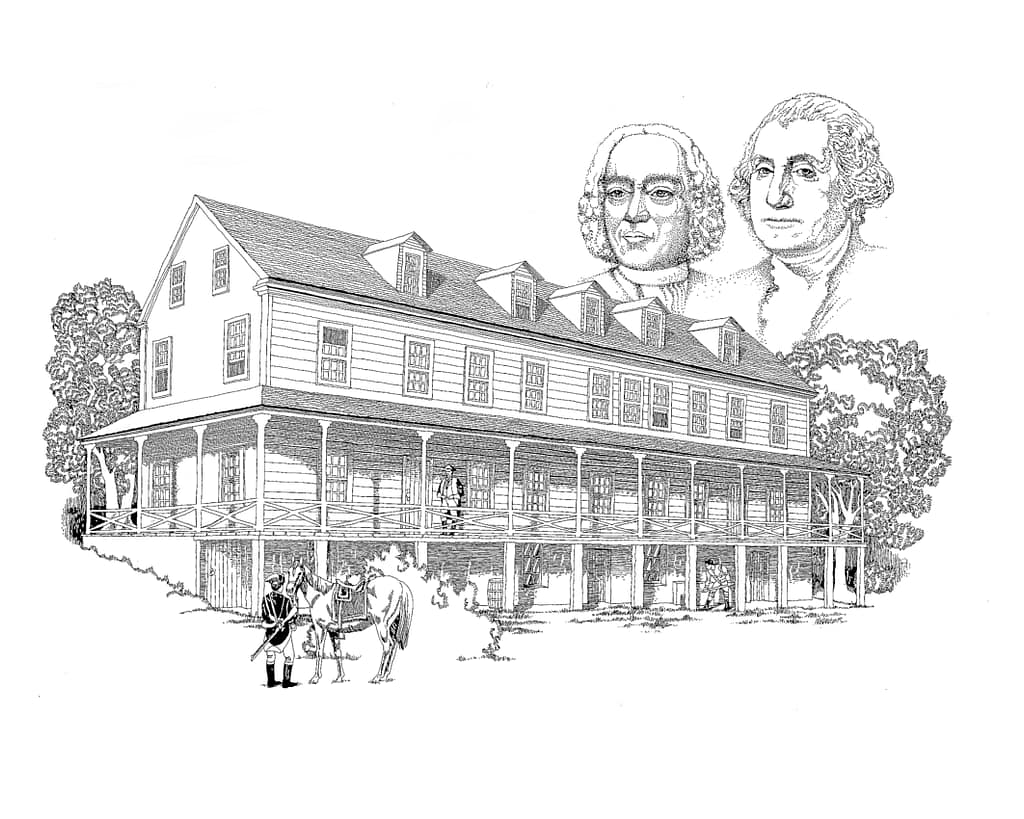
- Yellow Springs already hosted several “flying hospitals,” in three barns on the plantation, described by a Hessian soldier as “rebel hospitals,” and remained in use even while a permanent hospital was under construction.
- Otto arrived with his wife and sons, who served in the hospital, while some family members traveled regularly between Yellow Springs and Valley Forge.
After June 17, 1778
After the death of Dr. Samuel Kennedy: Otto was appointed director of Washington Hall, placing him in charge of one of the most important Revolutionary War medical sites in the region.
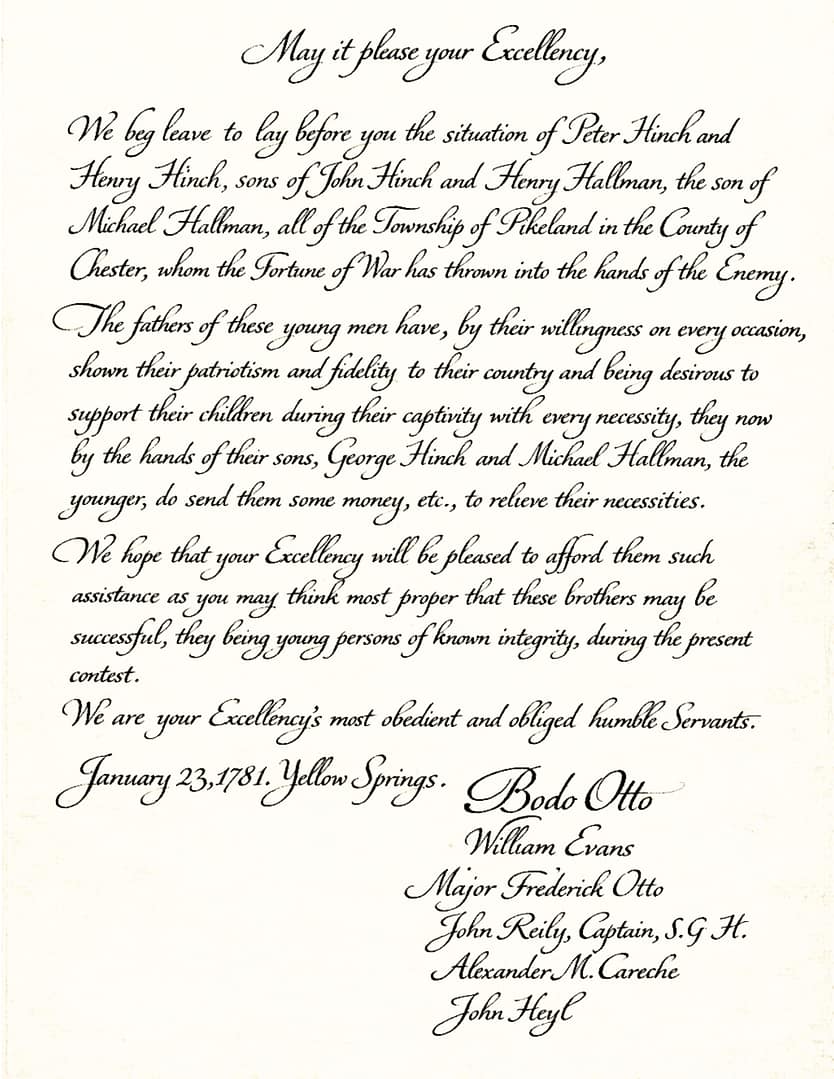
January 23, 1781
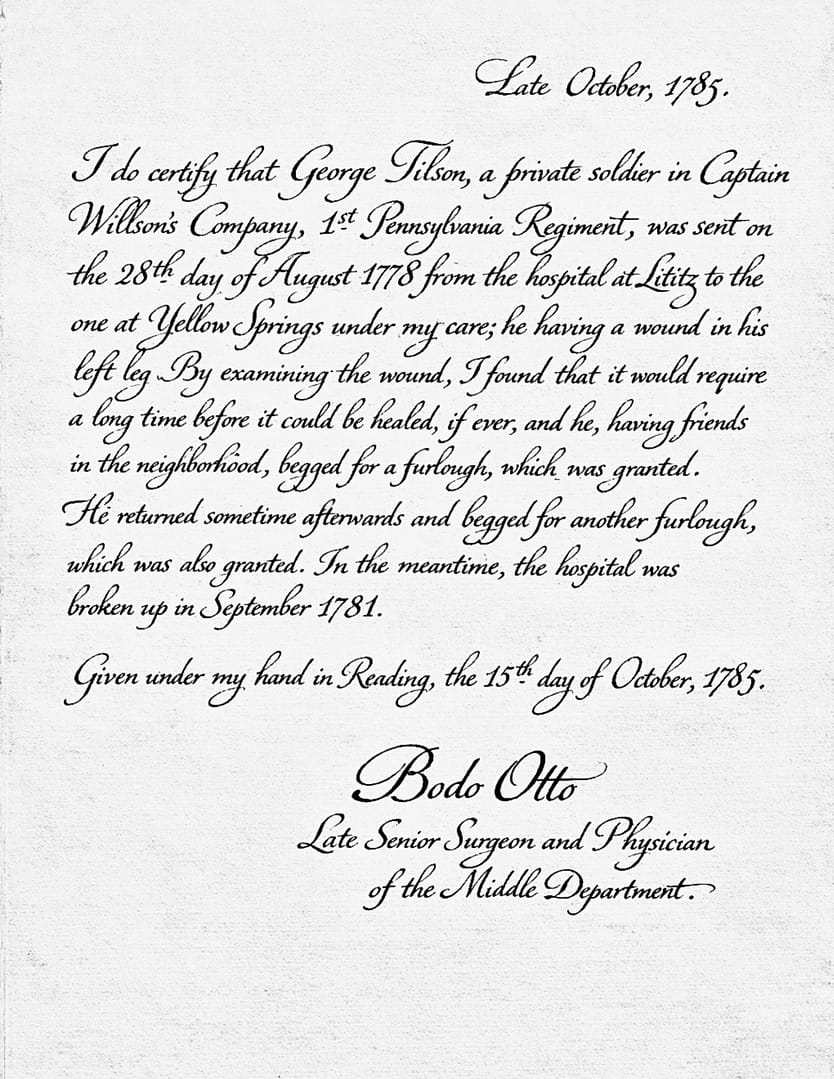
October, 1785
Posts Featuring Dr. Bodo Otto

Further research ongoing!
See our reconstruction of Dr. Otto’s family tree on Ancestry.com here!
Works Cited
Gibson, James E. Dr. Bodo Otto and the Medical Background of the American Revolution. 1937.