
Throwback Thursday: Making History- Neighbors and Nurses in the Village of Yellow Springs
We Continue to Use Historical Research to Return Imagery to Lost Revolutionary Figures
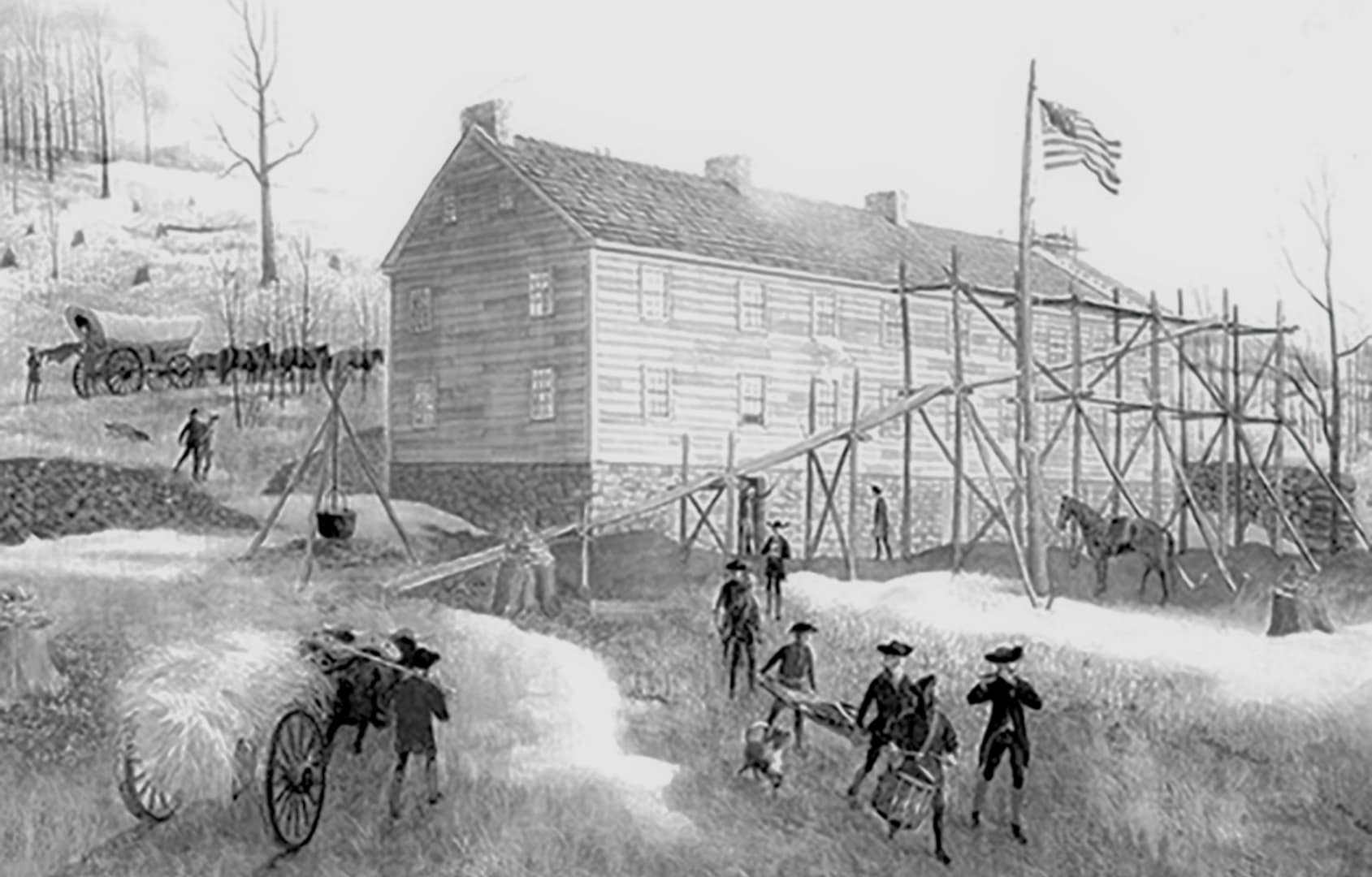
Setting the Scene
Over the past few months, we have presented a short series that uses new technology to restore the faces of people connected to Yellow Springs during the Revolutionary War. We paused the project briefly to share some important news. This week, we are returning to the series as we continue to mark the 250th anniversary of the founding of the United States.
So far, we have explored what Persifor Frazer and Dr. Samuel Kennedy likely looked like. We then used the same research and image restoration process to recreate Polly Frazer and Sarah Kennedy. Next, we examined Dr. Bodo Otto, his sons who also served as doctors at Washington Hall, and Surgeon’s Mate John Rose. Most recently, we focused on three people enslaved by the Kennedy family’s estate during 1777 and 1778: Rina, Lucia, and Kitte.
Each restoration combines historical research with modern technology. Together, these images help us better understand the people who lived, worked, and shaped the history of Yellow Springs during the Revolutionary era.
This week, we are focusing on the neighbors and nurses from around Yellow Spring that made Washington Hall possible.
Tools of the Trade
To distinguish these representations from the stylized portraits we created earlier, we will use digital photomanipulation to produce unified images of the individuals we are portraying.
We will create these images with the Procreate digital art program, stock photographs from sources such as Pexels, and public domain reference images. Afterward, we will process the photomanipulations through a Picsart filter to give them a consistent visual style.
However, it is important to note that the filter that we use on Picsart has an AI image generation aspect to it that cannot be removed. This process may result in incorrect details and “AI artifacts” that have been added to the final image, though we have taken steps to limit that as much as possible.
We will also draw on materials from the Moore Archives to provide greater historical context for these representations.
Abigail Hartman-Rice
Maria Appolonia Hartman-Rice, known to history as Abigail, is one of the most well-known figures in the local history of Yellow Springs today. Her story reflects the essential work that kept Washington Hall operating during the Revolutionary War.
During 1777 and 1778, Abigail served as a nurse and civilian support worker at Washington Hall and throughout Yellow Springs. She cared for sick and wounded soldiers and helped gather food and supplies from nearby farms when shortages threatened the hospital. Her efforts supported the informal care network that sustained Continental Army medical operations in the region.
Abigail married Zachariah Rice at age 15, only months after her confirmation at her local Lutheran church. Over her lifetime, she gave birth to 22 children, and 17 survived to adulthood. She spent much of her adult life caring for infants and children while managing a working farm household.
This background shaped her service at Washington Hall. Abigail cared for injured and dying soldiers as a woman already familiar with constant caregiving, physical exhaustion, and emotional strain. She practiced compassion daily under difficult conditions and often at personal cost.
In 1777, Abigail was likely in her mid-to-late thirties. The size and timing of her family suggest that she was either pregnant or had recently given birth while assisting at Washington Hall. Research confirms that she gave birth to her son, Heinrich “Henry” Rice, in early 1778. This evidence shows that she spent the difficult winter of 1777-1778 pregnant while helping support the hospital.
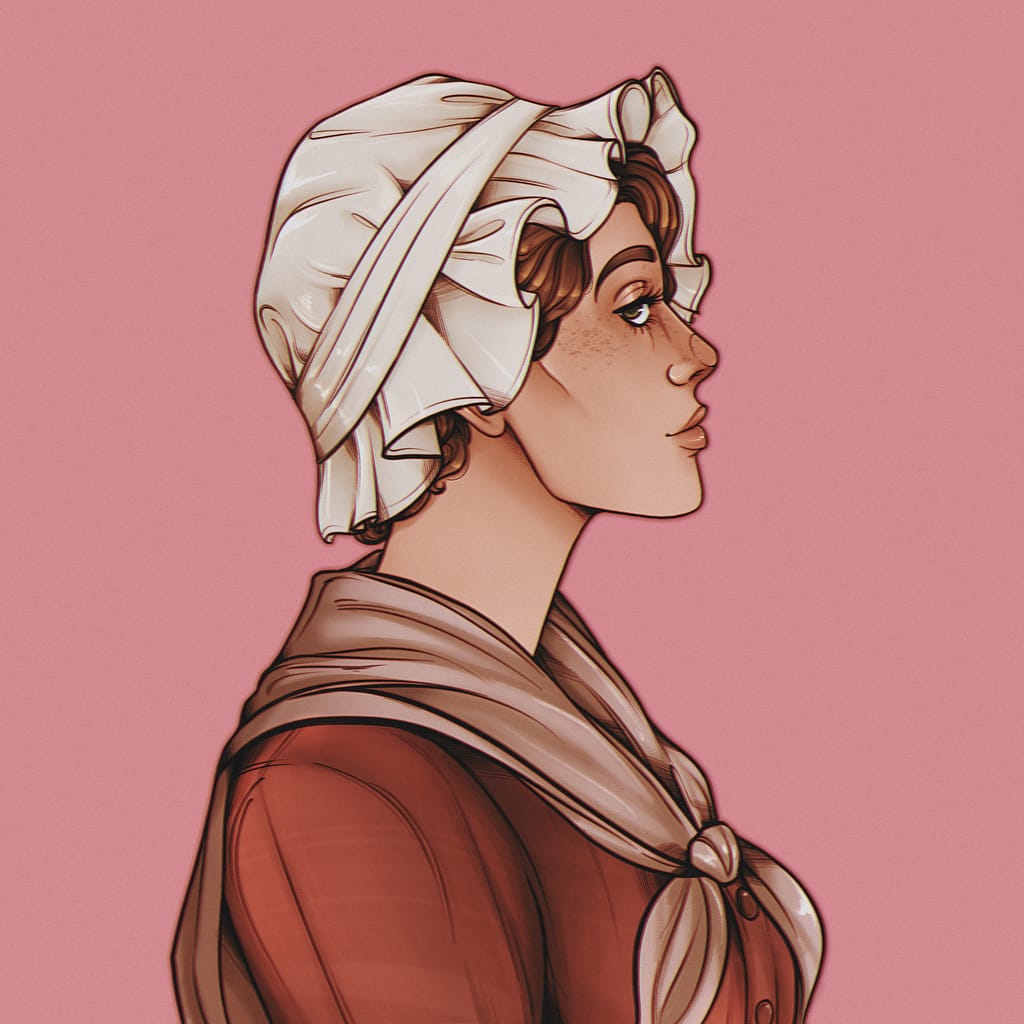
Because we featured Abigail as a living history character during our Washington Hall winter exhibit, we created an illustration showing how she likely appeared in life. You can view that illustration above.
You can also read about the research behind the reconstruction and the reasons for her design here. An archived version of the exhibit here also tells Abigail’s story from her perspective.
Abigail, Reimagined
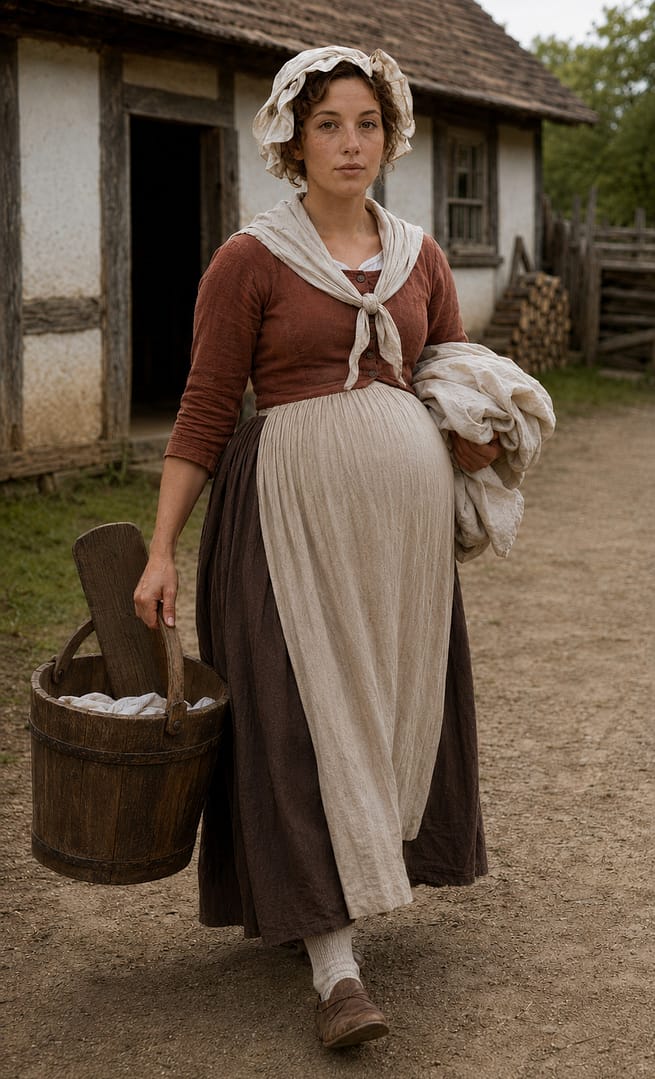
Zachariah Rice
Zachariah Rice, the husband of Abigail Hartman-Rice, is best known in Yellow Springs history for his role in building Washington Hall. As a skilled millwright and carpenter, he helped construct the hospital’s structure.
During the harsh winter of 1777-1778, local German immigrant families around Yellow Springs helped sustain the hospital complex here when supply lines began to fail. Families such as the Rices, Henches, and Hallmans, also known as Holmans, donated food from their own stores to support the sick and wounded. Their efforts helped Washington Hall survive one of its most difficult periods, and they continued providing aid throughout the hospital’s operation.
Zachariah was born on July 31, 1731. His family came from Bavaria and immigrated to Pennsylvania as part of the German Lutheran migration. He married Abigail in 1757. By then, the 26-year-old had already established himself as a millwright in the local community.
By 1777 and 1778, Zachariah was in his mid-to-late forties. He and Abigail raised a large family and saw 17 of their children reach adulthood. During the difficult winter at Washington Hall, Abigail gave birth to their son, Heinrich “Henry” Rice.
As the hospital struggled to care for hundreds of sick and wounded soldiers, the Rice family balanced the demands of wartime service with the arrival of a new child.
Zachariah, Reimagined
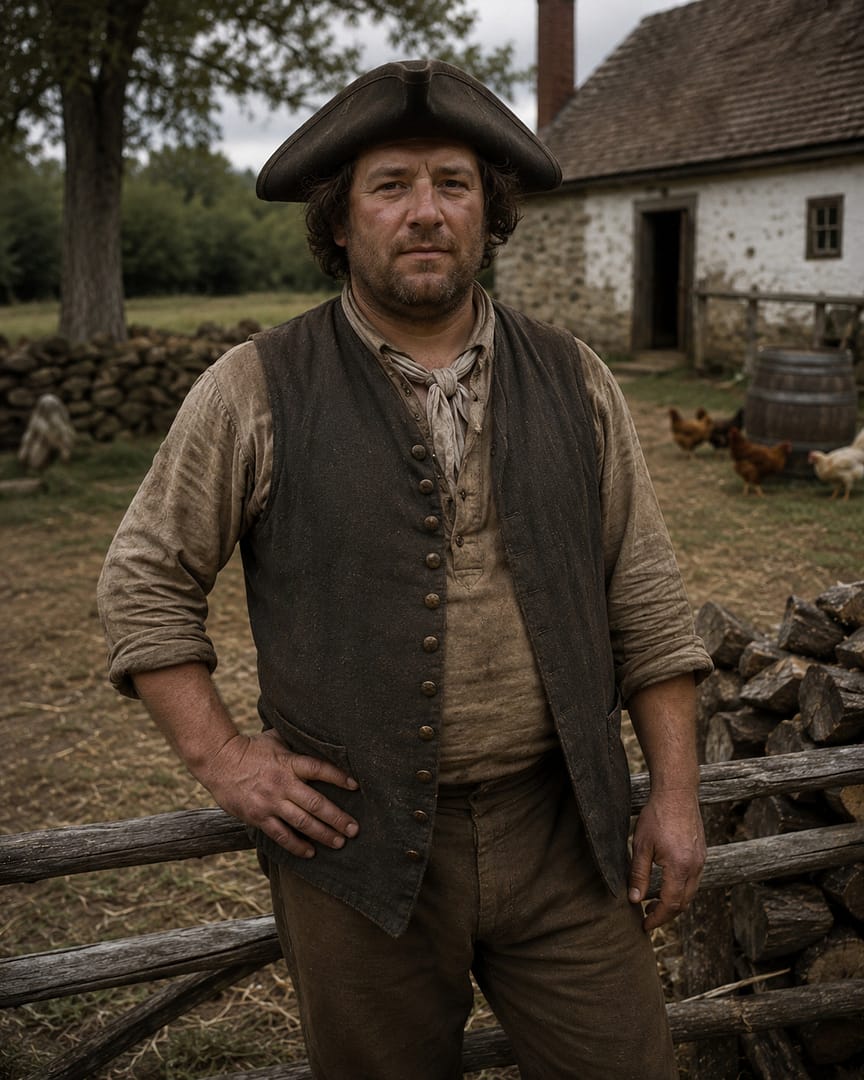
Christina Schneider Hench
Christina Elisabet Schreiber, later known as Christina Hench, was born in Baden-Württemberg, Germany between 1713 and 1720. She married Johannes Hench, and the couple settled in Yellow Springs, where they ran a farm.
As a neighboring farm owner, Christina opened her home to wounded soldiers and joined the informal civilian medical network that supported the Continental Army. She worked alongside Abigail Hartman-Rice in this shared system of care.
Before Washington Hall officially opened, a passing Hessian soldier recorded the presence of “rebel hospitals” in Yellow Springs in 1776. These early hospitals operated out of local barns and nearby homes.
During the winter of 1777 to 1778, Christina nursed soldiers at Washington Hall with Abigail. Their shared work likely created a close bond. Christina’s son, Lieutenant John Hench, born in 1750, later married Margaret Rice, Abigail’s daughter born in 1762. This marriage linked the Hench and Rice families through both wartime service and family ties.
Christina was in her sixties during her service at Washington Hall, likely in her late sixties depending on her exact birth year. Her age and experience placed her among the older women caring for the sick and wounded.
The Hench farm also supported Revolutionary War soldiers. Records show it provided shelter for troops after the retreat from the Battle of Brandywine. This support reflects the broader role local families played in sustaining soldiers during the war.
Christina, Reimagined
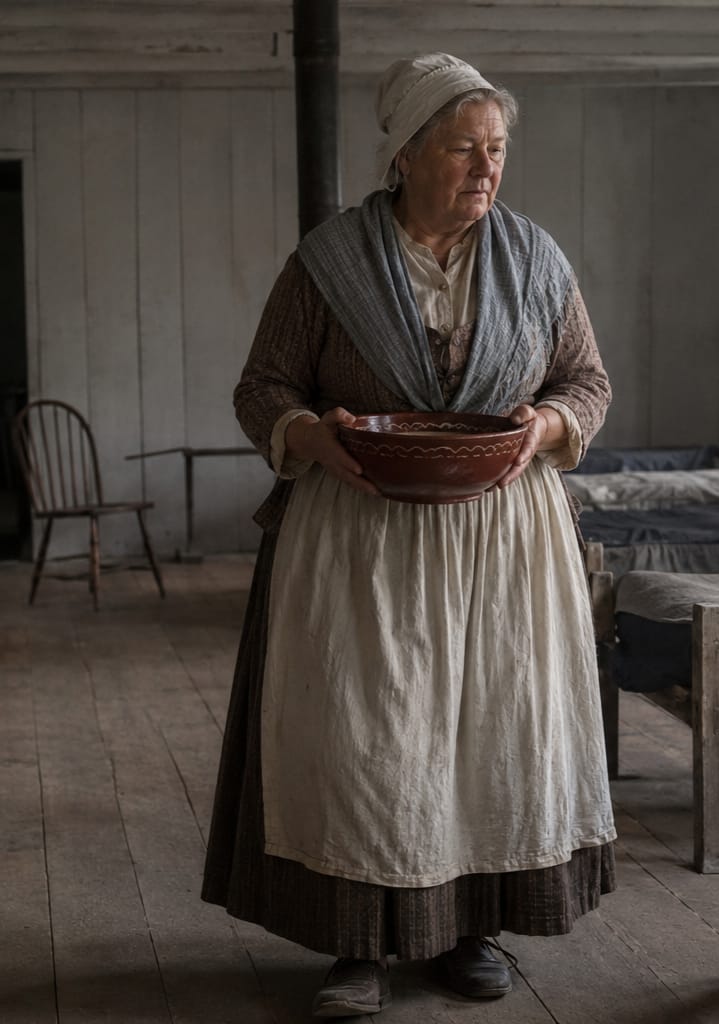
We chose to depict Christina doing her nursing duties. We gave her a distinctive German slipware-style bowl. You can read more about the slipware bowl that we found at Yellow Springs here.
Major Peter Hartman
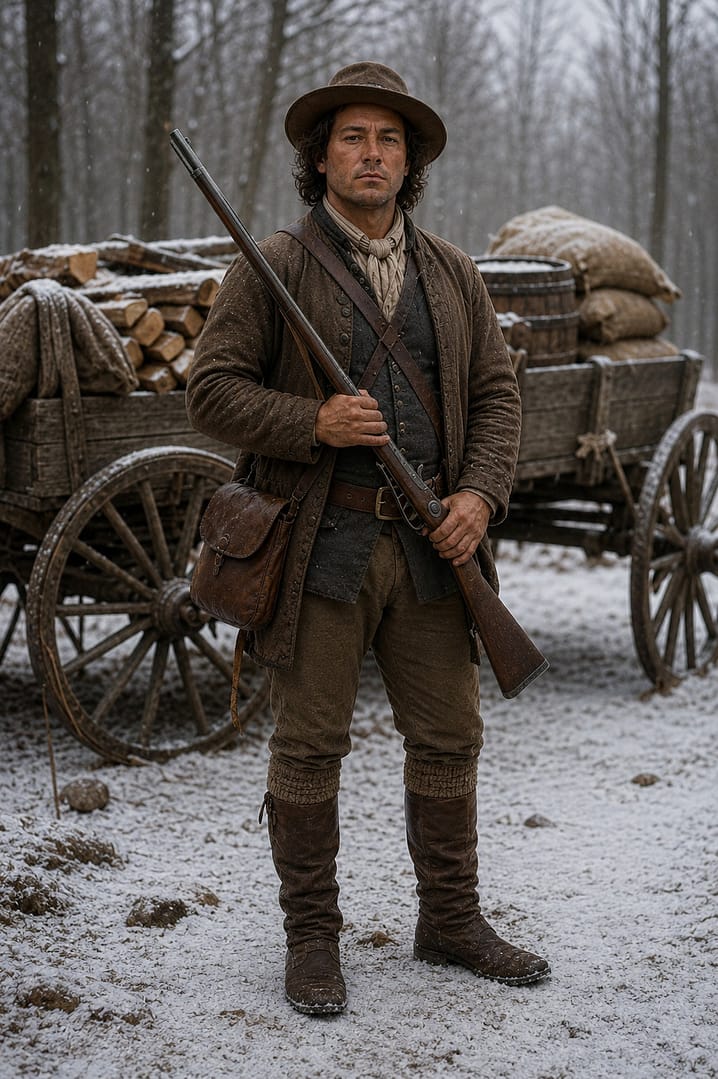
At her birth, Abigail had at least one older brother, Johann “Peter” Hartman, born on April 2, 1740. He later became known as Major Peter Hartman. Major Hartman was another key figure in the story of Washington Hall. He served as a militia officer and recruiter in Pennsylvania. He helped transport supplies and escorted sick soldiers from Valley Forge to the hospital complex at Yellow Springs by wagon. His work increased the movement of wounded men through the Hartman and Rice properties during the Revolutionary War.
He served in the Pennsylvania militia under Lieutenant Colonel Thomas Bull (also recorded as Ball). In 1777 and 1778, he was about 37 to 38 years old. During the winter of 1777-1778, he would have made regular journeys bringing food and supplies from neighbors to Valley Forge and then transporting back the sick and injured soldiers from the camps to Yellow Springs. This is recorded as being a stressful journey for all involved.
Peter Hartman’s burial marker stands at Saint Peter’s Pikeland United Church of Christ Cemetery in Chester Springs, Pennsylvania. The inscription records his name, his rank as major, his birth on April 2, 1740, and his death on September 30, 1810 at age 70 years, 5 months, and 28 days. It also notes his second wife, Margaret Metzler Schreiber, born June 12, 1752, who died on November 14, 1829 at age 76 years, 6 months, and 28 days.
The marker preserves both his military service and his family ties, showing his long life in Pennsylvania after the war.
Peter, Reimagined
To understand what Peter Hartman may have looked like, it helps to understand how militias operated during the Revolutionary War. Unlike the more formal battalion we studied when reconstructing Persifor Frazer, militia units had looser organization and less standardization.
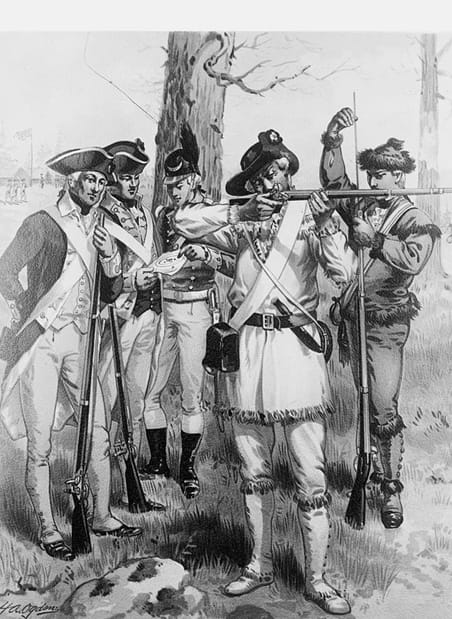
Our research shows that the Pennsylvania Militia did not use a standard uniform in 1777 and 1778. Most militiamen wore everyday civilian clothing rather than official military uniforms. Their typical dress included homespun linen shirts, waistcoats, and breeches, and simple hats to keep them warm.
To Us, Today
When we look back at the Revolutionary era, we often focus on leaders and battles. But places like Washington Hall did not survive because of famous names alone. It survived because of neighbors who stepped into constant need when systems broke down.
In Yellow Springs, daily life and wartime care blended together. Farms, homes, and hospital spaces formed one working network. Abigail Hartman-Rice cared for wounded soldiers while also raising a large family and managing a farm. Zachariah Rice helped build and supply the hospital that treated those soldiers. Christina Schneider Hench opened her home and cared for the sick alongside her neighbors. Major Peter Hartman moved between battlefields and hospitals, carrying supplies and bringing wounded men to safety. None of this work happened in isolation.
This history matters today because it reflects how communities still function under pressure. Hospitals, emergency systems, and disaster response all depend on local people who cook, drive, care for patients, and fill gaps when resources run short. Most of that work still happens quietly, without recognition.
These neighbors show that resilience is not only built in moments of leadership. It is built in ordinary decisions to help, share, and show up for others. Their story reminds us that community survival has always depended on people willing to carry more than their share when it matters most.
🏡🧺🪵
Learn more about the history of Yellow Springs
You can read the more in-depth version of this post here
Follow us on Substack, Instagram, and Facebook
🏡🧺🪵